Buy Now, Pay Later & AI: How Algorithms Decide If You’re Creditworthy in Under 3 Seconds

Senior Fintech Editor & Analyst · Tech Capital Hub
James Whitfield is a Senior Fintech Editor & Analyst at Tech Capital Hub with over eight years of experience covering AI, digital banking, payment infrastructure, and consumer fintech. In this guide, he explains how BNPL lenders use AI for instant approvals, what data shapes those decisions, how credit reporting is changing, and what the risks mean for everyday US shoppers.
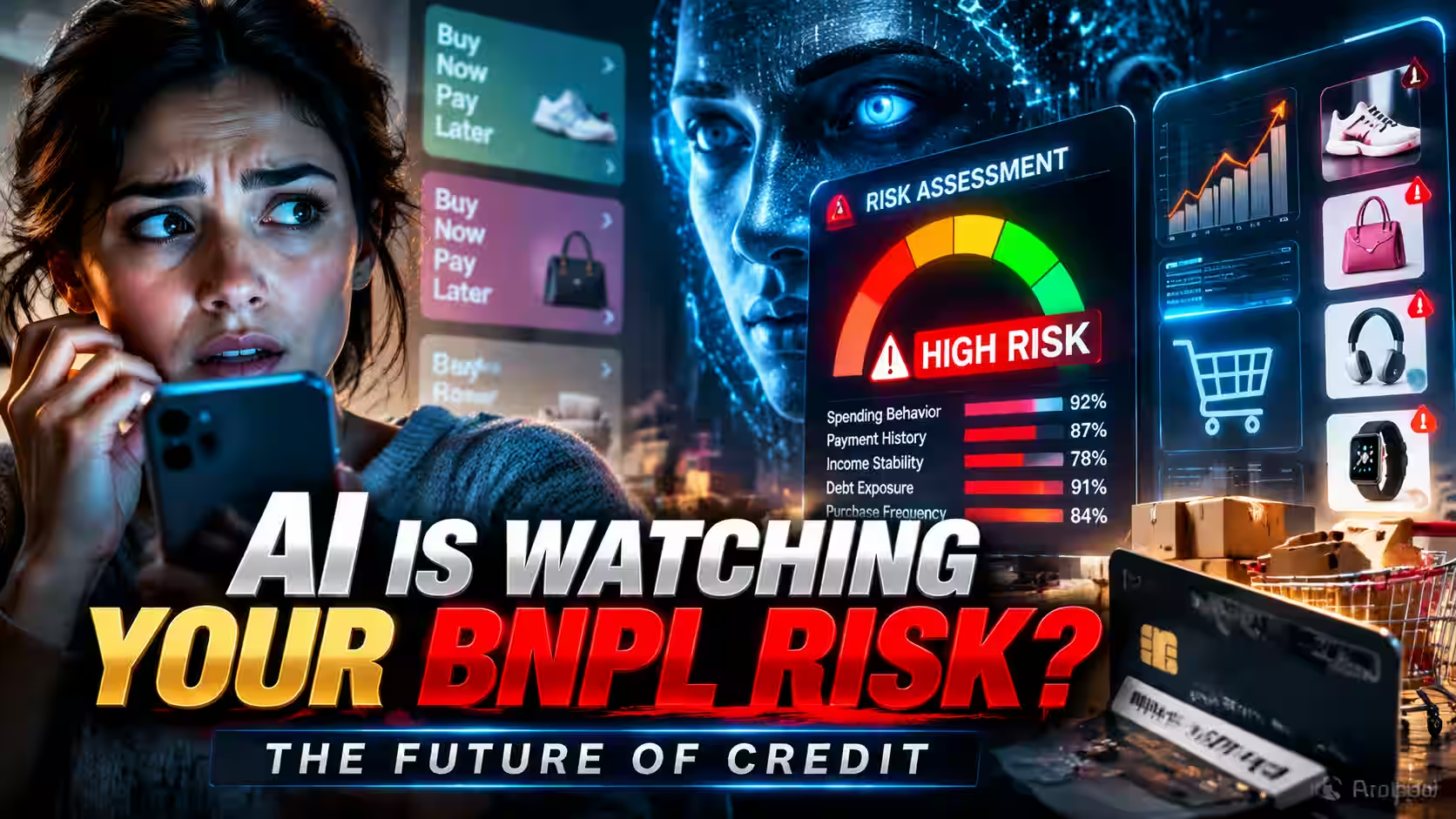
Ever wondered how you get approved so fast? BNPL AI risk assessment is how Buy Now, Pay Later lenders approve or decline you in seconds. Instead of relying only on a traditional credit score, these systems use machine learning, cash-flow data, repayment signals, and fraud checks to estimate how likely you are to repay on time. The answer pops up on your screen before you’ve even finished reaching for your wallet!
Here’s something that happened to me recently.
I was shopping online for a $74 air fryer. Nothing fancy. At checkout, a little option caught my eye: “Split into 4 payments of $18.50. No interest.” I thought, sure, why not! I tapped it, typed in my email and debit card, and it said approved. The whole thing took about four seconds.
No credit application. No waiting. A machine looked at something about me and decided I was good for it. That nagged at me — not in a scary way, more in a “wait, I should probably understand what just happened” way. So I dug in. And honestly? What I found was way more fascinating than I expected.
This guide breaks down exactly how BNPL approval works, what data these apps check, whether they touch your credit score, and the risks every US shopper should know before tapping “buy now.”
At a Glance: BNPL AI in 30 Seconds
In a hurry? Here’s the quick version!
- What it is: AI that decides if you qualify for pay in 4, usually in under two seconds.
- What it checks: Cash-flow data, bank account behavior, fraud signals — often more than your credit score.
- Credit score impact: Usually no hit at approval, but reporting is changing fast.
- Biggest risk: Loan stacking across multiple apps, not sky-high interest.
- When it shines: A single purchase you know you can cover in six weeks.
Now let’s dig into the details!

What Is BNPL and How Does It Work?
Buy Now, Pay Later is a short-term loan that happens right at checkout. The most common version is called pay in 4. It splits your purchase into four equal payments. You pay one chunk today, then three more every two weeks over six weeks. No interest if you pay on time. And here’s a big one for a lot of Americans — no credit card needed. You can use a regular debit card.
So how does the split actually work behind the scenes? It’s simpler than it looks. The lender fronts the full purchase amount to the merchant right away. You repay the lender in installments. The store gets paid, you get your air fryer, and the AI decides in a blink whether you qualify.
Simple on the surface, right? But the scale is wild. BNPL has grown into a mainstream financial tool, not a niche checkout gimmick. Middle-income families use it to smooth out tight weeks between paychecks. Younger shoppers lean on it instead of racking up credit card debt. And every single approval — and there are a lot of them every day — comes from AI with about two seconds to decide.
Key takeaway: Pay in 4 is a short, interest-free installment loan, approved in seconds by AI rather than a loan officer.
Table of Contents

Why Traditional Credit Scoring Falls Short
To understand why BNPL companies went all-in on AI, you need to see what came before.
For decades, American lenders leaned on FICO scores. According to myFICO, FICO weighs five things: payment history, amounts owed, length of credit history, new credit, and credit mix. For people with years of borrowing behind them, it works okay. Not perfect, but something to go on.
Here’s the catch, though.
Millions of Americans are “credit invisible,” with no credit record at all, according to CFPB research on credit invisibles. Maybe you’re young. Maybe you’re new to the country. Maybe you’ve just always paid with cash and a debit card. Under the old system, no score often meant an automatic “no” — even if you’d paid your rent on time for years. FICO simply couldn’t see that.
Then there’s speed. Traditional credit checks can take days. BNPL runs at checkout speed. If you had to wait more than a few seconds, you’d probably close the tab and move on. Most people do.
And accuracy? Old rule-based systems flagged plenty of good borrowers as risky, turning away folks who would’ve paid every dollar. AI credit decisioning tackles all three problems — inclusion, speed, and accuracy — at the same time.
Key takeaway: FICO can’t see millions of responsible, cash-first Americans. BNPL AI can.
How BNPL AI Risk Assessment Works
Here’s a simple way to picture it. I call it the 4-layer BNPL decision framework: Data → Features → Score → Fraud check. Every approval flows through these four layers in a heartbeat.
Two main technologies power the scoring itself.
Gradient Boosting
First up is gradient boosting — models like XGBoost and LightGBM. These crunch structured financial data fast, sometimes under 200 milliseconds. You feed them bank behavior, income patterns, and spending history, and they spot the signal combinations that best predict repayment. Not flashy, just wonderfully efficient!
Neural Networks
Second are neural networks. These handle messier data — device behavior, how you move through an app, patterns that don’t fit neatly in a spreadsheet. They catch things simpler models miss.
Together, this combination reaches far higher accuracy than old rule-based systems — the real engine behind modern AI creditworthiness assessment. When you’re running millions of decisions a day, that gap matters enormously.
There’s also a transparency layer. Regulators increasingly ask: if the AI denies someone, why? Explainability tools like SHAP and LIME let companies pinpoint exactly which data points pushed a decision toward yes or no. The NIST AI Risk Management Framework shows why that kind of auditability is becoming a requirement, not a nice-to-have.
Key takeaway: BNPL replaces one-dimensional credit scoring with real-time repayment prediction — fast models for structured data, neural networks for the messy stuff.
What Data BNPL Lenders Use to Approve You
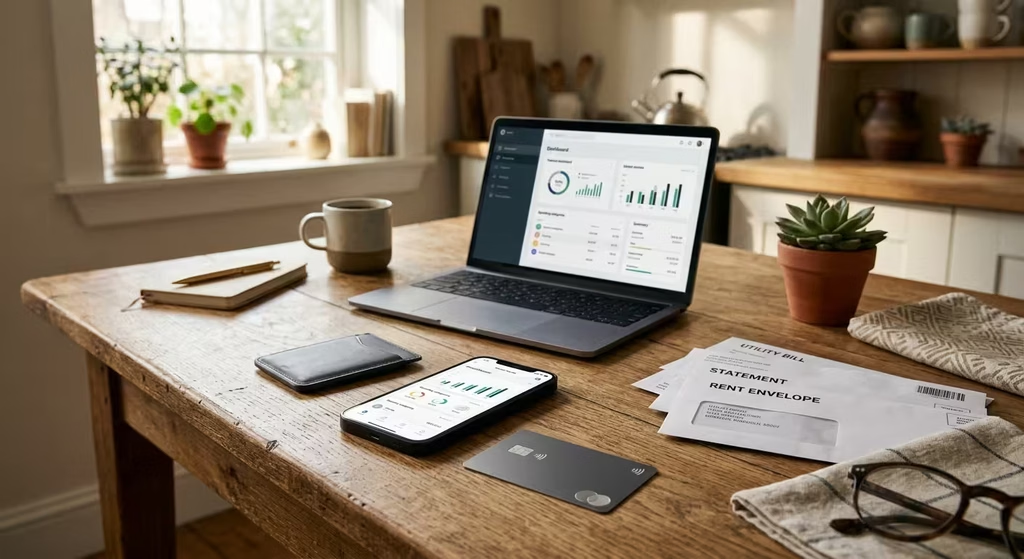
Here’s the part most people never see. The AI often isn’t checking your credit score at all. What it pulls in falls into two buckets.
Cash-Flow Data: The Stuff That Makes Sense
This is the heart of alternative credit data. It includes:
- Average monthly income into your bank account
- Overdraft history — how often you go negative, and by how much
- Whether you pay rent and utilities on time
- How your account balance trends over time
- How long your main bank account has been open
Think about what that reveals! Someone with steady direct deposits, years of on-time utility payments, and no recent overdrafts is clearly a solid borrower. FICO couldn’t see any of that. Cash-flow data can.
Here’s the insight I kept circling back to: plenty of people who look like risky borrowers on paper actually repay their BNPL loans reliably. Researchers call these folks “invisible primes” — low-risk borrowers mislabeled because the old measuring tool was wrong. Cash-flow-driven AI can finally find them. For a lot of hard-working Americans shut out for no good reason, that’s a genuine win.
Behavioral and Digital Signals: Trickier Territory
Some systems also look at things that have nothing to do with your money. How long you’ve had your email. Your device usage. How you navigate an app mid-session.
The theory? Stable digital habits hint at stable financial habits. But is that fair? I go back and forth. It can disadvantage people who switch phones often, use privacy-focused email, or simply don’t have a long digital trail — often older, lower-income, or privacy-minded folks. Regulators are starting to ask the same questions.
Key takeaway: BNPL AI often weighs your actual bank behavior over your credit score — a real advantage if your finances are steady but your file is thin.
The 3-Second Process, Step by Step
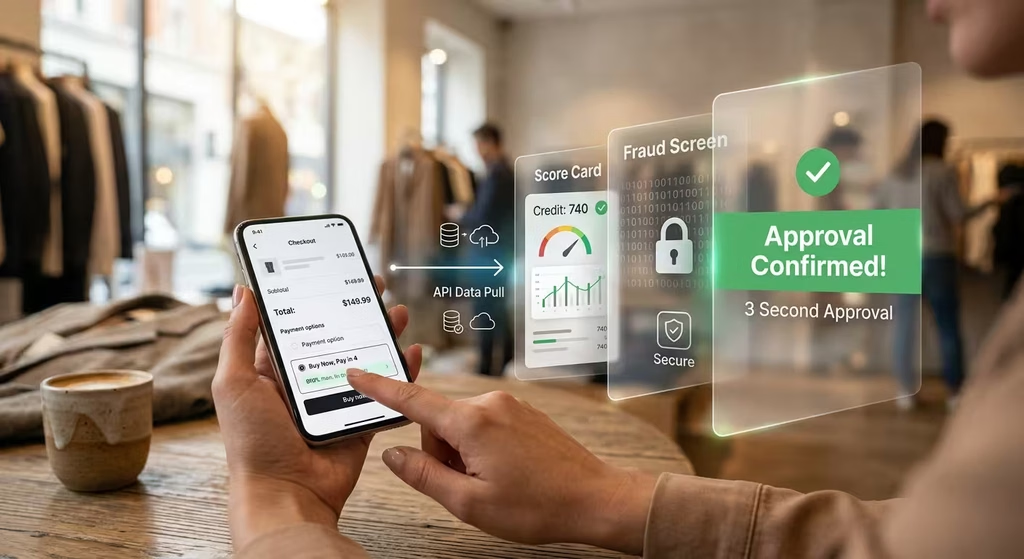
So what actually happens when you tap “buy now”? Here’s the sequence:
- Data gets pulled. APIs grab your linked bank info, device data, and any history with that provider — all at once, not one by one.
- Features get built. Raw data becomes model inputs like “net monthly cash flow” or “days since last overdraft.” Dozens of them, calculated in real time.
- The model scores you. Not just yes or no — a probability of default that shapes your offer terms and credit limit.
- Fraud gets screened. A separate identity layer confirms you are who you say you are
- The response lands. Usually before you’ve had time to second-guess the purchase.
All of that in under two seconds — even on a busy Black Friday morning with millions of Americans checking out at once. The engineering behind that reliability is genuinely impressive!
Does Buy Now, Pay Later Affect Your Credit Score?
This is the question I get asked most, so let’s clear it up.
For now, the answer is often no — but that’s changing fast. Many pay-in-4 products run only a soft check that doesn’t dent your score. A soft check lets the AI assess you without leaving a mark. So when you get approved in seconds with just a debit card, your FICO score usually isn’t touched in that moment.
But will Buy Now, Pay Later show up on your credit report? Increasingly, yes. Reporting is the real shift to watch. Affirm, for example, has started reporting repayment behavior to bureaus like Equifax. That means paying on time with a reporting provider can actually show up on your credit report. For someone with a thin or empty file, that’s a real pathway into the credit system.
Here’s a bigger change on the horizon. FICO has announced new credit scores that factor in BNPL payment history. That means your pay-in-4 habits could soon shape the score lenders see when you apply for a car loan or mortgage. On-time payments could help you. Missed ones could hurt. Worth keeping an eye on!
Key takeaway: BNPL rarely dings your score at checkout today — but with FICO folding in BNPL history, those three-second decisions may soon shape your bigger financial picture.

The Real Risks of Buy Now, Pay Later (and Its Downsides)
The AI is impressive, and the financial inclusion is real. But glossing over the downsides would do you a disservice. Let’s be straight about the disadvantages — because knowing them is how you stay in control.
Loan Stacking
Here’s a worked example. Say you have $1,200 in active BNPL obligations spread across four different apps. Because most providers don’t share data with each other, each lender thinks your total exposure is just $300. This is loan stacking, and it creates a dangerous blind spot. When money gets tight, every payment comes due at once — and nobody saw it coming. Not them. Not you.
If you’ve ever lost track of which app charges you on which day, you already know how easily this sneaks up on you. The biggest BNPL risk usually isn’t interest — it’s fragmented debt you can’t see all at once.
Late Fees
Late fees vary by provider, but they add up fast — especially if you’re already stretched thin before payday. What worries me more is that many users don’t fully grasp the fee structure before signing up. That’s a problem that starts before the product is even used.
The “It’s Only $22 a Month” Trap
BNPL can quietly nudge your spending higher. On a tight budget, the psychological cost feels low — you’re thinking $22 today, not $90 total across four apps all hitting your account the same week. The installment structure makes spending easier to justify in the moment. That’s not always a good thing.
My tip: Read the terms before you commit. Two or three minutes of reading can save you real money!
Buy Now, Pay Later vs. Credit Card: Which Is Safer?
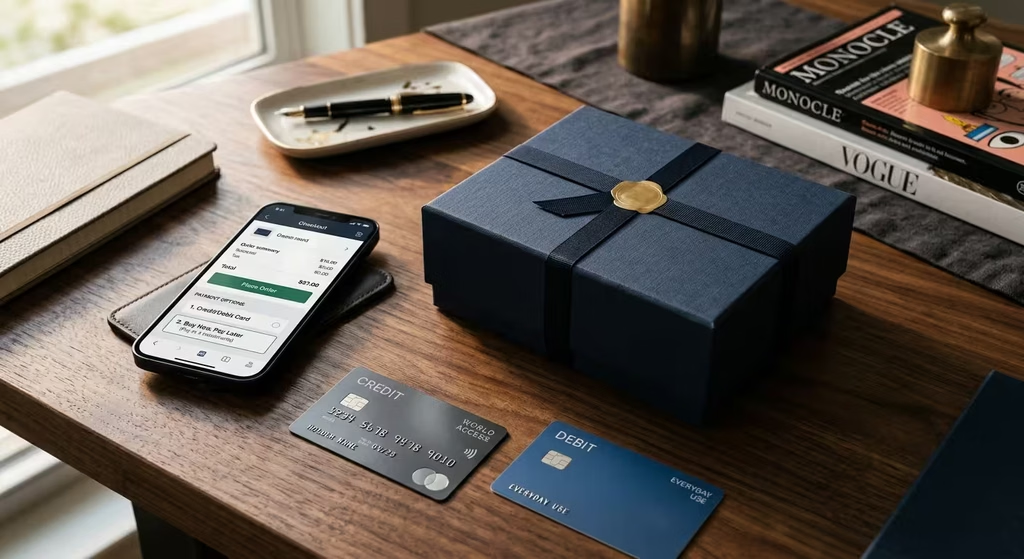
Short answer: it depends on the risk you mean.
On debt accumulation, BNPL has a real structural edge. Loans are short — six weeks max — with no revolving balance quietly compounding at a 20-something percent APR. You can’t fall into the minimum-payment trap, because there isn’t one. You either pay in six weeks or you don’t.
On consumer protections, credit cards still win. Dispute rights are clearer. Payments build your credit file automatically. And there’s one bank to call when something goes wrong — not five app support channels with five different policies.
My take: BNPL shines for a specific, one-time purchase you know you can cover in six weeks. It struggles as a way to juggle ongoing money problems across multiple apps. That’s the real heart of the Buy Now, Pay Later vs. credit card question — matching the tool to the situation.

How BNPL Regulation Is Changing
For years, BNPL enjoyed a comfortable run with little oversight. Most providers dodged the rules that bind credit card companies. That’s shifting.
In the US, the Consumer Financial Protection Bureau moved to treat BNPL lenders more like credit card providers under the Truth in Lending Act. A big focus is clearer rules around late fees and disclosures — the stuff that quietly costs US shoppers the most. Enforcement has gotten tangled in legal and political shifts, but the signal is clear: more structure is coming.
Across the pond, the UK is moving faster. New rules from the Financial Conduct Authority will require real affordability checks before approval. It’s a useful preview of where US rules may head next.
The takeaway for American shoppers? The wild-west era of BNPL is winding down. Expect clearer disclosures and stronger protections over the next few years.
Practical Tips Before You Tap “Buy Now”
Ready to use BNPL wisely? Here’s my go-to checklist:
- Favor bureau-reporting providers. On-time payments can build your credit history, not just your checkout history.
- Track your total exposure. Add up what you owe across all apps, not just per app. It climbs faster than you’d think.
- Read the late-fee structure. Five minutes of reading beats a surprise fee every time.
- Link your bank account thoughtfully. It gives the AI a cleaner cash-flow picture, which can actually help your approval odds if your finances are in decent shape.
- Start small if your file is thin. A reporting BNPL service can be a practical first step toward building credit.
Final Thought
That three-second approval wasn’t random, and it wasn’t magic. A machine studied your banking behavior, your spending patterns, and maybe your device history — then made a confident, probabilistic call about whether you’d repay.
For millions of credit-invisible Americans, this technology is genuinely opening doors. The invisible primes — responsible people who simply never had a reason to borrow — can finally be seen in a way FICO never managed. That’s real, and worth celebrating!
But BNPL can widen access to credit only if reporting and regulation catch up. Loan stacking stays widespread and under-tracked. The rules are still being written. And the data feeding these models runs broader than most people realize. And with FICO starting to fold BNPL payment history into credit scores, those three-second decisions may shape your bigger financial picture more than ever.
Understanding how it all works doesn’t make you paranoid — it makes you a smarter, more confident user of a tool that’s already woven into everyday American life. Next time you see that little “split into 4 payments” option, you’ll know exactly what’s happening behind the scenes!
People Also Ask
What is BNPL AI risk assessment?
It’s the process BNPL lenders use to approve or decline shoppers in seconds. Instead of relying only on a credit score, these AI models weigh cash-flow data, repayment signals, identity checks, and sometimes behavioral patterns to estimate your likelihood of repaying on time.
What is pay in 4, and how does it work?
Pay in 4 splits a purchase into four equal installments over six weeks. The lender pays the merchant upfront, and you repay every two weeks, usually with a debit card. There’s typically no interest if you pay on time.
How do BNPL companies approve you in seconds?
APIs pull your linked bank data, device info, and provider history all at once. The AI builds features, scores your default probability, screens for fraud, and returns a decision — typically in under two seconds.
Does Buy Now, Pay Later affect your credit score?
Often not at approval, since many providers run only a soft check. But some now report repayment to the bureaus, and FICO plans to factor BNPL history into future scores — so on-time payments increasingly matter.
Can BNPL help you build credit?
Yes, but only with providers that report repayment to the credit bureaus, like Affirm. On-time payments can then strengthen a thin or empty credit file.
What are the disadvantages of Buy Now, Pay Later?
The main ones are loan stacking across multiple apps, surprise late fees, and overspending driven by the “it’s only $22 a month” effect. Tracking your total exposure keeps most of these in check.
Is BNPL safer than a credit card?
For a single purchase you can repay in six weeks, BNPL avoids compounding interest and minimum-payment traps. Credit cards still offer stronger dispute rights and automatic credit reporting.
BNPL & AI Credit Decisioning · Editorial Integrity
Sources & Citations
Public consumer-finance guidance, AI risk frameworks, credit-scoring references, and current reporting behind this guide to Buy Now, Pay Later approval models, alternative underwriting, fraud screening, BNPL credit reporting, and evolving regulation.
This guide is grounded in public consumer-finance guidance, AI governance frameworks, credit-scoring references, and current reporting on Buy Now, Pay Later underwriting. We prioritized primary and institutionally credible sources to explain how BNPL providers use cash-flow signals, fraud checks, and alternative data to approve shoppers in seconds, how credit reporting practices are changing, and why regulators are paying closer attention to transparency, affordability, and consumer protections. Because BNPL reporting policies, model practices, and regulatory interpretations continue to evolve, readers should verify the latest provider terms and official guidance before making financial decisions.
View full sources, methodology, and editorial notes
This article was developed using primary consumer-finance sources, regulatory materials, institutional frameworks, and named industry references relevant to BNPL underwriting and AI-driven risk assessment. We favor official guidance and recognized standards when explaining credit invisibility, cash-flow underwriting, AI explainability, dispute rights, and emerging BNPL credit reporting. Supporting references are included where they extend context around fraud detection, financial data privacy, and broader fintech market shifts. This article is educational information and should not be treated as legal, financial, credit, compliance, or investment advice.
- Traditional credit scoring methodology: myFICO — What’s in Your Credit Score — cited for the article’s explanation of how FICO scoring works and why traditional models can miss financially responsible consumers with thin files.
- Credit invisibility and thin-file consumers: CFPB — Data Point: Credit Invisibles — cited for the discussion of consumers who lack sufficient traditional credit history despite potentially strong repayment behavior.
- AI governance and model oversight: NIST — AI Risk Management Framework — cited for the article’s discussion of explainability, auditability, and responsible AI oversight in automated financial decisions.
- BNPL credit reporting developments: Equifax — cited as a reference point for the article’s discussion of repayment reporting and how some BNPL activity is increasingly entering mainstream credit files.
- FICO’s announced BNPL scoring changes: FICO — Plans for a Score Reflecting BNPL Data — cited for the article’s explanation that BNPL repayment history may increasingly shape future credit scoring outcomes.
- US consumer protection and dispute-rights direction: CFPB — BNPL Disputes and Refunds Guidance — cited for the regulatory discussion around treating BNPL more like credit cards for dispute handling, disclosures, and consumer protections.
- UK regulatory direction on BNPL affordability checks: FCA — Buy Now Pay Later — cited for international regulatory context and the article’s discussion of stronger affordability expectations in BNPL markets.
- Behavior-based fraud detection in financial services: Tech Capital Hub — AI Fraud Detection in Finance — cited as a supporting internal reference for the fraud-screening and behavioral-risk portions of the article.
- Financial data access, permissions, and privacy risk: Tech Capital Hub — AI Financial Data Privacy — cited as a supporting internal reference for the sections discussing linked bank data, permissions, and privacy concerns in alternative underwriting.
- Broader fintech and lending context: Tech Capital Hub — Fintech Trends 2026 — cited as a related internal pillar for the wider market context shaping BNPL, AI underwriting, and digital finance in 2026.
BNPL & AI Credit Decisioning · Editorial Standards
Our Editorial Standards
Tech Capital Hub applies Google’s E-E-A-T framework to every BNPL, fintech, and AI underwriting guide, prioritizing practical clarity, named sources, and public documentation over hype. This article draws on trusted references where they support specific claims — myFICO for traditional credit-scoring context, CFPB materials for credit invisibility and BNPL consumer protections, the NIST AI Risk Management Framework for explainability and oversight, and FICO’s own announcements for the evolving role of BNPL data in future credit scores. Where underwriting practices, bureau reporting, or regulation are still changing, we describe the direction carefully rather than overstate certainty.
View how our editorial standards apply to this article
Written for Real Checkout Decisions
This article is built for people who actually see “pay in 4” options at checkout and want to understand what happens behind the approval screen. Instead of abstract fintech theory, it walks through the real user experience — fast approvals, soft checks, linked bank data, and stacked repayment risk — so readers can connect the technology to practical financial choices.
AI Underwriting Explained in Plain Language
The guide translates complex credit-decisioning concepts into accessible language without losing technical accuracy. It explains how BNPL models use cash-flow signals, repayment indicators, fraud screening, and alternative data to approve shoppers in seconds, while also clarifying where explainability, fairness, and reporting practices still raise important questions.
Primary Sources and Named Frameworks Over General Claims
Specific claims are grounded in recognized public and institutional references where possible. Traditional scoring context is tied to myFICO, credit invisibility references CFPB research, AI oversight references the NIST AI Risk Management Framework, and BNPL reporting developments reference FICO, credit-bureau context, and regulatory materials. Internal analysis is used only to extend adjacent topics such as fraud detection, privacy, and broader fintech trends.
Clear About Limits, Risk, and Regulatory Change
BNPL approval systems, bureau reporting practices, and consumer protections are evolving quickly, so this guide avoids false certainty. It does not promise approvals, does not treat provider marketing as proof, and distinguishes emerging regulatory direction from settled rules. It is educational information, not legal, financial, credit, compliance, or investment advice. Readers should always verify current provider terms, fee structures, and reporting practices before making borrowing decisions. Corrections or source questions can be sent to the editorial team.
BNPL & AI Credit Decisioning · About the Author
James Whitfield
Senior Fintech Editor & Analyst · Tech Capital Hub
James Whitfield is a Senior Fintech Editor & Analyst at Tech Capital Hub with eight years of experience covering where AI, consumer finance, and payments infrastructure meet. In this guide, he breaks down how BNPL lenders use AI to make near-instant credit decisions, what data these systems evaluate, how reporting is changing, and what the risks mean for everyday shoppers.
View full author bio, credentials, and links
James Whitfield is a Senior Fintech Editor & Analyst at Tech Capital Hub with eight years of experience covering where AI, consumer finance, and payments infrastructure meet. He writes for everyday users, operators, and decision-makers who want to understand what an automated financial decision actually means once it leaves the marketing page and starts affecting approvals, repayments, and credit visibility in the real world.
His reporting focuses on the practical mechanics behind financial technology: how alternative underwriting models interpret cash-flow behavior, how fraud systems screen transactions in real time, how BNPL products expand access while creating new repayment risks, and how reporting and regulation gradually reshape the consumer credit landscape. For this article, James explains how BNPL approval engines work behind the scenes, why thin-file consumers may be evaluated differently than in traditional lending, and where concerns around transparency, fairness, stacking risk, and evolving bureau treatment still matter. All articles are educational information and should not be treated as financial, legal, compliance, or investment advice.
- Covers BNPL, AI underwriting, and digital finance through the lens of real consumer and operational impact
- Explains alternative credit data, fraud screening, and fast approval systems in plain language without oversimplifying
- Tracks how AI-driven financial products behave in live conditions, including risk controls, reporting changes, and user trade-offs
- Separates meaningful underwriting capability from marketing claims using technical, regulatory, and consumer-outcome lenses
- Grounds analysis in public frameworks, named sources, and clear editorial standards with educational framing
Enjoying our content?
Click below to add us as a preferred source. Google will prioritize our latest articles in your Top Stories, AI Mode, and AI Overviews.
Preferred Source on Google