
YNAB vs Copilot Money vs Monarch: Which AI Budgeting App Actually Stops You Overspending?
About the Author

Marcus Delray
Fintech Analyst & AI Finance Writer
Marcus Delray writes about AI in personal finance, budgeting software, and fintech tools for readers who want practical answers instead of recycled feature lists. He focuses on how these products behave in real life: what actually reduces overspending, which budgeting method fits different households, and where app automation helps or gets in the way.
View full author bio, credentials, and links ⌄
Marcus Delray is a fintech analyst and founder of Tech Capital Hub, where he covers AI in finance, blockchain technology, DeFi, and business accounting tools. His work is built for readers who are tired of comparison pages that repeat marketing copy without explaining what actually changes day-to-day money decisions.
In coverage of budgeting apps, he focuses on the gap between tracking and prevention. That includes how zero-based budgeting changes spending behavior, where automated categorization saves time, what couples need from shared budgeting tools, and why features like sinking funds, rollovers, bill reminders, and net worth tracking matter differently depending on the household.
Rather than treating every finance app like a generic dashboard, he evaluates which products are useful for specific situations: solo earners who want less manual work, couples managing shared expenses, or higher-income households tracking investments and equity compensation alongside monthly cash flow. The goal is simple: make complex fintech products clear enough that readers can choose the right tool with confidence.
- Covers AI budgeting apps, spending automation, and personal finance tools with a focus on real-world behavior change rather than feature inflation
- Explains how zero-based budgeting, rollovers, sinking funds, and category-level spending visibility affect overspending and monthly cash flow control
- Analyzes which finance apps fit solo users, couples, and more complex households with investments, shared budgets, or equity compensation
- Writes across fintech, AI in finance, blockchain technology, DeFi, and accounting software with an emphasis on practical product evaluation
Editorial Integrity
Sources & Citations
Official app pricing and feature documentation, plus survey data directly tied to budgeting stress, purchase anxiety, and hands-on versus automated money management
This article is grounded in closely matched source material: YNAB’s 2026 Money Mood Report for the financial stress and “mental math” claims, plus official YNAB, Copilot, and Monarch documentation for pricing, trial length, supported platforms, and household collaboration details. Citations are selected to match the article’s central question: which budgeting app actually helps reduce overspending in real life.
View full sources, methodology, and editorial notes ⌄
This comparison was written using a mix of official product pages, product help documentation, and primary survey material closely tied to the claims made in the article. Preference was given to sources that directly support factual statements about pricing, trial length, platform availability, household collaboration, and budgeting-related stress behavior. Because app pricing, free trials, and product capabilities can change, readers should always verify the latest terms directly on each provider’s site before subscribing.
- Financial stress and “mental math” before spending: YNAB — 2026 Money Mood Report — cited for the survey findings that 85% of Americans are worried about money and 76% do mental math to decide whether they can afford a purchase, which directly supports the article’s framing around overspending as a clarity problem rather than just an income problem.
- YNAB pricing and free-trial verification: YNAB — Official Pricing — cited for current plan structure, annual pricing context, and the 34-day free trial referenced in the comparison and recommendation sections.
- Copilot platform availability and official product positioning: Copilot Money — Official Website — cited for supported platforms, including iPhone, iPad, Mac, and Web, and for Copilot’s official positioning around budgeting, spending tracking, investments, and net worth visibility.
- Copilot pricing cross-check: Apple App Store — Copilot: Track & Budget Money — cited as a near-primary source for subscription pricing information and to validate the article’s pricing discussion against a live distribution channel.
- Monarch trial length, annual pricing, and planning tier details: Monarch Money — Official Pricing — cited for the 7-day free trial and annual subscription information used in the feature comparison table.
- Monarch household collaboration and shared-finance functionality: Monarch Help Center — Monarch for Couples and Households — cited for household-member access and shared visibility features that support the article’s conclusion that Monarch is the strongest fit for couples and more complex households.
- Monarch receipt scanning and transaction review workflow: Monarch Help Center — Getting Started with Monarch — cited for confirmation of receipt scanning and related transaction-management features referenced in the app comparison.
Our Editorial Standards
Tech Capital Hub applies Google’s E-E-A-T framework to every personal finance and fintech review, prioritizing official product documentation, direct feature verification, pricing accuracy, and real-world usefulness over recycled marketing claims.
View how our editorial standards apply to this article ⌄
Built Around Real Budgeting Friction
This comparison was framed around the actual problem readers are trying to solve: overspending caused by weak budget visibility, inconsistent category control, and the gap between tracking purchases after the fact versus knowing what is left before spending. Instead of repeating generic app descriptions, the article focuses on how zero-based budgeting, automated categorization, rollovers, sinking funds, and shared household visibility change day-to-day financial behavior.
Personal Finance Tool Knowledge
Coverage is built around practical differences between budgeting systems, not just surface-level feature counts. That includes where YNAB’s zero-based method helps users break paycheck-to-paycheck cycles, where Copilot reduces manual work through automation, and why Monarch fits couples and more complex households that need shared visibility across spending, cash flow, and net worth.
Primary and Official Source Verification
Claims in this article were aligned to primary or near-primary sources wherever possible, including YNAB’s 2026 Money Mood Report for financial stress and “mental math” behavior, plus official YNAB, Copilot, and Monarch pricing and help documentation for trial length, platform access, collaboration features, and product positioning. We do not rely on affiliate landing pages or anonymous roundup lists as the factual backbone for product comparisons.
Transparent, Updated, and Reader-First
Affiliate relationships are disclosed where relevant. App pricing, platform support, and feature sets can change quickly, so comparison content is reviewed and updated as official product information changes. Nothing here is financial advice. The purpose is to help readers choose the budgeting app that best matches their spending habits, household setup, and desired level of automation. Corrections can be submitted directly to our editorial team at editorial@techcapitalhub.com.
Marcus pulled in $94,000 last year. Not bad for 31. No debt spiral, no gambling habit, nothing dramatic.
The Best AI Budgeting Apps in 2026
- Best for overspending YNAB
- Best for iPhone automation Copilot Money
- Best budgeting app for couples Monarch Money
- Best method for behavior change Zero-based budgeting
How to choose: If you need to know what’s left before you spend, pick YNAB. If you want the app to do most of the work, pick Copilot Money. If you manage money with a partner or track investments alongside spending, pick Monarch Money.
But here’s what happened every single month. Around the 18th, he’d open his bank app, see a number, and start doing math in his head. Dinner last Friday. The gym membership. That Amazon order he forgot about. He’d think he was fine. He’d hope he was fine.
App pricing and features change often. Always confirm the current terms on each provider’s site before you subscribe.
Most months he wasn’t.
What Marcus was dealing with isn’t an income problem. It’s a clarity problem. According to YNAB’s 2026 Money Mood Report, 85% of Americans are worried about money right now — and 76% run the math in their heads to decide if they can afford a purchase, instead of opening a budget.
That gap is exactly what the best AI budgeting apps in 2026 are built to close. But YNAB, Copilot Money, and Monarch Money don’t close it the same way. This comparison covers all three — not by feature count, but by which one actually stops you from overspending.
That’s the gap AI budgeting apps are supposed to close. But they don’t all close it the same way.
Some apps want you to show up and do the work. Others want to do it for you. And one of them — depending on who you are — will change how money feels in your life. The others will sit unused after three weeks.
This breakdown covers YNAB, Copilot Money, and Monarch Money. Not which one has the longest feature list. Which one will stop you from overspending.
Disclosure: This post contains referral-style links. If you sign up through one, we may earn a small commission. Costs you nothing. All opinions are independent.
Table of Contents
Why Most Budgeting Apps Don’t Actually Work
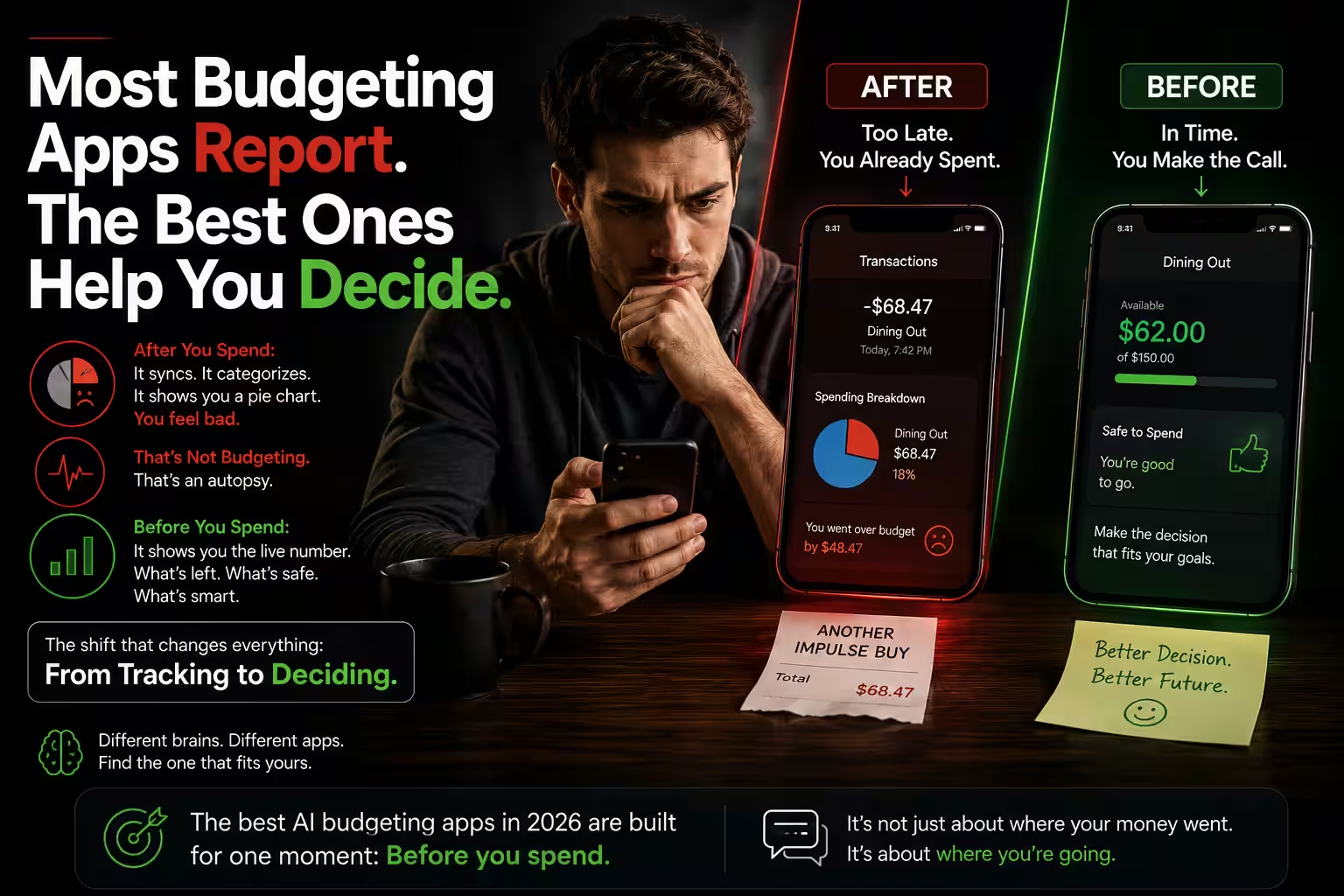
Let’s get this out of the way. The problem with most budgeting apps isn’t the app. It’s what the app does after you spend money.
Most of them report. They don’t prevent.
You buy something stupid. It syncs. The app puts it in a category. You look at the pie chart and feel bad. That’s it. That’s the whole experience. You didn’t make a better decision — you got a slightly colorful receipt.
That’s not budgeting. That’s an autopsy.
What changes the behavior is knowing before. A live number. The amount you have left in a category before the card hits the terminal. That’s the shift — from tracking to deciding. And the best AI budgeting software in 2026 is built around that exact moment.
The question is which one fits the way your brain works.
Key Budgeting Terms, Defined
What is zero-based budgeting?
Zero-based budgeting gives every dollar of income a specific job until nothing is left unassigned.
You divide your money across bills, groceries, savings, and fun before you spend a cent. It works because it forces spending decisions upfront, which is why a zero-based budgeting app like YNAB reduces overspending.
What is an AI budgeting app?
An AI budgeting app uses machine learning to categorize transactions and learn your spending patterns automatically.
Instead of manual data entry, the app reads your bank activity and surfaces insights in real time. Tools like Copilot Money and Monarch Money turn raw transactions into a clear picture of where your money goes.
What are sinking funds?
Sinking funds are savings categories where you set aside a little each month for a known future expense.
Think car repairs, holidays, or annual subscriptions. When the bill lands, the money is already waiting — turning a financial surprise into a planned expense you barely feel.
Preventive vs reactive budgeting — what’s the difference?
Reactive budgeting reports what you already spent; preventive budgeting shows what you have left before you spend it.
An overspending prevention app wins by being preventive — giving you a live number at the moment of decision, not an autopsy after the fact. That single shift is what changes spending behavior.

Quick Comparison: YNAB vs Copilot Money vs Monarch Money
| Feature | YNAB | Copilot Money | Monarch Money |
|---|---|---|---|
| Budgeting Method | Zero-based | AI-automated | Holistic cash flow |
| AI Expense Categorization | Yes | Yes — learns over time | Yes + receipt scanning |
| Net Worth Tracking | Basic | Yes (crypto + real estate) | Full equity tracking |
| Couples / Shared Budgets | YNAB Together plan | No | Household collaborators |
| Bill Reminders | Yes | Yes | Yes |
| Platform | iOS, Android, Web | iPhone, iPad, Mac, Web | iOS, Android, Web |
| Price (2026) | ~$109/year | ~$95–107/year | ~$99.99/year |
| Free Trial | 34 days | 30 days | 7 days |
| Best For | Overspenders | Solo Apple users | Couples & households |
Summary: YNAB is the strongest zero-based budgeting app for stopping overspending, Copilot Money is the best automated budget tracking tool for Apple users across iPhone, iPad, Mac, and Web, and Monarch Money is the best budgeting app for couples and complex households.

YNAB: Built for People Who Keep Falling Off Track
Here’s who YNAB is for. You earn decent money. You’re not reckless. But at the end of the month, you genuinely don’t know where it went.
Sound familiar?
YNAB runs on zero-based budgeting. The idea is blunt: every dollar you earn gets a job before you spend it. Rent gets a job. Groceries get a job. That vague “fun stuff” feeling you’ve been spending on? That gets a job too. Once the job is assigned, the guesswork stops.
It sounds like a lot of work. It’s actually less work than what you’re doing now — running numbers in your head at the register and hoping for the best.
YNAB — Quick Facts
- Budgeting style Zero-based budgeting (every dollar gets a job)
- Best for Overspenders breaking the paycheck-to-paycheck cycle
- Platforms iOS, Android, Web
- Price (2026) ~$109/year
- Free trial 34 days
- Main weakness Requires manual upkeep; thin investment tracking
The 2026 version added a feature called “Current Goal” — a single mission pinned to your home screen every time you open the app. One number. One target. Nothing buried in a menu. It’s a small thing that turns discipline into habit because you can’t avoid seeing it.
YNAB Together, the shared plan, now shows “Recent Moves” — who moved money between categories, complete with their avatar. Useful when you and your partner both manage the budget and someone shifted the grocery money into “dining out” again. No blame, no mystery. The app just shows you.
92% of users report less financial stress within a month of using YNAB. That’s a number they publish from their own research, and I believe it — not because the app is magic but because the method forces you to make decisions before spending, not after.
The weak spots. Getting started takes effort. If you miss a week and come back to a backlog of uncategorized transactions, catching up is a slog. A lot of people quit before the method clicks. Also, YNAB’s investment tracking is thin. If you have RSUs or a complex portfolio, you’ll need something else for that piece.
Best for: Anyone stuck in the paycheck-to-paycheck loop even on a decent income. People who want to build a real habit, not just watch a dashboard.
YNAB — What We Like and What to Watch
- Zero-based method changes your spending behavior
- Long 34-day free trial to test it properly
- Strong for breaking the paycheck-to-paycheck cycle
- Shared “Together” plan for partners
- Requires consistent manual upkeep
- Steeper learning curve than automated apps
- Thin investment and equity tracking

Copilot Money: The Hands-Off AI That Learns Fast
Copilot asks very little of you. That’s the whole pitch.
You connect your accounts. It watches. After a few weeks, it starts to know you. The charge showing up as “SQ*HARBOR COFFEE” gets filed under coffee without you touching it. The $52 Trader Joe’s run lands in groceries, not household supplies. You stop fixing its mistakes. Eventually you stop thinking about it.
Copilot Money — Quick Facts
- Budgeting style AI-automated tracking and categorization
- Best for Solo Apple users who want a hands-off AI expense tracker
- Platforms iPhone, iPad, Mac, Web
- Price (2026) ~$95–107/year
- Free trial 30 days
- Main weakness No couples mode; Apple-focused; passive by design
That’s the goal. An AI app that tracks all your spending automatically — and does it quietly, without asking you to rate every purchase or assign every dollar a category name.
The investment side is where Copilot pulls ahead of the other two for solo users. It links to crypto wallets, pulls Zillow estimates for real estate, and puts your full net worth in one view. All of that for $107 a year is genuinely good value.
One feature that gets overlooked: Rollovers. Say you budget $200 for entertainment and only spend $130 this month. The leftover $70 automatically carries into next month. No decision required. That one thing alone removes a weird amount of friction.
The weak spots. Copilot is iOS only. Full stop — if you’re on Android, close this tab.
It also has no couples mode. You can technically share login credentials, but there’s no collaborative layer, no ownership icons, nothing built for two people managing money together.
And it’s passive. Copilot is excellent at showing you what happened. It’s not going to tell you what to do next. If you need that kind of direction — if you want the app to hold you accountable — Copilot will feel like it’s not paying attention.
Best for: iPhone users who want automated budget tracking without the manual work. Solo earners who want spending clarity without a system to maintain.
Copilot Money — What We Like and What to Watch
- AI learns your categories and gets sharper over time
- Slickest Apple experience across iPhone, iPad, Mac, and Web
- Low-effort automation that runs quietly in the background
- Strong AI expense categorization and net worth tracking
- Apple-only — no Android app
- No shared or couples mode
- Passive by design — won’t change spending habits on its own
- Shorter 30-day trial than YNAB’s 34 days

Monarch Money: The One Built for Couples and Complex Households
Monarch Money is the hardest one to summarize because it does the most. That’s its strength and, honestly, its one real weakness.
Start with the AI assistant. Monarch didn’t build a chatbot that regurgitates generic tips. They trained it with input from Certified Financial Planners and PhDs. You can ask it something like “why did my net worth drop this month?” and get an actual, specific answer — not a redirect to a help article.
Monarch Money — Quick Facts
- Budgeting style Holistic cash flow, net worth, and shared budgeting
- Best for Couples and complex households with investments or equity comp
- Platforms iOS, Android, Web
- Price (2026) ~$99.99/year
- Free trial 7 days
- Main weakness Occasional sync reliability issues; short 7-day trial
The Receipt Scanning feature fixes something that drives me crazy about other apps. When you spend $190 at Costco, most apps throw the whole thing into “Shopping.” Done. Monarch splits that same charge into groceries, household, electronics — automatically. If you’re tracking spending categories automation across a real budget, that difference matters every single month.
For couples, the Ownership Icons are the feature that changes everything. Every transaction shows who made it. No more “did you buy this?” conversations. The Sankey diagram — a visual flow chart of where income goes — gives both partners the same picture at the same time. I’ve seen this feature specifically credited with reducing money arguments in households because it removes the information gap that causes most of them.
Equity compensation tracking is in a class by itself here. If you receive RSUs, ISOs, or NSOs as part of your comp package, Monarch tracks vesting schedules alongside your cash flow. Most people handling that kind of compensation are either using a separate spreadsheet or ignoring it entirely. Monarch brings it into the same view as your monthly budget.
The weak spots. Sync reliability is a recurring complaint. Fidelity and PayPal connections drop more than they should. When a linked bank account goes dark for two days, the whole “effortless” experience breaks down fast.
The free trial is only 7 days. Not enough time to feel the value.
Best for: Couples. High-income households with investments and equity comp. Anyone who wants a Monarch Money review from someone who’s actually dug into the equity features — they’re real and they’re useful.
Monarch Money — What We Like and What to Watch
- Shared household budgeting for couples and collaborators
- Full net worth and equity tracking in one dashboard
- Receipt scanning keeps transactions organized
- True cross-platform access on iOS, Android, and Web
- Occasional sync reliability issues with linked accounts
- Short 7-day free trial leaves little time to test
- Less behavior-changing than YNAB’s zero-based method

The One Feature All Three Get Right: Sinking Funds
This deserves its own section because most people skip it — and it’s the habit that removes more financial stress than anything else on this list.
Sinking funds work like this. Your car will need repairs at some point. You don’t know exactly when. So you put $50 a month into a “Car Repairs” category and leave it there.
Then the $800 bill shows up. And it’s not a crisis. It’s an inconvenience.
A real YNAB user in 2026 described it exactly that way. Car needed major work — thousands of dollars. Wasn’t an emergency. The money was already there, already assigned. That’s the line between white-knuckling your budget and actually being worry-proof.
All three apps support sinking funds in some form. Copilot’s rollovers do this passively. YNAB and Monarch let you build dedicated categories with monthly targets. Either way, the concept turns financial surprises into planned expenses — and that one shift makes the $100 monthly fee for any of these apps worth it.
Which App Should You Actually Use?
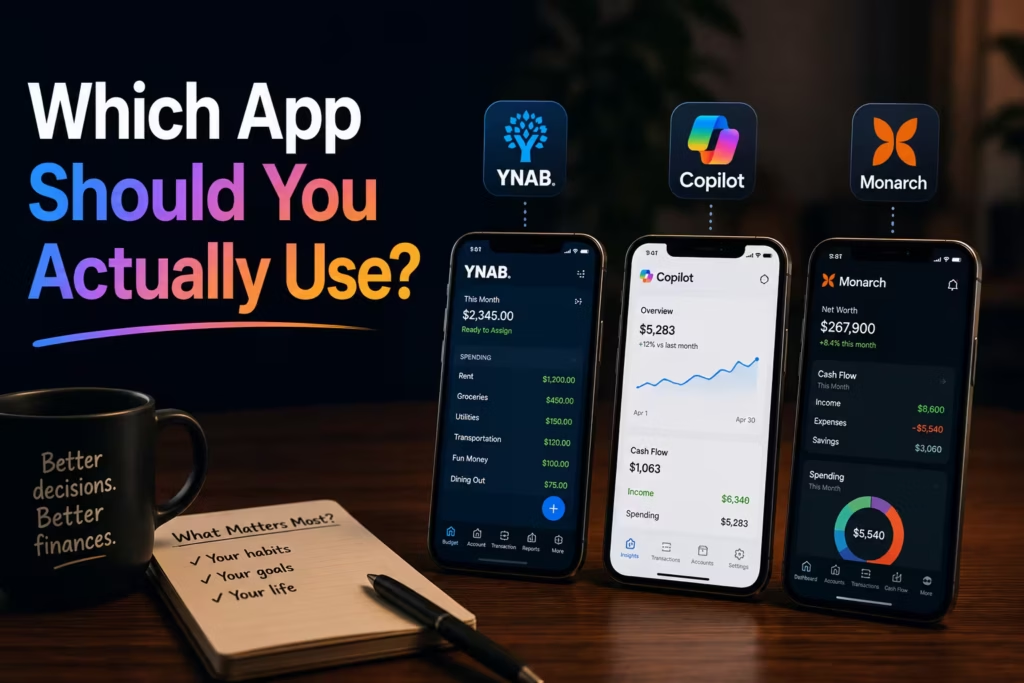
No single winner.
If your core problem is overspending because you never know what’s left — use YNAB. The zero-based method forces you to decide before you spend. The 34-day trial is long enough to feel the difference.
If you’re on iPhone and want automation that stays out of your way — use Copilot. Set it up once, let it learn, check in weekly. No maintenance required.
If you share finances with a partner, or you have investments and equity comp alongside your regular budget — use Monarch. The collaboration layer and the AI assistant built on actual financial expertise put it in a different category for complex households.
Marcus, the guy we opened with, tried all three. He’s on Monarch now. Not because of the feature count. Because his partner uses it too — and the ownership icons killed three arguments in the first month. He mentioned the Sankey diagram to me specifically. Said it was the first time money ever made visual sense to him.
That’s what a good AI budgeting app does. It doesn’t bury you in data. It closes the gap between knowing and doing. That gap is where overspending lives.
People Also Ask
What is the best AI budgeting app for couples in 2026?
Monarch Money. It supports unlimited collaborators, displays who made each transaction, and includes an AI assistant trained by financial professionals. The shared cash flow visibility alone makes financial conversations easier for most households.
YNAB vs Monarch Money — which is actually better?
Depends on your situation. YNAB wins for building discipline and breaking the paycheck-to-paycheck cycle through zero-based budgeting. Monarch wins for couples, complex households, and anyone tracking investments or equity compensation. Both are strong. The difference is method, not quality.
Is Copilot Money worth it for budgeting?
Yes, if you’re on iOS and want spending categories automation without constant manual input. The AI categorization gets accurate fast, the investment tracking is solid, and the hands-off design is genuinely rare. If you’re on Android, it’s not an option.
What is zero-based budgeting and does it actually work?
Zero-based budgeting means giving every dollar of income a specific job before you spend it. Nothing sits in a vague “whatever” pile. YNAB built its entire product around this method, and 92% of users report measurably less financial stress after one month. It works — but it requires you to show up.
Are AI budgeting apps safe with linked bank accounts?
Reputable apps connect through read-only services like Plaid, Finicity, or MX. These can see your transactions but have zero ability to move or transfer funds. Monarch Money also holds SOC 2 certification, which is a verified third-party security audit. Enable multifactor authentication on every financial app. Non-negotiable.
Which app is best for subscription tracking?
All three handle subscriptions. If subscription cancellation and bill negotiation are your main goals, Rocket Money is the more focused option — they negotiate bills directly with providers and only charge a fee if they succeed.
Disclaimer: This post is for informational purposes only and does not constitute financial advice. App pricing and features are subject to change. Verify current terms directly with each provider before subscribing.
Enjoying our content?
Click below to add us as a preferred source. Google will prioritize our latest articles in your Top Stories, AI Mode, and AI Overviews.
Preferred Source on Google