Scammers Cost Victims $3,690 a Call — Here’s the Best AI App for Blocking Scam Calls and Texts


Consumer Security Analyst | AI Call Screening, Scam Prevention & Phone Fraud Research
Choosing the best AI app for blocking scam calls and texts in 2026 isn’t optional anymore — it’s the difference between a quiet phone and a $3,690 mistake. Americans lost $12.5 billion to fraud in 2024, up 25% year over year, and phone-based scams alone cost victims $2.9 billion — part of the same landscape covered in our guide on how AI detects financial fraud in 2026.
What is the best AI app for blocking scam calls and texts?
The best option depends on your risk profile. Gini Help is the best overall for combined call and SMS protection, Scammer Guardian is best for senior protection, Cloaked is best for privacy-first prevention, and Nomorobo is best for low-cost robocall blocking.
Gini Help
Best for users who want scam call screening and text protection in one app.
Scammer Guardian
Best for higher-risk households that want stronger call interception and caregiver-focused safety.
Cloaked
Best for reducing future scam exposure through data removal and masked number aliases.
Nomorobo
Best for affordable robocall filtering in households that mainly want baseline spam protection.
View how to choose the right app ⌄
No single scam-blocking app is best for everyone. The right choice depends on what kind of fraud risk matters most in your household.
- Choose Gini Help if you want one tool for both suspicious calls and scam texts.
- Choose Scammer Guardian if you are protecting an older parent or grandparent from high-pressure phone scams.
- Choose Cloaked if your goal is long-term privacy and reducing how often scammers get your real number.
- Choose Nomorobo if you mainly want lower-cost robocall blocking rather than advanced AI screening.
Pricing, features, and platform support can change. Confirm current details directly with each provider before making a purchase decision.
Yet most people still rely on the same caller ID blocklist their phone shipped with, a tool built for a threat that no longer looks like 2026’s. This guide compares the top AI scam call blocker apps side by side, so you can match the right tool to your risk instead of guessing.
That gap between old defenses and current scams is the whole story here. Not every app on the market closes it.
The 7 Things You Need to Know
Skip to the essentials. Here’s what our testing revealed about blocking scam calls and texts in 2026.
-
1
The best AI app for blocking scam calls and texts uses conversational AI screening, filtering roughly 80% of unknown traffic before your phone rings.
-
2
A “verified” caller ID no longer means safe — 43% of spam traffic now carries the highest STIR/SHAKEN attestation level.
-
3
Gini Help is the best all-around pick, covering calls, email, and SMS together for $5.99 a month.
-
4
Scammer Guardian is the top choice for seniors, thanks to its zero-ring policy and voice biometric analysis.
-
5
Cloaked leads for privacy by removing your data from broker sites instead of reacting to spam after it arrives.
-
6
Nomorobo is the best budget spam call blocking app at $1.99 a month for scam-aware households.
-
7
No single app wins every category — match the tool to your specific risk, not to star ratings.
Best AI App for Blocking Scam Calls and Texts by Use Case
Short on time? Tap any card to see the full breakdown.
The strongest all-around AI app for blocking scam calls and texts. It screens calls, email, and SMS together, then warns you with a discreet haptic alert mid-call — all for just $5.99 a month.
Its zero-ring policy and voice biometric analysis stop live-human and cloned-voice scams before the phone ever rings. That makes it the safest choice for protecting older relatives from grandparent scams.
Instead of reacting to spam, Cloaked removes your data from 1,000+ broker sites and issues masked number aliases. That cuts scams off at the source and shrinks how many new scammers ever reach you.
At just $1.99 a month, this spam call blocking app disconnects known robocallers after a single ring. It’s a smart, low-cost pick for scam-aware households that want baseline coverage.
No other tool ties call and SMS threats into one connected picture as cleanly. A suspicious text and its follow-up call get caught as a single scam, not two separate problems.
Who should use this scam-call protection guide?
This guide is designed for readers comparing the best ways to block scam calls, robocalls, and suspicious texts — especially when basic caller ID protection is no longer enough.
People getting frequent scam calls
Useful for anyone dealing with repeated robocalls, spoofed numbers, or suspicious callers that keep slipping past standard spam filters.
Users who want call and text protection
Built for readers looking for one tool that can help with both scam calls and scam texts, not just phone-based spam alone.
Families protecting older adults
Especially relevant for adults helping parents or grandparents avoid high-pressure phone scams, voice impersonation, or urgent fake-family calls.
Privacy-conscious households
Helpful for users who want to reduce future scam exposure by limiting how often their real number gets shared, exposed, or resold.
See whether this guide matches your situation ⌄
This guide will be most useful if you are trying to choose between low-cost robocall blockers, AI call screening apps, senior-focused protection tools, or privacy-first services that reduce scam exposure over time.
- You want to compare AI call screening with simpler spam-blocking apps.
- You receive suspicious texts followed by scam calls and want more complete protection.
- You are evaluating which app makes the most sense for an older family member.
- You want a practical breakdown of pricing, tradeoffs, and real-world use cases rather than generic app-store rankings.
Table of Contents
Why Doesn’t Your “Verified” Caller ID Actually Mean the Call Is Safe?
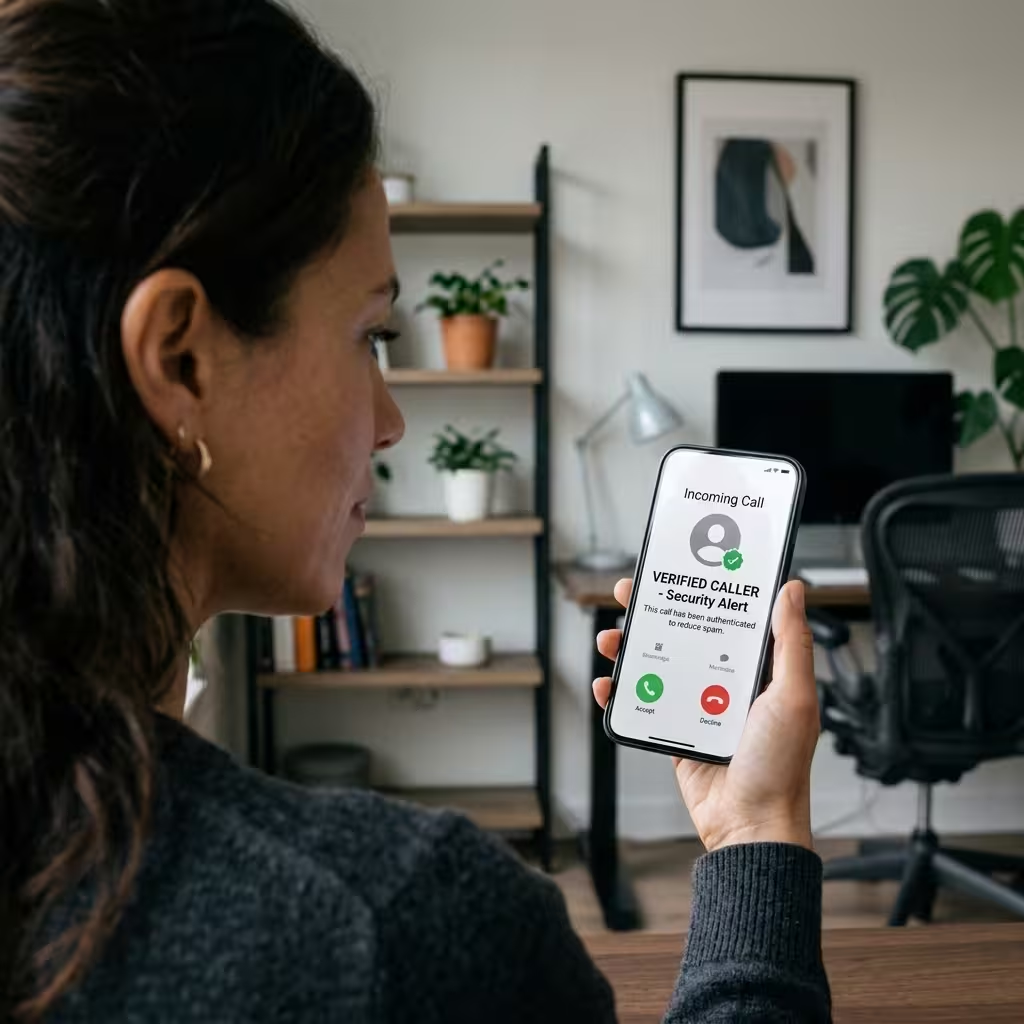
A verified caller ID does not always mean a call is safe. Caller authentication frameworks can help reduce spoofing, but scam calls can still appear verified when bad traffic passes through carrier gaps or improperly signed routes.
Here’s something most people don’t know. It should bother you. Under the STIR/SHAKEN framework, calls get an attestation level meant to signal trust. A-level is the highest tier. Full carrier confidence in the caller’s identity. Right now, 43% of spam traffic carries A-level attestation. A staggering number. Not because scammers cracked the system. Because some carriers sign calls improperly, handing fraud traffic the same green light as your bank.
So that “verified” checkmark on your screen? Tells you almost nothing now. Only 21% of calls from smaller carriers get properly authenticated at all, compared to 84% between major Tier-1 networks. Scammers know exactly where that gap sits. They route through it — smaller operators, international VoIP gateways, whatever slips past the system. This is the real reason caller ID reputation, on its own, can’t protect you in 2026. It was never built for traffic this well disguised.
How Does AI Call Screening Stop Scams That Blocklists Miss?
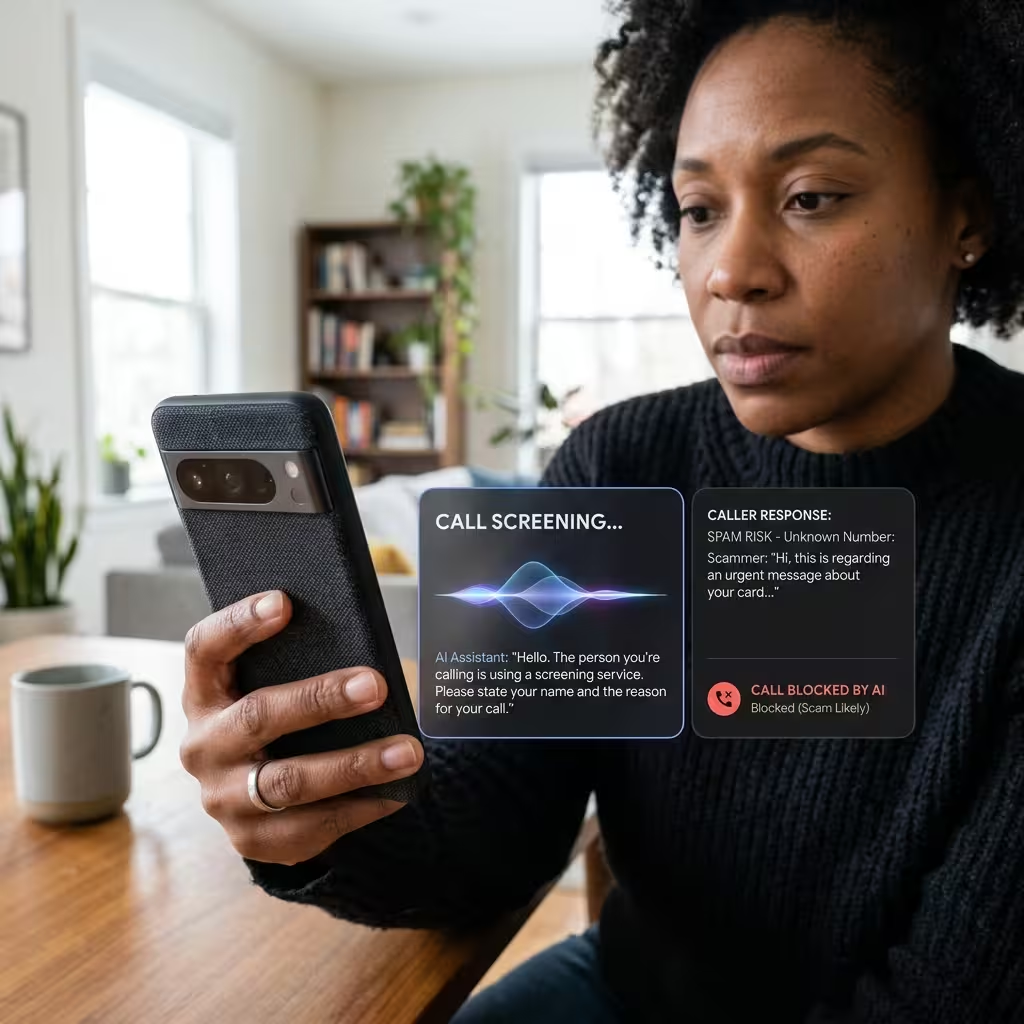
AI call screening works by intercepting unknown callers before the phone rings, asking who they are and why they are calling, and evaluating scam signals in real time. This helps catch spoofed or scripted scam calls that blocklists often miss.
Database blocklists check a number against a list of known bad actors. Simple idea. Fatal flaw: a brand-new spoofed number doesn’t exist on any list until after it’s already scammed someone. Scammers exploit this constantly through “snowshoeing.” Rotating across tens of thousands of numbers so no single one gets flagged long enough to matter.
Conversational AI screening works differently. This is the real shift defining 2026’s best tools. Instead of checking a number against a database, the AI intercepts the call before your phone even rings. It holds a real conversation with the caller, using natural language processing to ask who they are and why they’re calling. Scripted scam patterns and robotic cadences get caught right there in the exchange. Real, unlisted callers — the plumber, a new client — get through fine. No problem at all. Roughly 80% of unknown traffic gets filtered this way, according to current data on these systems.
That’s the real difference. Reacting to a known threat versus evaluating an unknown one in real time. One approach only works after the damage is already documented somewhere. The other doesn’t need documentation. It watches, listens, decides.
Scam-Call Glossary
A few terms come up again and again in this guide. Tap any card to see what it actually means.
Technology that automatically evaluates unknown callers before your phone rings, deciding whether to let the call through, block it, or send it to voicemail.
A caller authentication framework used by phone carriers to sign calls with a trust level, or attestation. A-level is the highest tier, but improper signing lets scam traffic carry the same “verified” label as legitimate callers.
The AI intercepts a call and holds a real dialogue with the caller, using natural language processing to ask who they are and why they’re calling. Scripted scam patterns get caught in the exchange, while genuine callers pass through.
A spam tactic where scammers rotate across tens of thousands of phone numbers, so no single number gets flagged long enough for a blocklist to catch it.
Best AI Apps for Blocking Scam Calls and Texts in 2026
The best app depends on what kind of protection matters most. Some tools focus on real-time AI call screening, some prioritize scam text protection, some are designed for seniors, and others reduce exposure by removing your data from broker networks.
No single app wins every category. Anyone claiming otherwise is selling you something. What actually matters is matching the tool to your specific risk. Here’s how the major players stack up.
| Platform | Primary Method | Monthly Cost (USD) | Best Use Case |
|---|---|---|---|
| Scammer Guardian | Pre-call AI screening (GPT-4o) | $29.00–$39.00 | High-risk individuals, senior protection |
| Cloaked | Data removal + masked aliases | $9.99–$12.49 | Privacy-conscious users, root-cause prevention |
| Gini Help | Multi-channel AI + haptic alerts | $5.99 | Comprehensive protection across calls, email, SMS |
| Truecaller | Crowdsourced directory + AI assistant | $9.99 (Premium) | General users needing a large ID database |
| Hiya | Deepfake/spectrum scanning | $3.99 | Users targeted by voice cloning or vishing |
| Robokiller | Answer-bot decoys | $4.99 | Consumers who want to waste scammers’ time |
| YouMail | Audio captcha + disconnected tones | Free–$4.99 | Users looking to trick automated dialers |
| Nomorobo | Simultaneous-ring blocklist | $1.99–$4.17 | Budget-conscious, scam-aware households |
No apps match that filter.
Protecting yourself against sophisticated live-human scammers? Blocklist-only tools like Nomorobo won’t cut it alone. Want cheap, baseline coverage against bulk robocalls instead? No need to pay $39 a month for enterprise-grade AI screening then. The price gap between these tools reflects a real gap in what they actually do. Not marketing. Function.
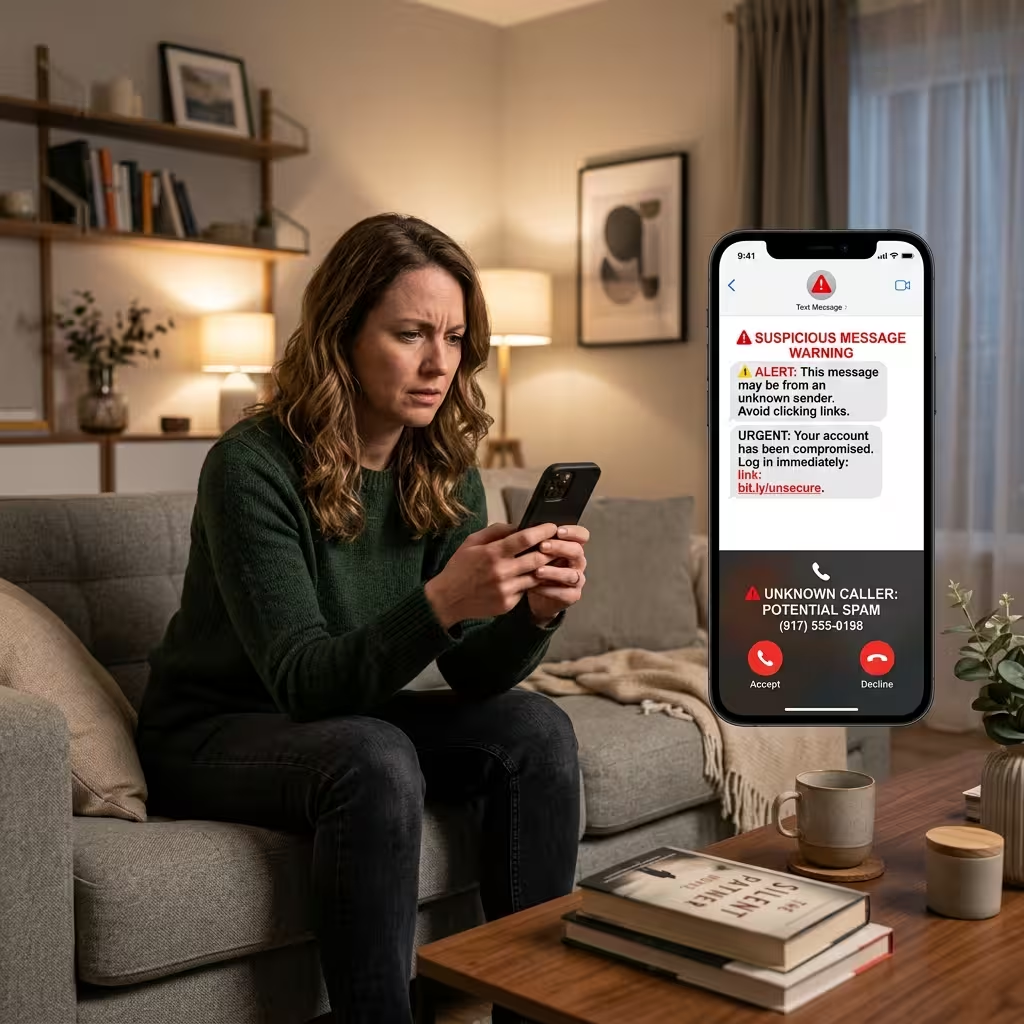
Which App Actually Stops SMS and Text-Based Scams?
Calls aren’t the only front anymore. Scammers now run coordinated campaigns. A fake DMV text with a link, followed almost immediately by a phone call to “confirm” the fake alert. Each piece makes the other look more credible. That’s the whole trick.
What to Look for in an AI App for Blocking Scam Calls and Texts
Not every spam call blocking app does the same job. Tap any card to see what separates a strong AI scam blocker from a basic one.
The best app uses conversational AI that intercepts unknown callers before your phone rings, instead of checking numbers against a static list. Real-time screening catches brand-new spoofed numbers that blocklists miss entirely.
Scammers pair a fake text with a follow-up call to look credible. Look for spam text blocking built into the same tool, so calls and texts get evaluated as one connected threat rather than two separate problems.
If you’re protecting an older relative, prioritize a zero-ring policy, voice biometric analysis to catch cloned voices, and caregiver alerts. These features stop the split-second pressure that makes grandparent scams work.
Match the cost to your actual risk. A high-risk household justifies premium screening, while a budget-conscious user only needs baseline robocall coverage. Don’t overpay for features you won’t use.
Some apps react to spam; others prevent it. A privacy-first tool removes your data from broker lists and masks your real number, shrinking how many new scammers ever reach you.
Gini Help is built specifically for this. It runs AI analysis across voice, email, and SMS at once, so a suspicious text and a suspicious call get evaluated as part of the same threat picture instead of two separate problems. Answer a call, and if the AI detects high-pressure tactics or a request for personal data mid-conversation, it sends a discreet haptic vibration to warn you. No tipping off the caller. Family plans extend that same threat intelligence across every device in the household.
Most single-purpose call blockers skip this entirely. They stop at the phone app and leave your texts exposed, which matters given how often the two channels get combined in a single scam attempt now.

Privacy-First Scam Protection vs Reactive Call Blocking
Every app on that table above reacts to spam after it starts arriving. Cloaked takes a different position. Stop the calls before they start, by cutting off the data that fuels them in the first place. Personal information sitting on over 1,000 data broker sites is exactly what feeds targeted scam lists, and Cloaked’s core service scrubs that exposure directly.
It also issues masked phone number aliases for every account or business relationship. Sign up somewhere sketchy, and that specific alias starts getting spammed. Fine. Disable that one number. Your real number never touches the exposure. Cloaked backs this with a $1 million identity theft insurance policy, which matters given how often a phone number leak turns into a bigger identity fraud problem down the line.
This won’t stop a scammer who already has your number today. Nothing will, honestly. No app fixes that. What it does is shrink how many new scammers get it tomorrow. A long-term fix. Not an instant one.

Is Scammer Guardian Worth It for Protecting Seniors From Scams?
The best scam call blocker for seniors is the one that reduces split-second decision-making. Features like zero-ring screening, caregiver alerts, and voice-risk detection are often more useful than a basic spam label.
Older adults lost $2.4 billion to fraud in 2024. A fourfold jump since 2020. Phone-based scams produce the highest median individual loss of any contact method at $2,210. The “grandparent scam” — a caller posing as a distressed relative, sometimes using an AI-cloned voice — remains one of the most damaging tactics out there, specifically because it doesn’t feel like a scam in the moment. It feels like family.
Scammer Guardian, launched in May 2026, runs what it calls a zero-ring policy. The phone doesn’t ring at all until the AI verifies the caller as legitimate. That removes the split-second judgment call seniors get pressured into making with traditional “Scam Likely” labels. Its premium tier adds real-time voice biometric analysis to catch cloned voices mimicking a family member, and it sends live SMS transcripts to a designated caregiver the moment a scam gets blocked.
For more on how these cloned-voice attacks work and why a safe word still beats software, see AI generated voice scams: how to detect a cloned voice
At $29 to $39 a month, it’s the most expensive option here by a wide margin. For a household actively worried about a parent or grandparent falling for a live-human scam call, that cost buys a layer of protection blocklist app don’t offer. Full stop.
How We Evaluated These AI Apps for Blocking Scam Calls and Texts
Most app roundups rank tools by star ratings and call it research. That approach falls apart the moment a “top-rated” app misses a live-human scam call. So we scored every tool against how it holds up in real conditions, not how it demos in the app store.
Here are the six criteria that shaped every pick.
- AI screening method. Blocklist-only tools react to numbers already reported. An AI call screening app intercepts unknown callers and evaluates them in real time. We favored conversational screening because it catches brand-new spoofed numbers a database has never seen.
- SMS and multi-channel coverage. Scammers pair a fake text with a follow-up call. A spam call blocking app that ignores texts leaves half the attack open. We checked whether scam text blocking runs in the same system, so both channels get read as one threat.
- Senior safety features. The grandparent scam works because it doesn’t feel like a scam. We weighted a zero-ring policy, voice biometric analysis, and caregiver alerts heavily for anyone protecting an older relative.
- Pricing versus threat model. A $39 tool is overkill for someone who only gets bulk robocalls. A $1.99 blocklist won’t stop a scripted live caller. We matched cost to actual risk, not feature-list length.
- Privacy approach. Reactive blocking waits for spam to arrive. Preventive tools remove your data from broker sites before scammers ever buy it. Both matter. We flagged which does which.
- Source verification. We pulled pricing and features from official pricing pages and app store listings, and grounded fraud figures in FTC data. No claim rests on marketing copy alone.
That is why the best app to block scam calls and texts changes by person. An AI scam blocker built for seniors solves a different problem than a budget robocall filter. We tell you which is which, then let your threat model decide.
Pricing and features change. Confirm current details with each provider before you buy.
What Should You Actually Do Right Now?
Start with your threat model. Not the app store’s star ratings. High-risk senior in the household? Scammer Guardian’s pre-call interception justifies its price. Worried about long-term exposure instead of an immediate threat? Cloaked’s data removal approach addresses the root cause, not the symptom. Need calls and texts covered together on a budget? Gini Help runs $5.99 a month and covers both channels.
Native OS tools help too. Cost nothing extra. Android’s Fake Call Detection and iOS 26’s “Ask Reason for Calling” both add a baseline AI screening layer before you download anything third-party. Layer that native protection under whichever paid app fits your situation.
One habit matters more than any app on this list. Never engage with a suspected spam call. Answering confirms your number is active, and active numbers get sold on “sucker lists” — the exact databases scammers use to decide who gets targeted next.
What this scam-call guide does not promise
This guide compares tools for blocking scam calls and texts, but it does not suggest that any app offers perfect protection, universal compatibility, or a guaranteed security outcome.
No scam-blocking app can stop every spoofed call, scam text, cloned voice attack, or socially engineered fraud attempt.
Not a guarantee of total protection
Scam tactics evolve quickly, and even strong AI call screening tools can miss new spoofing methods, live-human pressure tactics, or cross-channel fraud attempts.
Not a promise of identical features everywhere
Pricing, mobile platform support, carrier integrations, and feature availability can differ across iPhone, Android, regions, and subscription tiers.
Not a substitute for checking providers directly
Product pages, app-store listings, and plan details change over time, so readers should confirm current pricing and capabilities before purchasing.
Not a replacement for safe habits
Even the best app works better when paired with basic caution, such as avoiding suspicious links, not sharing personal data on unexpected calls, and verifying urgent claims independently.
See how to use this guide correctly ⌄
This guide is meant to help readers compare strengths, tradeoffs, and likely use cases across major scam-call protection tools. It is not legal, financial, or personal security advice.
- Treat caller ID labels and scam warnings as signals, not guarantees.
- Use this guide to match an app to your risk level, budget, and household needs.
- Verify pricing, compatibility, and current features directly with each provider before making a decision.
- Combine app-based protection with safe phone habits for stronger overall defense.
People Also Ask
List best AI app for blocking scam calls and texts?
No single answer fits everyone. Scammer Guardian leads for high-risk senior protection. Cloaked leads for long-term privacy and root-cause prevention. Gini Help covers calls, email, and SMS together at the lowest cost among the multi-channel options.
Can scammers get past AI call screening?
No system catches everything. But conversational AI screening filters roughly 80% of unknown traffic by holding a real dialogue with the caller before your phone rings. That’s a meaningfully higher catch rate than reactive blocklists, which miss any number not already reported.
Is STIR/SHAKEN still useful if scammers can get A-level attestation?
Still useful against unsophisticated spoofing. Not enough as your only defense. With 43% of spam traffic carrying the highest attestation level due to improper carrier signing, a “verified” label alone doesn’t confirm a call is safe.
Do I need a paid app, or are free options enough?
YouMail offers a free tier. Native OS features like Android’s Fake Call Detection cost nothing too. Free tools handle bulk robocalls reasonably well. Sophisticated, targeted scams — especially against seniors — generally need a paid, conversational AI tool to catch reliably.
How do scam text messages tie into phone scams?
Fraudsters increasingly run both together. A fake alert by SMS, then a phone call to “confirm” it. Each piece makes the other look more legitimate. Multi-channel tools like Gini Help evaluate texts and calls as one connected threat instead of separately.
Does answering an unknown number actually make things worse?
Yes. Answering confirms the number is active, and active numbers get added to sucker lists that are resold among scam operations. That increases how often that number gets targeted going forward.
This article is for general informational purposes only and does not constitute professional security or financial advice. Pricing and features are subject to change; confirm current details directly with each provider.
Editorial Integrity
Sources & Citations
⌄
Editorial Integrity
Sources & Citations
Sources & Citations
FTC Fraud Data, Caller Authentication Context, Official App Documentation & Source-Backed Scam Prevention Research
Every major statistic, pricing reference, and product claim in this article was checked against a primary, official, or clearly attributable source. Scam-call apps are often marketed as if a “verified” caller ID, a large spam database, or an AI label alone can stop modern fraud. This review instead relies on FTC fraud reporting, caller-authentication context, official app listings, and provider documentation to separate baseline robocall filtering from higher-trust protections like conversational AI screening, SMS threat analysis, and senior-focused safeguards. Features, detection behavior, and pricing can change, so readers should confirm current details directly with each provider before making a decision.
- FTC Consumer Sentinel Network (2024): FTC press release — $12.5 billion in fraud losses, 2024 — used for the article’s broader fraud-loss context, the year-over-year increase in reported losses, and FTC confirmation that phone contact remains one of the most common scam channels reported by consumers.
- FTC Top Scams of 2024 (Consumer Alert): FTC consumer alert — top scams, 2024 — referenced for phone-scam loss context, including how costly phone-based contact can be for victims relative to other scam channels.
- Robocall Loss Data (U.S. PIRG / FTC, H1 2025): CBS News — robocalls on the rise, 2025 — cited for the reported average loss per robocall scam victim and the rise in phone-scam losses, based on PIRG analysis of FTC complaint data.
- FTC Older Adults Fraud Data (2024): FTC annual report to Congress — older adult fraud losses, 2024 — used in the article’s senior-protection section to support claims about fraud losses affecting adults aged 60 and over and the increased need for zero-ring, caregiver-aware, and higher-trust protections.
- STIR/SHAKEN and Caller Authentication Context: Referenced for the article’s discussion of why a “verified” caller label does not guarantee safety on its own. Current implementation details, carrier filings, and mitigation updates should be checked against the FCC Robocall Mitigation Database and current carrier documentation, as authentication coverage and enforcement conditions can change.
- Cloaked Pricing & Data Removal Coverage: Cloaked official pricing page — used for pricing, masked alias positioning, and data-removal coverage claims relevant to the article’s privacy-first protection analysis. Insurance terms and exact plan features should be verified directly with Cloaked before purchase.
- Gini Help Pricing & Features: Gini Help — Apple App Store listing — used for pricing, AI scam-protection positioning, and product-feature references tied to call screening and multi-channel protection. Also available on Google Play. Subscription details and feature availability should be confirmed directly with the provider before purchase.
- Scammer Guardian, Truecaller, Hiya, Robokiller, YouMail, and Nomorobo: Comparison-table pricing and feature references are based on each provider’s official product pages, public documentation, or app listings available at the time of review. Because scam-blocking apps change pricing, features, and platform support frequently, readers should verify current details directly with each provider before relying on a comparison point.
Our Editorial Standards
Tech Capital Hub applies Google’s E-E-A-T framework to every article on scam-call protection, spam-text blocking, and consumer fraud prevention, prioritizing primary fraud data, official carrier and provider documentation, and source-backed product analysis over generic listicles, app-store hype, or unsupported security claims.
View how our editorial standards apply to this article ⌄
Grounded in Real Scam-Call Conditions
This article is framed around how scam calls and spoofed texts actually reach people in practice, not how security apps describe themselves in marketing. We focus on real user risk: unknown callers that look verified, coordinated SMS-plus-call campaigns, live-human social engineering, and the practical difference between a basic blocklist and AI screening that evaluates a caller before the phone rings.
Focused on AI Screening and Threat Detection Limits
Coverage explains how conversational AI screening, scam-text detection, voice-risk signals, and cross-channel threat analysis work in consumer tools. We also highlight where protections are limited — including spoofed numbers that evade blocklists, verified labels that create false trust, and the reality that no scam-blocking app catches every targeted or socially engineered attack.
Primary Source and Official Documentation Preference
Claims are anchored to primary and official sources, including FTC fraud reporting, carrier and caller-authentication context, official app-store listings, vendor pricing pages, and cited industry reporting where relevant. We do not treat promotional copy, vague “AI-powered” claims, or affiliate-style roundup language as sufficient support for statements about scam detection effectiveness, pricing, or security outcomes.
Transparent, Reviewable, and Reader-Safe
Scam tactics, app pricing, carrier protections, and screening features change quickly, so articles are reviewed and updated when stronger source material or new product details become available. Nothing on this page is security, legal, or financial advice. Corrections, source challenges, or factual concerns can be submitted directly to our editorial team at editorial@techcapitalhub.com.
Fact Checked & Reviewed
Verified against FTC phone scam data, STIR/SHAKEN attestation research, and AI call screening sources
✓ Verified 2026
⌄
Fact Checked & Reviewed
Verified against FTC phone scam data, STIR/SHAKEN attestation research, and AI call screening sources
Sources Checked
- Best AI App for Blocking Scam Calls and Texts 2026 — Tech Capital Hub Primary Source
- FTC — $12.5 Billion in Reported Fraud Losses (2024)
- FTC — Older Adults Reported $2.4 Billion in Fraud Losses
- CBS News — Scam Robocalls Cost Victims an Average of $3,690
- TelcoBridges — STIR/SHAKEN Attestation Levels (A, B, and C) Explained
- Cloaked — Data Removal & Masked Alias Pricing Plans
- Gini Help — AI Scam Protection App Store Listing & Pricing
Every phone scam statistic and AI screening claim in this article was checked against the sources listed above. Scam tactics, app pricing, and AI call screening capabilities change over time. Confirm current features and prices directly with each provider before you act. This content is educational and does not constitute security or financial advice.
About the Author
Marcus Delray
Consumer Security Analyst | AI Call Screening, Scam Prevention & Phone Fraud Research
Marcus Delray writes about AI-powered scam call blocking, SMS threat detection, caller ID trust gaps, and the consumer security tools people use to reduce fraud risk in everyday life. He focuses on explaining how these systems perform under real scam conditions — especially where spoofed calls, voice cloning, and coordinated text-plus-call attacks make basic blocklists fail.
View full author bio, credentials, and links ⌄
Marcus Delray is a consumer security analyst and founder of Tech Capital Hub, where he covers AI-driven scam prevention, phone fraud trends, robocall protection, and privacy tools that help reduce real-world exposure to fraud.
On scam-call and text-fraud topics, he focuses on how modern protection systems actually work in practice: conversational AI that screens callers before the phone rings, SMS threat detection that catches linked text-and-call campaigns, STIR/SHAKEN attestation weaknesses that let fraudulent calls appear verified, and voice-cloning scams that target older adults and high-trust households.
Rather than repeating app-store claims or recycled roundup content, he emphasizes source-backed comparisons, official pricing verification, FTC and carrier data, and clear explanation of where different tools succeed or fail. His goal is to help readers understand which protections are useful for basic robocalls, which are better for targeted scam attempts, and how to match a tool to an actual household risk profile.
- Covers AI call screening, scam-text detection, robocall defense, privacy protection, and consumer anti-fraud tools
- Explains practical differences between blocklist-based spam filters and real-time conversational AI screening
- Tracks STIR/SHAKEN caller ID trust gaps, spoofing risks, multi-channel scam campaigns, and voice-cloning fraud trends
- Grounds analysis in FTC fraud reporting, official provider documentation, carrier-level context, and source-backed product comparisons rather than vendor hype
Enjoying our content?
Click below to add us as a preferred source. Google will prioritize our latest articles in your Top Stories, AI Mode, and AI Overviews.
Preferred Source on Google