
5 AI Credit Score Tools for Smarter Credit Building in 2026


Senior FinTech Analyst | Alternative Data Underwriting & Algorithmic Compliance
Before You Act on This Article
Please Read This First
This article is for information only. It is not financial, legal, or credit-repair advice, and your results can differ from any example shown here. Some links are affiliate links, which means we may earn a commission at no extra cost to you. Pricing and features for the tools mentioned change often, so confirm the current details with each provider before you sign up.
Informational Use Only
Everything here is written to help you understand how AI credit tools work and where they may fit your situation. It is not financial, legal, tax, or credit-repair advice, and it does not create any adviser relationship between you and Tech Capital Hub.
Credit outcomes depend on your own file, your payment history, and how each bureau reads your data. A timeline that works for one person may take longer for another, or may not move a score at all. Treat the examples and 90-day plans as illustrations, not promises.
For decisions that carry real financial weight, such as a mortgage or a large loan, consider speaking with a licensed financial professional who can review your full circumstances.
Affiliate Disclosure
Some of the links in this article are affiliate links. If you sign up or make a purchase through one, we may earn a small commission. You pay the same price either way, and there is no added cost to you.
Commissions help fund the research and testing behind our coverage. They do not decide which tools we recommend or how we rate them. We include and flag products we believe are useful, and we name the ones we think you should avoid, whether or not a commission is attached.
Accuracy & Updates
Pricing, plan tiers, reporting behavior, and provider policies in this space change quickly. Figures were checked at the time of writing, but a plan that cost one amount last month may cost more today, or may have shifted its features.
Always confirm current pricing and terms directly with each provider before you enroll. We review and update this article as newer or stronger source material becomes available, but we cannot guarantee that every detail reflects the latest change on the provider’s side.
If you spot something that looks out of date or incorrect, we would rather hear about it than leave it standing. Send us a note and we will look into it.
AI credit score tools are apps that help you monitor credit behavior, identify reporting opportunities, and make better timing decisions before your score changes. Instead of only showing you what already happened, the best tools help you spot utilization problems, bill-reporting gaps, and approval risks early.
That matters more in 2026 because credit scoring has become more sensitive to recent patterns, alternative data, and ongoing account behavior. Tools like Arro, BON Credit, and Experian Boost are built around that shift.
In this guide, we break down what these tools actually do, which ones are worth using, how the 15/3 method fits in, and where consumers should be careful.
Your bank isn’t going to hand you that playbook. This guide will.
What Is an AI Credit Score Tool?
AI Credit Score Tool
An AI credit score tool is a consumer app that analyzes payment behavior, utilization, cash flow, and eligible bill activity to help users monitor and potentially improve their credit profile.
What it does
These tools watch the parts of your credit file that move day to day, then point out actions you can take before your next statement closes. The work happens across your linked accounts rather than in a single monthly snapshot.
- Tracks utilization timing so you can lower a reported balance before the statement date, not after.
- Flags payment risks before a due date passes.
- Identifies eligible bills — rent, utilities, phone, and some streaming — that may be added to your file.
- Surfaces report errors worth disputing across the bureaus.
The direction of the benefit is consistent: earlier information, fewer surprises. The degree still depends on your file and your issuer’s reporting behavior.
What it does not do
An AI credit score tool does not raise your score on its own, and it cannot promise a specific number by a specific date. It removes guesswork; it does not remove the fundamentals.
- It cannot guarantee approval, a score increase, or a lower interest rate.
- It does not erase accurate negative history, such as a genuine late payment.
- It does not replace consistent payment behavior and sensible utilization.
- It is not legal or financial advice for complex situations like identity theft or formal disputes.
If a platform claims certain, fast results, treat that as a reason to check its terms more closely rather than a reason to sign up.
How it differs from standard credit monitoring
Standard credit monitoring is mostly reactive. It tells you what already happened — a new account, a score drop, a hard inquiry — after it lands on your report.
An AI credit score tool is a consumer app that analyzes payment behavior, utilization, cash flow, and eligible bill activity to help users monitor and potentially improve their credit profile. The best tools do not “fix” credit on their own. They help users make better decisions earlier by identifying patterns, timing issues, and reporting opportunities.
- Standard alert: notifies you after a change appears on your file.
- AI tool: suggests a specific action before the reporting date, then tracks whether it helped.
The practical difference is timing. One explains the past; the other helps you make a decision while it still affects the next report.
Best AI Credit Score Tools at a Glance
Each of these tools solves a different part of the credit-building problem. Before you pick one, it helps to match the tool to the gap in your file rather than to the loudest promise. Use the quick view below to compare cost, purpose, and the main tradeoff, then open any card for the detail.
Arro
Best for coaching plus a path to revolving credit
$12/mo
Users who want behavior coaching and a route toward an open revolving credit card, not just a static tradeline.
The AI coach ties each recommendation to a specific account and reporting date, so you know what to pay and when. It reports to Experian and Equifax.
It is a paid tool, and the path to the Arro Card takes a few months of consistent behavior rather than a quick approval.
BON Credit
Best for product matching and approval guidance
Free base
People deciding which credit product to apply for next and wanting to reduce hard inquiries from declined applications.
CredGPT connects through Plaid to read your real bank data and scan a large set of products, then suggests which ones may fit your profile.
The feature set is still evolving, and premium options are expected later. A product match is guidance, not an approval promise.
Experian Boost
Best for adding eligible bills to your Experian file
Free
Renters and thin-file users who pay bills on time but see none of that history in their credit file.
It can add eligible on-time payments, such as utilities, telecom, rent, and some streaming, to your Experian file from a connected bank account.
It only affects your Experian file, and only bank-linked payments qualify. Cash and manually entered card payments do not count.
Dovly
Best for dispute-focused monitoring
Free–$39.99/mo
Users whose main need is finding and disputing report errors across the bureaus without managing the paperwork themselves.
It runs automated scans and flags entries worth disputing. The free tier covers basic TransUnion monitoring; the paid plan adds more.
Its focus is narrower than a full coaching tool, so it works best alongside a utilization or bill-reporting tool rather than on its own.
Kikoff
Best for a starter tradeline
~$5/mo
People with no credit history who need an accessible first tradeline while they work toward something more substantial.
It is a low-cost entry point and reports to all three bureaus, which can help establish a basic account on your file.
A tradeline is not a substitute for a revolving card, and users report that cancellation and support can be slow. Treat it as a starter, not a destination.
Pricing and features change often in this space. Confirm the current terms directly with each provider before you enroll.
Table of Contents
AI credit score tools are part of a bigger transformation — if you want the full context, our guide to AI personal finance tools changing how Americans manage money covers fraud detection, automated investing, and smart budgeting all in one place.
What Just Changed — And Why It Actually Matters for You
Let’s start with the uncomfortable part.
Between 2021 and 2026, FICO raised its per-pull mortgage score price from $0.60 to $10.00. That’s not a typo. A 16x increase in five years. Lenders were bleeding money on every single application, and they had no real alternative — until they did.
The Federal Housing Finance Agency stepped in. Starting in 2025, VantageScore 4.0 became the required model for all mortgages sold to Fannie Mae and Freddie Mac. FICO’s grip on the mortgage market cracked open for the first time in decades.
Here’s why that matters to you personally.
Vantage Score 4.0 incorporates trended credit data, which means recent credit behavior patterns can matter more than a single static snapshot — how your balance moves month to month, whether your payments are trending up or down, what your cash flow actually looks like. It also scores the 33 million Americans who were completely invisible to the old system. Renters. Freelancers. Gig workers. Students who never touched a credit card.
If you’ve been paying bills on time for years but couldn’t get a decent score because you weren’t carrying the “right” kind of debt — that model is becoming less complete.
This is also part of the shift toward digital credit scoring, where trended behavior and alternative data matter more than static snapshots. On the lender side, more firms are becoming companies using AI for real time credit risk assessment, which is one reason consumer-facing tools now feel more predictive than traditional credit alerts.
What AI Credit Score Tools Are Actually Work
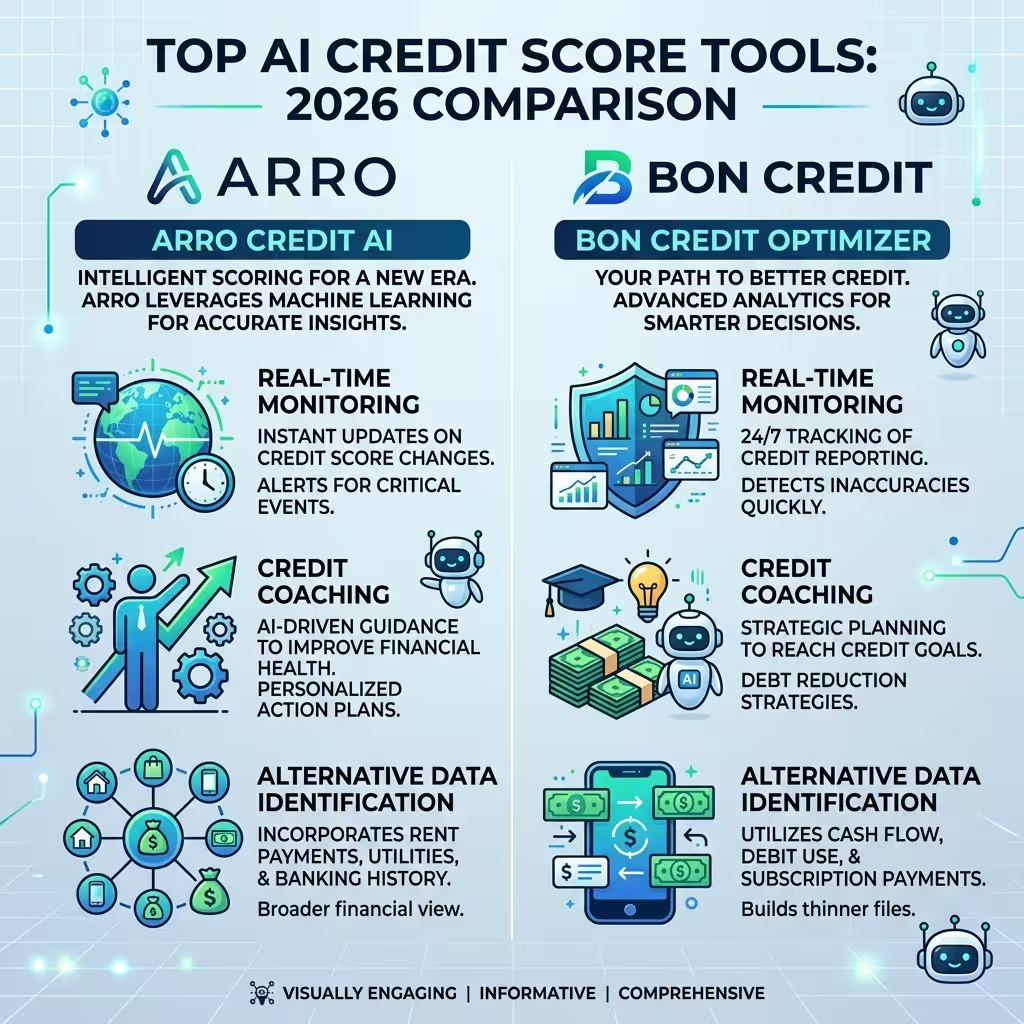
Most people think credit monitoring means checking your number once a month. That’s not this. The best modern credit scoring software tracks behavior continuously and surfaces actions before your next reporting cycle.
What you’re seeing is a move toward automated credit scoring, where payment timing, utilization changes, and alternative data are analyzed continuously instead of being reviewed in isolated snapshots.
Real AI credit monitoring runs continuously. It’s watching your payment behavior across every linked account, flagging timing problems before they hit your report, and scanning your existing bills for credit-building opportunities you’re probably missing entirely.
Here’s what’s actually running when you use something like Arro or BON Credit:
Payment history analysis. The AI looks at trajectory, not just your record. One rough month from three years ago doesn’t define you — 14 straight months of on-time payments does. Under VantageScore 4.0’s trended data model, that direction is weighted heavily. The system is asking: is this person getting more reliable over time, or less?
Spending behavior is the upstream cause of most credit problems — the best AI budgeting app catch the patterns before they become late payments or maxed-out cards.
Credit utilization tracking. The old rule is keep it under 30%. Top AI tools push for under 10% — and here’s the part most people never figure out on their own: utilization is calculated when your statement closes, not when you pay. So if you’re carrying $2,200 on a $5,000 card and your statement closes Thursday, you’ve already reported 44% utilization to the bureaus. Even if you pay it off on Friday. The AI flags this before Thursday, not after.
If high balances are dragging your utilization, an AI debt payoff planner builds the fastest path to lowering that number — while keeping your spending stable.
Alternative data identification. This is honestly where the biggest gains are hiding. AI tools scan your connected accounts and identify which bills — rent, phone, electricity, streaming — can be reported to Experian, Equifax, or TransUnion through services like Experian Boost. Payments you’re already making every month. Not getting any credit for. That ends the day you connect them.
Error detection. One in five credit reports contains a material mistake. Dovly runs automated scans across all three bureaus and flags anything worth disputing. No spreadsheets, no certified mail — just a flag and a next step.
If you’re looking for the best AI solution for credit, the answer depends on your starting point: Arro is stronger for behavior coaching and a path toward revolving credit, while BON Credit is better for product matching and approval guidance.
Best AI Credit Score Tools Reviewed
(Pricing confirmed as of February 2026 — verify before you sign up, things change fast in this space)
AI Credit Score Tools Compared
A side-by-side view of the five tools. Use it to match a tool to the gap in your file — the right pick depends on your starting point, and results vary from one profile to the next.
| Tool | Best For | Price | Main Advantage | Reporting Coverage | Watch-out |
|---|---|---|---|---|---|
| Arro | Coaching plus a path to revolving credit | $12/mo | Ties each nudge to a specific account and reporting date, so you can act before a statement closes | Experian and Equifax | Paid tool; the path to the Arro Card can take a few months of consistent behavior |
| BON Credit | Choosing which product to apply for next | Free base | CredGPT reads real bank data via Plaid and may point you toward products where approval is more likely | Reads linked bank data; not a direct bureau reporter | A match is guidance, not an approval promise; feature set is still evolving |
| Experian Boost | Renters and thin-file users with steady bills | Free | Can add eligible on-time bills — utilities, telecom, rent, some streaming — to your file in about 10 minutes | Experian only | Only bank-linked payments qualify; it won’t offset accurate negative history |
| Dovly | Finding and disputing report errors | Free–$39.99/mo | Automated scans flag entries worth disputing, so you skip the certified mail and spreadsheets | Free tier monitors TransUnion; paid plans add more | Narrower than a full coaching tool; disputes won’t remove accurate negatives, and outcomes vary |
| Kikoff | A first tradeline when starting from zero | ~$5/mo | Low-cost entry point that can establish a basic account in good standing | All three bureaus | A tradeline is not a revolving card; users report slow cancellation and support |
Pricing and features change often in this space. Confirm the current terms directly with each provider before you enroll.
Arro — $12/month
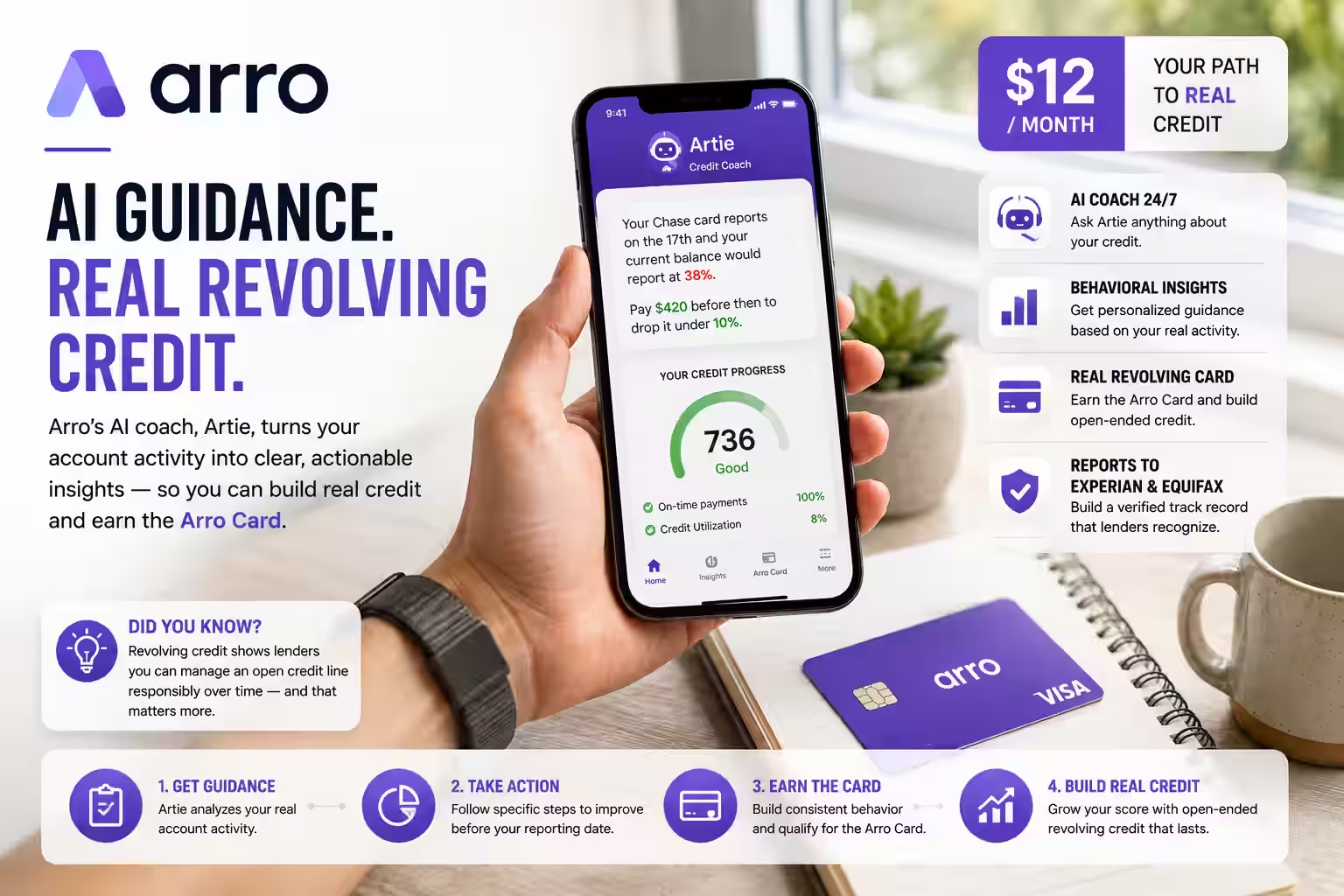
Arro is built around one specific destination: a real revolving credit card. Not a tradeline. Not a credit-builder loan. An actual card with a limit that reports to lenders as open-ended revolving credit.
The AI coach is called Artie. It’s available around the clock — you can ask it why your score moved, what to pay and when, whether you’re on track. What makes it different from other coaching tools is that Artie shows you the behavioral reason behind each recommendation, turning raw account activity into usable AI credit insights you can act on before your reporting date.
Not “reduce your utilization.” More like: “Your Chase card reports on the 17th and your current balance would report at 38% — pay $420 before then to drop it under 10%.”
That specificity is worth the $12, honestly.
Arro reports to Experian and Equifax. The path to the Arro Card takes a few months of consistent behavior, but that’s the point — it’s building a verified track record, not just adding a line to your file.
BON Credit — Free (basic version)
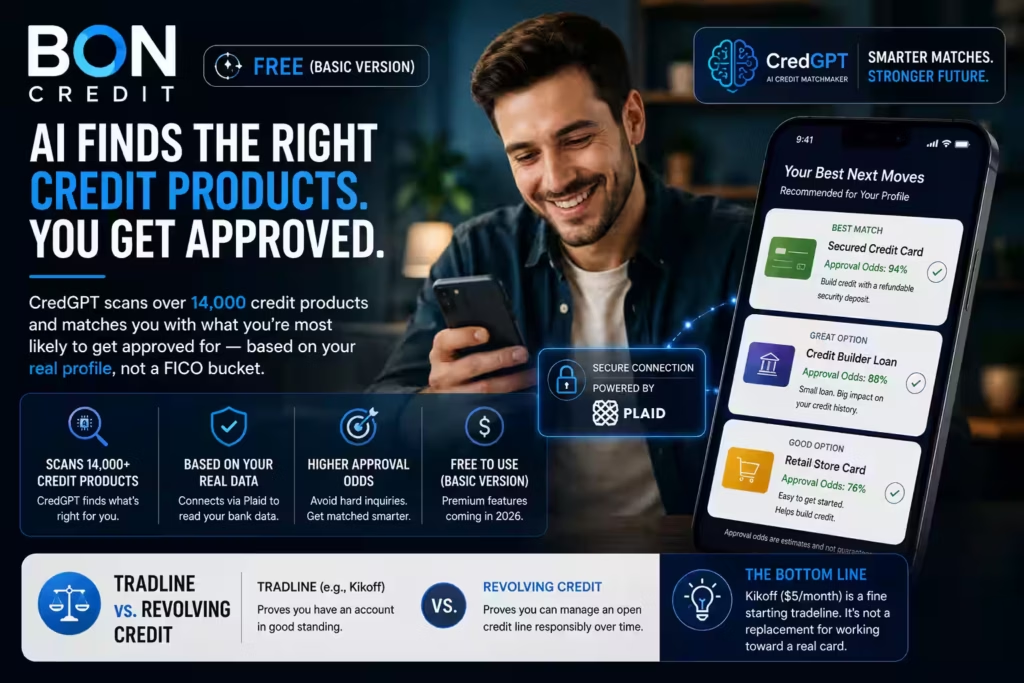
BON Credit’s AI is called CredGPT, and it works differently. Instead of coaching you on what to do with what you have, it scans over 14,000 credit products to find what you should get next — based on your actual profile, not a FICO bucket.
It connects through Plaid, so it’s reading your real bank data. When you don’t know whether to apply for a secured card or a store card or a credit-builder loan — CredGPT tells you which one you’ll actually get approved for and which one helps your profile most. That “which product first” question trips up a lot of people. Hard inquiries from declined applications hurt your score, so the matchmaking matters.
Premium features are coming later in 2026. For now, the free version is genuinely useful.
One thing to note about revolving credit, since it comes up a lot: a tradeline (like from Kikoff) proves you have an account. A revolving card proves you can manage an open credit line responsibly over time. Future lenders — especially mortgage lenders — read those two things very differently. Kikoff at $5/month is fine as a starting tradeline. It’s not a replacement for working toward a real card.

Experian Boost — Credit for Bills You Already Pay
Experian Boost lets you add on-time payments you’re already making to your Experian file. Eligible payments include utilities, telecom, rent, and some streaming services, pulled from a connected bank account.
Best for: Renters and thin-file users who pay bills reliably but see none of that history reflected in their credit.
Cost: Free.
Key advantages: For people with little traditional credit, on-time rent and utility payments can be a strong signal. Setup takes about ten minutes, and it can surface months of qualifying payments that were previously invisible. This kind of alternative data fits the direction of modern scoring, which increasingly rewards consistent everyday behavior.
Watch-out: It only affects your Experian file, not Equifax or TransUnion. Only bank-linked payments qualify — cash and manually entered card payments don’t count. It can support a thin file, but it won’t offset accurate negative history.
Dovly — Automated Error Detection and Disputes
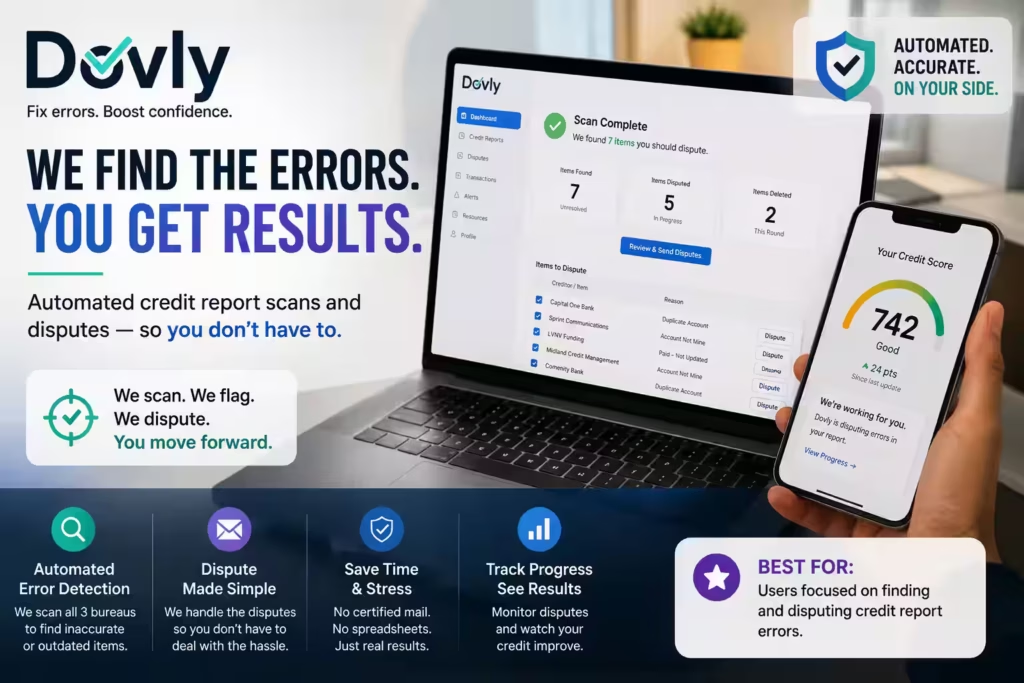
Dovly focuses on the cleanup side of credit. It runs automated scans across the bureaus and flags entries worth disputing, so you don’t manage certified mail or spreadsheets yourself.
Best for: Users whose main need is finding and disputing report errors rather than coaching or product matching.
Cost: Free to $39.99/month, depending on the plan.
Key advantages: The free tier covers basic TransUnion monitoring, and higher plans add broader coverage and a tradeline. If you suspect duplicate accounts, unfamiliar entries, or outdated records dragging your file, an automated dispute workflow can save real time.
Watch-out: Dovly’s focus is narrower than a full coaching tool, so it works best alongside a utilization or bill-reporting tool rather than on its own. Disputes can help when an entry is genuinely wrong, but they won’t remove accurate negative history, and outcomes are never guaranteed.

Kikoff — A Low-Cost Starter Tradeline
Kikoff gives you an accessible first account when you have no credit history to build on. It reports to all three bureaus, which can help establish a basic tradeline on your file.
Best for: People starting from zero who need a simple entry point while they work toward something more substantial.
Cost: Around $5/month.
Key advantages: It’s inexpensive and legitimate, and a reported tradeline proves you have an account in good standing. For a credit-invisible user, that’s a reasonable first step before pursuing a revolving card.
Watch-out: A tradeline is not the same as a revolving card — future lenders, especially mortgage lenders, read those two things very differently. Users also report that cancellation and customer service can be slow, so before enrolling with any credit platform, it’s worth checking complaint history and ratings on the Better Business Bureau. Treat Kikoff as a starter, not a destination.
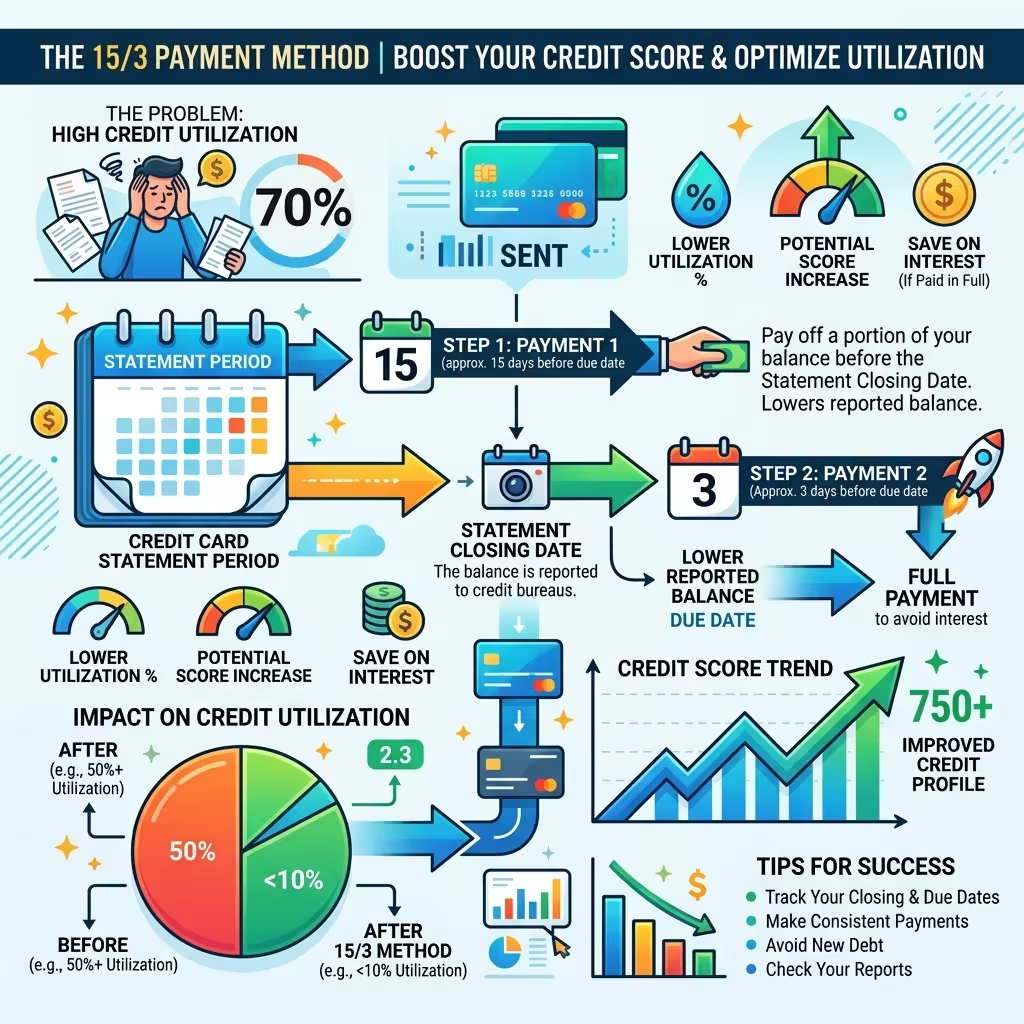
The 15/3 Method: A Credit Utilization Timing Strategy
The 15/3 method is a payment timing strategy intended to reduce reported utilization before a statement closes.
It is not a guaranteed scoring tactic, and results depend on your issuer’s reporting behavior, your existing file, and your broader credit history.
No elaborate setup required for this one. Just a timing change.
Your utilization ratio is based on the balance your card reports when your statement closes. Not when you pay. Not your average balance. The snapshot on the day the statement generates.
So if your statement closes on the 20th and you’re carrying $1,800 on a $4,000 card, you’re reporting 45% utilization to the bureaus — even if you pay the whole thing on the 21st and your account hits zero. Lenders already got that 45% number. It’s on your file.
The 15/3 method is a payment timing fix:
- 15 days before your statement closes: Pay down roughly half of whatever you’re carrying.
- 3 days before it closes: Pay the rest down to near zero.
- What the bureau sees: Consistently low utilization month after month.
📊 30-Day Billing Cycle Visualized
How to time your payments perfectly to manipulate the VantageScore 4.0 snapshot window.
Pay First Half
Wipe out roughly 50% of your current balance to safely lower your mid-month profile baseline.
Pay to Near-Zero
Clear the remaining balance. Leave just 1% to 9% active so the card doesn’t appear inactive.
The Bureau Snapshot
Your bank reports your data. The credit bureaus record a pattern of low utilization.
VantageScore 4.0 specifically rewards that pattern. Not a one-time payoff before a loan application — a pattern. Two or three months of this and the trended data starts working in your favor in a way it doesn’t with the old FICO snapshot model.
Arro’s Artie tracks your close dates and sends reminders. You don’t have to remember any of this yourself.
Most people who find out about the 15/3 method are annoyed they didn’t know sooner. Now you do.
How to Use AI to Build Credit With Bills You Already Pay
Here’s something that surprises people: if you’re paying rent, utilities, and a phone bill consistently — you’re already demonstrating creditworthiness. The problem is that none of it is showing up in your file.
Rent. This is the biggest one. If you pay through a property management portal, that payment can now be reported to Experian through Experian Boost. Cash and Venmo don’t count — it needs to be a bank-linked transaction. But for renters with no credit history? On-time rent is the strongest signal in your file. Lenders read it the same way they’d read a mortgage payment: you show up every month for a large, non-optional bill.
Utilities. Electricity, gas, water — all of it now counts. Consistent payments on these flag you as someone who handles essential obligations before discretionary ones. That’s low-risk borrower behavior, and lenders know it.
Your phone and streaming. Under Experian Boost, your cell bill and home internet count as tradelines. Netflix and Disney+ build your Experian file too, as long as the payment pulls from a connected bank account rather than a manually entered card.
The setup: go to Experian Boost, connect your checking account, let it pull 24 months of qualifying payments. A lot of users see a score jump within 24 hours. It takes about 10 minutes and costs nothing.
🎯 A 90-Day Credit Improvement Plan
Check off each baseline milestone as you transition your credit history into the modern VantageScore 4.0 framework.
A Real Timeline: What Happens Over 90 Days With AI Credit Monitoring
If you’re building from scratch — or rebuilding — here’s what honest progress actually looks like, not the optimistic version.
Days 1 to 30. Pull your free reports at AnnualCreditReport.com, the federally authorized source for free annual credit reports. Don’t just glance at the number — read the actual entries. Look for duplicate accounts, addresses that aren’t yours, any account you don’t recognize. Use Dovly to flag and dispute anything suspicious. Activate Experian Boost and connect your bank account so your bills start building history. Check that your Equifax file shows your employment through The Work Number Report Indicator — it signals income stability to lenders automatically, without you having to upload documents.
Days 30 to 60. Start the 15/3 timing habit on every card you carry a balance on. Enroll in Arro or BON Credit for guidance specific to your file. If you have zero credit history at all, add Kikoff at $5/month — it’s an easy tradeline on all three bureaus while you work toward something more substantial.
Days 60 to 90. This is when trended data actually kicks in. VantageScore 4.0 rewards patterns, and 60 to 90 days of clean behavior is when meaningful score movement tends to show up. If Artie flags a plateau, it’ll suggest a credit mix adjustment — sometimes a credit-builder loan, sometimes a second card.
Sixty days isn’t a guarantee. What it is: a real window if you’re consistent.
One Specific Warning — Don’t Skip This Part
Not every credit platform is worth your business. Most are fine. One isn’t.
Once your score improves, investing is the natural next move — our guide to the best robo-advisors for beginners shows how to start building wealth with as little as $0 minimum.
TomoCredit. Avoid it. The Better Business Bureau gives it an “F” rating. There are documented legal challenges, reported unauthorized withdrawals, and a long trail of complaints about subscriptions that are nearly impossible to cancel. A credit platform that’s hard to cancel is a problem you don’t need to add to your financial life right now.
CRITICAL RISK ALERT: TomoCredit
While the promise of a credit-builder tool with no credit check sounds appealing, consumer files reveal severe operational red flags.
- The “F” Rating Reality: The Better Business Bureau (BBB) maintains an active “F” rating for TomoCredit due to an pattern of unanswered complaints detailing abrupt account freezes without explanation.
- The Auto-Debit Trap: Users consistently report unauthorized account withdrawals continuing long after they requested account closures, occasionally resulting in unexpected bank overdraft fees.
- The Cancellation Ghosting Loop: The platform features no phone support or accessible dashboard cancellation button. Subscriptions must be canceled via email tickets, which frequently go unanswered for multiple billing cycles.
- Bureau Reporting Failures: Instead of steadily improving files, systemic technical delays mean users often wait months for history to update, completely invalidating the point of the monthly subscription fee.
Dovly ($0 to $39.99/month depending on the plan) is fine for dispute-focused monitoring. The free version covers basic TransUnion monitoring. The $39.99 plan adds a $2,000 tradeline. Worth it if dispute resolution is your main need.
Kikoff at $5/month is legitimate and reports to all three bureaus. Go in knowing the cancellation process is slow and customer service is inconsistent. Use it as a tradeline starter. Don’t expect more than that.
People Also Ask – PAA’s
How fast can AI improve my credit score?
Thirty to sixty days is realistic for measurable movement, if you’re applying the 15/3 habit and Experian Boost at the same time. Enough movement to change your loan tier — what lenders call a tier upgrade, which can mean a meaningfully lower interest rate — usually takes 60 to 90 days of consistent behavior. AI doesn’t manufacture results. It removes the guesswork so your consistent behavior actually compounds.
What’s the best AI app to monitor and improve my credit score?
Depends what you’re optimizing for. If you want a clear path to a revolving credit card, Arro is the right call. If you’re starting with no cards and need to figure out which product to apply for first, BON Credit’s CredGPT is where to start. Both are worth having if your budget allows — they serve different functions and don’t overlap much.
Can AI help if I’m credit invisible?
Yes — and this is the part of the 2026 shift that doesn’t get enough attention. VantageScore 4.0 was built specifically to score the 33 million Americans who had zero FICO score. AI tools that connect your rent, utility bills, and cash flow to your credit file can make you visible to mortgage lenders, car lenders, and card issuers — without any traditional debt on your record at all.
Does credit utilization matter more than payment history?
Payment history is the most important factor, full stop. One missed payment can stay on your report for seven years. But utilization is the fastest factor you can actually move right now. Good AI credit monitoring tools handle both at the same time — they alert you before you miss a payment and flag rising utilization before your statement closes.
How is AI credit monitoring different from a standard credit alert?
A credit alert tells you after something already happened. AI credit monitoring tools like Arro and BON Credit tell you what to do before the score changes. That’s the whole difference. Reactive vs. proactive.
Will using multiple AI tools hurt my score?
No. Signing up for monitoring platforms doesn’t trigger hard inquiries. Only applying for new credit — a card, a loan — creates a hard pull. You can run Arro, BON Credit, Experian Boost, and Dovly simultaneously with zero score impact from the tools themselves.
How can AI fix my credit score?
AI cannot “fix” your credit score on its own. What it can do is identify the actions most likely to improve it, such as lowering utilization before statement close, flagging report errors, surfacing bill payments that can be reported, and helping you choose the next credit product more strategically.
Can ai help me fix my credit?
If you’re asking, can AI help me fix my credit, the honest answer is yes — but indirectly. It helps by removing guesswork, improving timing, identifying reporting opportunities, and catching errors early.
How to Improve credit score with AI?
AI can help improve your credit score by identifying actions that may raise it over time, such as lowering credit utilization before the statement date, flagging missed-payment risks, surfacing eligible bill payments that can be added to your credit file, and detecting possible report errors. It does not improve your score automatically, but it can help you make better decisions earlier.
The Bank Isn’t Going to Hand You This
There’s a reason none of this is in the brochure at the teller window.
An informed borrower negotiates harder. Shops around. Costs more to retain. That’s not a criticism of banks specifically — it’s just how the incentive structure works. Institutions don’t build tools designed to give customers the upper hand.
But the credit system changed. VantageScore 4.0 is now the mortgage standard. Your rent and your Netflix and your electric bill count now. And AI tools that track all of it in real time are available, they’re affordable, and they can be useful when matched to the right situation.
Start with Experian Boost. Ten minutes, costs nothing, you may see a score bump by tomorrow. Then pick one AI platform — Arro if you want a revolving card on the horizon, BON Credit if you need help figuring out which product to go after first. Apply the 15/3 timing to every card you carry. Run it for 60 days.
The system finally works for people who understand it.
You do now.
Editorial Integrity
Sources & Citations
Official credit bureau documentation, FHFA and VantageScore announcements on VantageScore 4.0 and trended data, FICO pricing changes, federal consumer resources, and Better Business Bureau records directly relevant to AI credit scoring and alternative data underwriting
This article draws on official credit bureau product documentation, federal regulatory announcements about VantageScore 4.0 adoption for Fannie Mae and Freddie Mac mortgages, VantageScore’s own materials on trended credit data, federally authorized free credit report resources, and Better Business Bureau records that shape how modern AI credit tools read payment behavior, utilization timing, and alternative data.
View full sources, methodology, and editorial notes ⌄
This article was developed using source material directly related to AI-powered credit scoring, alternative data underwriting, consumer fintech tools, and the regulatory shift toward VantageScore 4.0. Preference is given to official credit bureau documentation, government and regulatory announcements, and recognized consumer protection resources where those sources directly support claims about scoring models, reportable bill types, mortgage-model requirements, and platform reliability. Because pricing, features, reporting behavior, and third-party policies can change over time, readers should verify current figures and provider terms directly before acting on any single source.
- Official credit bureau documentation on adding alternative bills: Experian Boost — Improve Your Credit Scores for Free (Experian) — cited for eligible on-time payments such as utilities, telecom, rent, and select streaming services that users can add to their Experian credit file.
- Federal regulatory announcement on VantageScore 4.0 mortgage adoption: FHFA and HUD Announce VantageScore 4.0 Implementation for Fannie Mae, Freddie Mac and FHA — cited for the official adoption of VantageScore 4.0 across the enterprises and the projected lender savings that opened credit-score competition.
- Official FHFA release on historical VantageScore 4.0 scores: FHFA Announces Release of Historical VantageScore 4.0 Credit Scores by the Enterprises (FHFA) — cited for the government-sponsored enterprises making historical VantageScore 4.0 data available, marking the structural shift away from a single-model mortgage market.
- Official VantageScore consumer guidance on the FHFA transition: Top 10 Consumer Questions: FHFA Acceptance of VantageScore 4.0 (VantageScore) — cited for how trended credit data and alternative data expand scoring to previously credit-invisible consumers, including renters, freelancers, and gig workers.
- Federally authorized source for free credit reports: AnnualCreditReport.com — Official Free Credit Reports — cited for the only federally authorized website where consumers can request free reports from all three bureaus to audit entries and flag errors.
- Federal consumer protection guidance on credit reports: Free Credit Reports (Federal Trade Commission) — cited for consumer rights to free reports and guidance on reviewing entries before disputing inaccurate or unrecognized accounts.
- Better Business Bureau record on a flagged credit platform: Better Business Bureau — Business Profiles and Ratings (BBB) — cited for the accreditation ratings and consumer complaint records used to flag TomoCredit and to verify provider reliability before enrollment.
Our Editorial Standards
Tech Capital Hub applies Google’s E-E-A-T framework to every article on AI in finance, credit scoring tools, and consumer fintech, prioritizing official source documentation, regulatory guidance, platform disclosures, and practical financial analysis over hype, generic commentary, or unsupported claims.
View how our editorial standards apply to this article ⌄
Focused on Real Consumer Credit Use Cases
This article is written around how people actually improve credit in practice: managing utilization before statement close, identifying reporting opportunities in existing bills, disputing real errors, and choosing the next credit product strategically. We emphasize user decisions and borrower outcomes rather than repeating broad AI marketing language.
Credit Model Behavior and Fintech Tool Analysis
Coverage explains how AI-powered credit tools interact with payment timing, utilization, alternative data, and trended behavior patterns that matter in modern scoring environments. We focus on the mechanics behind score movement, approval strategy, and platform utility so readers can distinguish genuinely useful tools from vague automation claims.
Source-Backed Claims and Platform Verification
Claims are evaluated against official company materials, credit bureau resources, recognized regulatory guidance, and reputable consumer protection sources where applicable. We do not treat broad vendor promises, anonymous testimonials, or unverified social posts as sufficient support for claims about credit improvement, approval likelihood, pricing, or risk.
Transparent, Reviewable, and Consumer-Safety First
Pricing, features, reporting behavior, and third-party policies can change quickly, so articles are reviewed and updated as stronger or newer source material becomes available. Nothing on this page is financial, legal, or credit-repair advice. Corrections or source challenges can be submitted directly to our editorial team at editorial@techcapitalhub.com.
About the Author
Marcus Delray
Senior FinTech Analyst | Credit Risk Models, Alternative Data Underwriting & Algorithmic Compliance
Marcus Delray writes about AI in personal finance, credit scoring tools, alternative data underwriting, and the systems financial institutions use to evaluate borrower risk. He focuses on turning complex credit-model behavior, trended data, and consumer fintech products into practical guidance readers can use to improve financial outcomes.
View full author bio, credentials, and links ⌄
Marcus Delray is a fintech analyst and founder of Tech Capital Hub, where he covers AI in finance, blockchain technology, DeFi, and business accounting tools.
With over a decade of experience researching financial technology, he writes to make complex fintech topics actionable for investors, entrepreneurs, and finance professionals.
On consumer credit and lending topics, he focuses on how AI-powered financial tools interpret cash flow, payment behavior, alternative data, and trended credit usage to shape lending decisions and credit outcomes. His goal is to help readers understand which tools are genuinely useful, where automation improves decision-making, and where consumers still need to watch for risk, weak transparency, or misleading claims.
- Covers AI in finance, credit tools, alternative underwriting, and consumer fintech platforms
- Explains credit model behavior, utilization timing, trended data, and approval strategy in practical terms
- Breaks down how AI-powered platforms surface errors, reporting opportunities, and product-match recommendations
- Grounds analysis in source-backed research, platform documentation, and real-world fintech use cases over hype or unsupported claims
Enjoying our content?
Click below to add us as a preferred source. Google will prioritize our latest articles in your Top Stories, AI Mode, and AI Overviews.
Preferred Source on Google