Best Robo Advisors in 2026: 6 Top Platforms Compared by Fees, Returns, and Tax Savings


Fintech Analyst · Founder of Tech Capital Hub
Marcus has spent more than a decade researching financial technology, with a focus on robo advisors, automated investing, digital wealth management, and AI in finance. In this guide, he compares the top robo advisors of 2026 by fees, tax efficiency, reported returns, and fit, so you can match the right platform to your balance and tax situation.
Short answer: The best robo advisor in 2026 for most people is Fidelity Go. It’s also the best robo advisor for beginners, with no advisory fee under $25,000, no minimum to open, and zero-expense internal funds. Wealthfront is the best robo advisor for tax-loss harvesting, especially for high earners with large taxable accounts. Vanguard Digital Advisor is the best low-cost choice for long-term investors with balances above $25,000, at roughly 0.15% all-in.
The best robo advisors differ by balance, tax situation, and account type. This robo advisor comparison helps you find the right fit the first time.
Here’s a story we hear all the time. Jordan had $8,000 sitting in a savings account for two years. He wasn’t avoiding investing. He was just stuck. One Saturday, he opened four automated investing platforms in his browser, compared them for an hour, and picked the one he’d seen in an ad.
Eighteen months later, a coworker with the same starting amount and timeframe mentioned her balance at lunch. She had a few thousand dollars more than he did. She didn’t pick better stocks. She picked a platform that better fit her balance and tax situation.
That gap is exactly what this guide helps you avoid! Below, we compare the best robo advisors of 2026 on fees, independently reported robo advisor performance, tax tools, safety, and hidden costs. Then we match each platform to real investor situations so you can choose with confidence.
New to automated investing? Start with our beginner’s guide to robo-advisors, which covers the basics in plain English. Robo advisors are also one of the fastest-growing categories of AI personal finance tools reshaping how people invest in 2026.
Affiliate disclosure: Some links on this page may be referral links. If you open an account through one, Tech Capital Hub may earn a commission at no extra cost to you. Compensation never affects our rankings, scores, or recommendations. Several platforms we rank highly don’t pay us anything, and we list each platform’s drawbacks right alongside its strengths.
Best Robo Advisors in 2026 at a Glance
Short on time? Here’s the cheat sheet.
- Best robo advisor overall: Fidelity Go
- Best robo advisor for beginners: Fidelity Go
- Best free robo advisor (under $25K): Fidelity Go
- Best robo advisor for tax-loss harvesting: Wealthfront
- Best for goal-based investing: Betterment
- Lowest long-term cost: Vanguard Digital Advisor
- Best all-in-one auto investing app: SoFi Automated Investing
- Best with no advisory fee (with a catch): Schwab Intelligent Portfolios
Key takeaway: Fidelity Go fits most people starting out. Wealthfront leads for high earners with taxable accounts. Betterment is the strongest choice if you’re saving for several goals at once.
What’s inside this guide:
- A full robo advisor comparison table with fees, minimums, and performance
- How we ranked and scored each platform
- Standardized reviews of six leading digital investment platforms
- Wealthfront vs. Betterment, Fidelity Go vs. Vanguard, and Vanguard vs. Wealthfront
- Wealthfront alternatives and Betterment alternatives
- Robo advisors vs. financial advisors: when each makes financial sense
- The real cost of robo advisors: fees, hidden costs, and after-tax value
- Which robo advisor delivers the best tax-loss harvesting and returns
- The best robo advisor by balance, account type, and investor situation
What Is a Robo Advisor? (And Why It Matters for This Comparison)
A robo advisor is an automated investing platform that builds and manages a diversified portfolio for you. You answer a short questionnaire about your goals, timeline, and risk tolerance. The platform then invests your money in low-cost funds, rebalances automatically, and, on many platforms, uses tax-loss harvesting to lower your tax bill.
Think of it as digital investing on autopilot. You set your direction once, and the software handles the routine maintenance that most of us forget or avoid.
How Robo Advisors Work — and Where Platforms Differ
Most robo advisory services follow the same simple flow:
- Answer a questionnaire. Your age, goals, timeline, and how you react when markets drop.
- Get a portfolio. The platform builds a mix of low-cost ETFs or index funds across stocks and bonds.
- Fund your account. Many platforms let you set up automatic recurring deposits.
- Let it run. The platform rebalances your portfolio and, in taxable accounts, may harvest losses.
You can open a range of automated investing accounts, including individual taxable accounts, joint accounts, traditional IRAs, and Roth IRAs. Account options vary by platform, so check before you sign up.
Are Robo Advisors Right for You vs. a Human Advisor?
For most beginners and hands-off investors, yes! Robo advisors keep costs low, remove emotional decision-making, and handle portfolio upkeep for you. They’re less ideal if you enjoy picking individual stocks or have complex needs like estate planning or business succession.
A quick note on the buzz around “AI-powered” platforms: most robo advisors rely on rules-based algorithms and modern portfolio theory, not cutting-edge AI. That’s actually a good thing. Predictable, disciplined rules are exactly what long-term investing needs.
Quick Picks: The Best Robo Advisors by Category
Quick Pick
Find Your Best-Fit Robo Advisor in Seconds
Your ideal platform depends on your balance, tax bracket, and what you actually need. Match your situation to one of these six profiles — then hover or tap each card for the full picture.
★ Top Pick Fidelity Go
Starting out · Keeping costs at zero
- Fee
- $0under $25K
- Minimum
- $0
- 5-Yr Alpha
- +1.02%
🏆 Best 5-year outperformance in the tracked groupWhy it wins: Zero management fee under $25K plus zero-expense internal funds means nothing is eating your returns before they compound.
- No cost layer on internal funds — expense ratios are literally $0
- Municipal bond tilt held up well through rate-hike periods
- Ideal balance range: $2,000–$20,000 with a simple tax setup
- No tax-loss harvesting or direct indexing available
- Not the right tool for high-bracket taxable accounts over $100K
SoFi Automated
Under 35 · Wants a full financial platform
- Fee
- 0.25%
- Minimum
- $1
- 3-Yr Alpha
- +1.22%
📈 Highest 3-year outperformance in the tracked groupWhy it stands out: More than just a portfolio — career coaching, financial planning tools, and banking perks live alongside your investments.
- Heavy U.S. large-cap growth tilt drove outperformance during the 2024–25 AI surge
- 5-year outperformance: +0.92%
- Suited for investors still juggling income, debt, and savings simultaneously
- Same growth tilt adds real volatility if tech pulls back sharply
- No tax-loss harvesting
- Free management ended 2024 — now 0.25% annually
Wealthfront
High earners · $100K+ taxable accounts
- Fee
- 0.25%
- Minimum
- $500
- 5-Yr Alpha
- +0.80%
🔬 Direct indexing harvests up to 38.4% in tax losses over 10 yrsWhy it stands out: The tax efficiency engine for high earners — direct indexing and Smart Beta go far beyond what a standard ETF portfolio can do.
- Direct indexing available for taxable accounts over $500K
- ETF-only approach: ~20.2% tax losses over 10 yrs vs. 38.4% with direct indexing
- Smart Beta weights stocks by momentum, profitability, and volatility
- For 32–37% bracket investors, the tax-alpha alone covers the fee many times over
- Overkill for balances under $100K — Betterment is simpler and cheaper there
Betterment
Goal-based savers · Clean interface priority
- Fee
- 0.25%
- Minimum
- $0
- Returns
- Competitive vs. benchmark
🎯 Asset location can lift retirement value up to 15% over 30 yrsWhy it stands out: Separate goal buckets — retirement, down payment, emergency fund — each with its own allocation and automatic asset location.
- Puts high-yield assets in IRAs, tax-efficient holdings in taxable accounts automatically
- Best fit for taxable balances under $100K where simplicity matters most
- Clean interface makes multi-goal tracking genuinely easy
- $4/month fee on small accounts — on $500 that’s ~9.6% annually
- Check your balance tier before signing up
Vanguard Digital Advisor
Index purists · Lowest cost structure
- Fee
- ~0.15%
- Minimum
- $100
- Returns
- Competitive vs. benchmark
💰 ~0.15% is the lowest fee structure of any platform listedWhy it stands out: Pure index investing at the lowest ongoing cost — built for investors who want to keep it simple and let compounding do the work.
- Vanguard’s own low-cost index funds keep the total cost floor very low
- Strong institutional trust and long-term track record behind the product
- $100 minimum makes it accessible without being a cost-zero freebie
- Fewer features than Wealthfront or Betterment — no direct indexing or goal buckets
- Interface is more utilitarian than polished
Schwab Intelligent Portfolios
Hands-off investors · Read the fine print first
- Fee
- $0management
- Minimum
- $5,000
- 5-Yr Alpha
- Below peer avg.
⚠️ Cash drag can cost more than a 0.25% fee in most bull yearsWhy it’s complicated: The zero fee is real — but 6%–30% of your portfolio sits in a cash sweep that misses market gains. That’s how Schwab earns its revenue.
- Cash allocation earns some interest but does not participate in market upside
- In 2025, with S&P 500 up ~18%, a 15% cash drag meaningfully reduced returns
- Schwab paid $187M to settle SEC charges over undisclosed cash sweep practices
- Five-year performance is below peers in the tracked group
- High $5,000 minimum limits accessibility for newer investors
- Only suited for those who fully understand and accept the cash trade-off
Fees and minimums as of April 2026. Five-year outperformance data through December 31, 2025 — source: 38th edition of The Robo Report. For informational purposes only, not personalized financial advice.
Robo Advisor Comparison Table: Fees, Minimums, and Performance
Here’s the full robo advisors comparison side by side. Fees and minimums reflect official platform disclosures as of October 2026. Always confirm current pricing on each provider’s site before opening an account.
Side-by-Side
Robo Advisor Comparison Table
See how six leading platforms stack up on performance, cost, and entry point, then match the “Good Fit For” column to your own balance and tax situation.
- Beat benchmark
- Competitive
- Below peers
| Platform | 5-Yr Outperformance | Fee | Minimum | Good Fit For |
|---|---|---|---|---|
| Fidelity Go ★ Editor’s Top Pick | +1.02% | $0 under $25K | $0 | Starting out, keeping costs at zero |
| SoFi Automated Top 3-Yr Return | +0.92% (1.22% 3-yr) | 0.25% | $1 | Under 35, wants a full financial platform |
| Wealthfront Direct Indexing | +0.80% | 0.25% | $500 | High earners, $100K+ taxable accounts |
| Betterment Goal-Based | Competitive | 0.25% | $0 | Goal-based savers, clean interface priority |
| Vanguard Digital Advisor Low Cost | Competitive | ~0.15% | $100 | Index purists, lowest cost structure |
| Schwab Intelligent Portfolios ! Read Caveats | Below peers | $0 | $5,000 | Hands-off (but read the Schwab section before signing up) |
Figures reflect five-year normalized benchmark outperformance through December 31, 2025, as reported in the 38th edition of The Robo Report. For informational purposes only, not personalized financial advice.
*Robo advisor performance figures are normalized five-year benchmark comparisons through December 31, 2025, as reported by independent tracker The Robo Report. “Outperformance” means the platform’s return relative to a comparable benchmark, not its total return. These figures are historical and don’t guarantee future results.

How We Chose the Best Robo Advisors
No single robo advisor is best for everyone. A 26-year-old with $1,500 and student loans needs something very different from a 44-year-old with $250,000 in a taxable brokerage account. That’s why we don’t rank on last year’s returns alone. Bull markets make almost every platform look brilliant, and weak spots often appear later, usually at tax time.
We scored each platform on six factors:
- All-in cost. The advisory fee plus fund expense ratios, flat fees, and cash drag. The SEC’s guide to understanding investment fees shows how even small fees compound over decades.
- Risk-adjusted performance. We use independent, third-party benchmark data from The Robo Report rather than platform marketing claims.
- Tax efficiency. Tax-loss harvesting, direct indexing, and asset location.
- Account access. Minimums, supported account types, and fee thresholds.
- Human support. Whether you can speak with a real advisor, and at what balance.
- Transparency. How clearly each firm discloses fees and conflicts of interest in its Form CRS.
Every platform in this guide operates through an SEC-registered investment adviser. You can review any firm’s regulatory record on the SEC’s Investment Adviser Public Disclosure database and check its brokerage custodian on FINRA BrokerCheck.
Update policy: We review this comparison every six months and whenever a platform changes its fees, minimums, features, or reported benchmark data. Fee figures were last verified against official provider disclosures in October 2026.
Table of Contents

The Best Robo Advisors in 2026: Platform Reviews
Each review follows the same structure, so you can compare these digital investment platforms on equal footing. Let’s dig in!
1. Fidelity Go: Best Overall and Best Robo Advisor for Beginners
Best for: Beginners and anyone with under $25,000 who wants to invest without paying fees.
Fees and minimum:
- $0 advisory fee on balances under $25,000
- 0.35% per year on balances of $25,000 and above
- $0 to open, $10 to start investing
- Zero expense ratios on the Fidelity Flex funds used in portfolios
Confirm current terms on the official Fidelity Go page.
Key features:
- About +1.02% in normalized five-year benchmark outperformance, the highest five-year figure among platforms tracked by The Robo Report
- Truly zero all-in cost under $25,000, which makes it the closest thing to a free robo advisor for small balances
- Unlimited 30-minute coaching calls once your balance reaches $25,000
- Municipal bond exposure that held up well during the early-2020s rate hikes
Pros:
- Lowest all-in cost for small balances
- No minimum to open
- Strong independently reported performance
- Human coaching at a modest balance
Cons:
- No tax-loss harvesting
- No direct indexing
- 0.35% fee above $25,000 is higher than Vanguard’s
Verdict: For investors with roughly $2,000 to $20,000 and a simple tax picture, Fidelity Go is the most sensible robo advisor for beginners in 2026. High earners with large taxable accounts should look at Wealthfront instead.

2. Wealthfront: Best Robo Advisor for Tax-Loss Harvesting
Best for: High-income investors with sizable taxable brokerage accounts.
Fees and minimum:
- 0.25% advisory fee
- $500 minimum
Check the official Wealthfront site for current pricing and feature thresholds.
Key features:
- About +0.80% in normalized five-year benchmark outperformance
- Direct indexing: Wealthfront holds individual stocks instead of a single index ETF, so it can harvest losses on individual companies even when the overall index is up
- Daily tax-loss harvesting on taxable accounts
- Smart Beta weighting on larger taxable accounts, based on factors like momentum and profitability
- High-limit FDIC coverage on its cash account through partner banks
A note on thresholds: Wealthfront has lowered the balance required for direct indexing over time. Its most advanced stock-level features have historically required larger taxable balances, often $100,000 or more. Verify the current threshold before you commit.
Pros:
- Deepest tax automation of any platform reviewed
- Strong after-tax value for high tax brackets
- Same 0.25% fee as Betterment, with more advanced tax tools
Cons:
- No access to human advisors
- $500 minimum
- Tax features add little value inside IRAs or 401(k)s
Verdict: If you’re in a high tax bracket with a large taxable account, Wealthfront’s tax-loss harvesting can outweigh its 0.25% fee. Investors who mainly use retirement accounts will get less from it.

3. Betterment: Best Robo Advisor for Goal-Based Investing
Best for: Savers juggling several goals at once, like retirement, a home down payment, and an emergency fund.
Fees and minimum:
- 0.25% advisory fee for the Digital plan
- A small flat monthly fee on smaller balances without a qualifying recurring deposit
- Premium tier with certified financial planners at $100,000+, for a higher fee
- $0 minimum
Review current numbers on Betterment’s pricing page.
Key features:
- Separate goal buckets, each with its own risk level and timeline
- Tax-coordinated portfolios (asset location): places tax-inefficient assets in IRAs and tax-efficient assets in taxable accounts
- Tax-loss harvesting on taxable accounts
- A clean, intuitive app that makes goal tracking genuinely satisfying
- Five-year performance competitive with peers
Pros:
- Best goal-based planning tools reviewed
- Asset location across account types
- Path to certified financial planners as your balance grows
- No minimum
Cons:
- The flat monthly fee hits tiny accounts hard. At $5 a month, a $500 balance pays about 12% a year
- Premium tier significantly raises your annual cost
Verdict: Betterment is the most thoughtful pick for organized, multi-goal savers. Set up a qualifying recurring deposit to sidestep the flat fee.
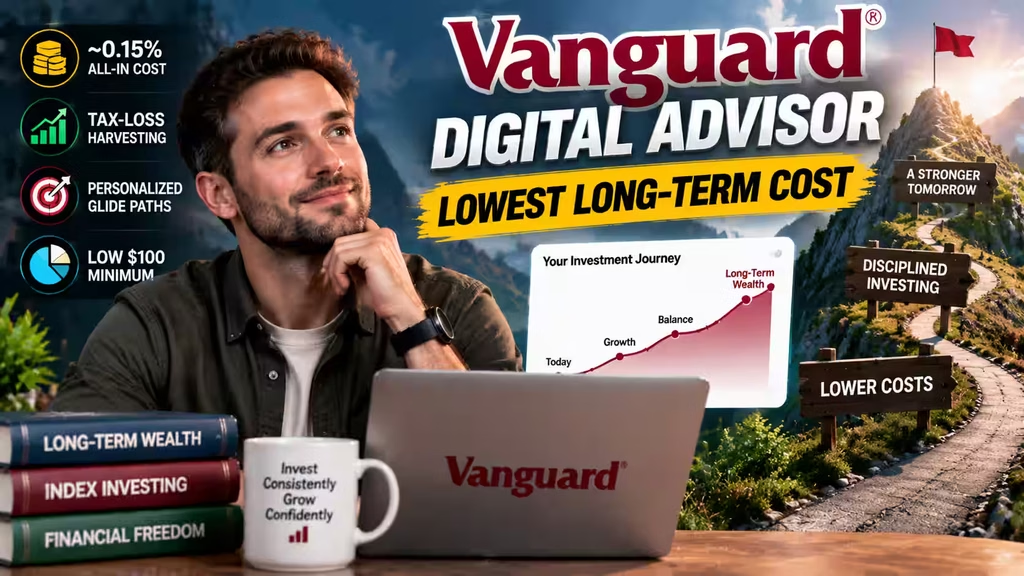
4. Vanguard Digital Advisor: Lowest Long-Term Cost
Best for: Disciplined, long-term index investors with balances above $25,000.
Fees and minimum:
- About 0.15% net all-in, depending on your portfolio mix
- $100 minimum
See current details on Vanguard’s official Digital Advisor page.
Key features:
- Personalized glide paths that shift your allocation as your age and circumstances change
- Built on Vanguard’s ultra-low-cost index ETFs
- Tax-loss harvesting on taxable accounts
- Five-year performance competitive with peers
Pros:
- Lowest long-term cost for mid-size and large balances
- Low $100 minimum
- Personalized glide paths
Cons:
- No goal buckets
- No human advisor access in the digital tier
- More expensive than Fidelity Go under $25,000
Verdict: Vanguard Digital Advisor is the platform many investors graduate into once their balance grows. It’s steady, low-cost, and built for the long haul. Boring? A little. Effective? Absolutely!

5. SoFi Robo Advisor Review: Best All-in-One Auto Investing App
Best for: Investors under 35 who want banking, budgeting, and investing in one place.
Fees and minimum:
- 0.25% advisory fee (SoFi ended its free management in 2024)
- $1 minimum
Confirm current terms on SoFi’s automated investing page.
Key features:
- About +1.22% in three-year benchmark outperformance, the highest three-year figure among platforms tracked by The Robo Report, and about +0.92% over five years
- Career coaching and financial planning tools
- Easy links to SoFi banking and loans
Why the returns look so strong: SoFi has tilted heavily toward U.S. large-cap growth stocks tied to the AI boom. That tilt paid off in 2024 and 2025, but it adds real volatility if technology stocks pull back.
Pros:
- Very low barrier to entry
- Banking, lending, and investing in one app
- Strong recent robo investing returns
Cons:
- No tax-loss harvesting
- Concentrated growth tilt adds risk
- Less broadly diversified than peers
Verdict: Our SoFi robo advisor review lands here: it’s a great hub if you’re managing income, debt, and savings at once, and one of the best automated investing apps for convenience. Just understand that recent returns come from a sector bet.
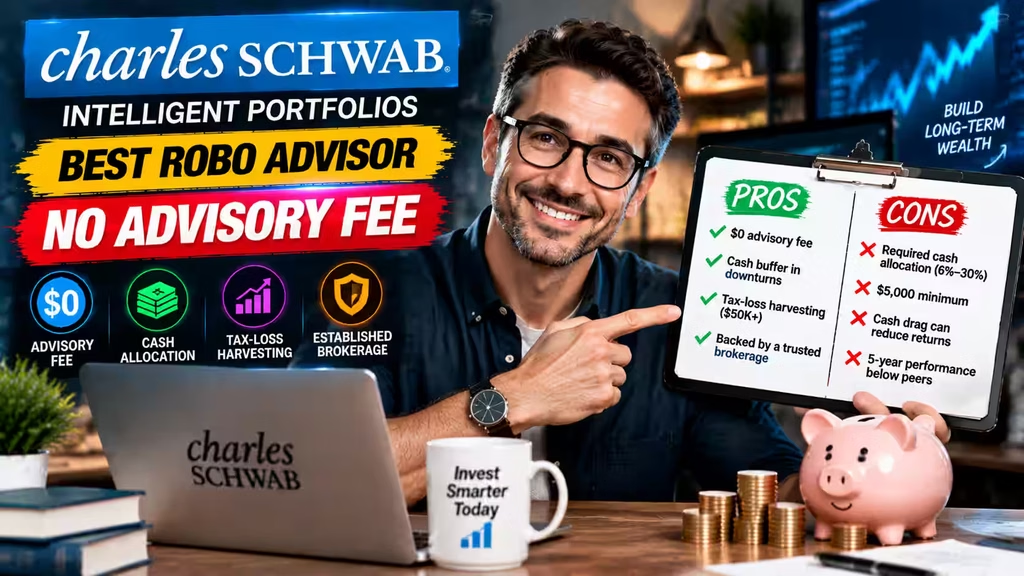
6. Schwab Intelligent Portfolios: Best Charles Schwab Robo Advisor With No Advisory Fee
Best for: Hands-off investors who understand and accept a required cash allocation.
Fees and minimum:
- $0 advisory fee
- $5,000 minimum
- Required cash allocation ranging from roughly 6% to 30% of your portfolio
Check current details on Schwab’s official Intelligent Portfolios page.
Key features:
- No advisory fee
- Tax-loss harvesting on balances of $50,000 and up
- Built-in cash cushion during market downturns
- Premium tier with human planning available
How the cash allocation works: The cash sits in a sweep account that earns interest but doesn’t participate in market gains. Schwab earns revenue on the spread. In 2022, Schwab paid $187 million to settle SEC charges over how it disclosed this cash practice.
Pros:
- Truly $0 advisory fee
- Cash buffer can soften downturns
- Backed by a large, established brokerage
Cons:
- Cash drag reduces returns in rising markets
- $5,000 minimum
- Five-year performance below peers
Verdict: Among robo advisors, Charles Schwab’s offering is solid, but it isn’t free. In most bull markets, the cash drag costs more than a 0.25% fee on a fully invested portfolio. Run the math first.
Wealthfront vs. Betterment: Which Robo Advisor Is Better?
Short answer: Betterment is better for multi-goal savers with under $100,000. Wealthfront is better for high earners with large taxable accounts.
This is one of the most-searched matchups in automated investing, and for good reason! Both charge 0.25% and both offer tax-loss harvesting, but they serve very different investors.
Head-to-Head · Wealthfront vs. Betterment
Wealthfront vs. Betterment Comparison Table
Both platforms charge 0.25% and offer tax-loss harvesting, but they’re built for different investors. Here’s how they compare side by side.
| Factor | Wealthfront Tax Automation | Betterment Goal-Based Planning |
|---|---|---|
| Advisory fee | 0.25% | 0.25% (flat fee on some small accounts) |
| Minimum | $500 | $0 |
| Core strength | Tax automation and direct indexing | Goal-based planning and asset location |
| Human advice | No | Yes, Premium at $100K+ |
| Best balance range | $100K+ taxable | Under $100K, or multi-goal savers |
| Ideal user | High earner in the 32%–37% bracket | Organized saver with several goals |
Note: This matchup reflects Tech Capital Hub’s editorial analysis. Fees and features change often, so confirm current terms on each provider’s official site. For informational purposes only, not personalized financial advice.
Choose Wealthfront if:
- You have a large taxable account
- You’re in a high federal tax bracket
- You want maximum tax-loss harvesting and don’t need human advice
Choose Betterment if:
- You’re saving for several goals at once
- You hold both IRAs and taxable accounts and want asset location
- You may want a certified financial planner later
Fidelity Go vs. Vanguard Digital Advisor: Which Costs Less?
Short answer: Fidelity Go costs less under $25,000. Vanguard Digital Advisor costs less above $25,000.
Both are low-cost giants, but the cheaper choice flips depending on your balance.
Head-to-Head · Fidelity Go vs. Vanguard Digital Advisor
Fidelity Go vs. Vanguard Digital Advisor Comparison Table
Both are low-cost giants, but the cheaper choice flips once your balance crosses $25,000. Here’s how they compare side by side.
- Fidelity Go costs less under $25,000
- Vanguard Digital Advisor costs less above $25,000
| Factor | Fidelity Go Cheaper Under $25K | Vanguard Digital Advisor Cheaper Above $25K |
|---|---|---|
| Fee under $25K | $0Lower cost | About 0.15% net |
| Fee above $25K | 0.35% | About 0.15% netLower cost |
| Fund expense ratios | $0 (Flex funds) | Very low (included in net estimate) |
| Minimum | $0 to open | $100 |
| Tax-loss harvesting | No | Yes |
| Human coaching | Yes, at $25K+ | No (separate paid tier) |
Note: This comparison reflects Tech Capital Hub’s editorial analysis. Fees and features change often, so confirm current terms on each provider’s official site. For informational purposes only, not personalized financial advice.
Estimated annual cost by balance:
- At $20,000: Fidelity Go costs $0. Vanguard costs about $30. Fidelity Go wins.
- At $50,000: Fidelity Go costs about $175. Vanguard costs about $75. Vanguard wins.
- At $150,000: Fidelity Go costs about $525. Vanguard costs about $225. Vanguard wins.
Helpful tip: Start with Fidelity Go while you build. Once you cross roughly $25,000 to $30,000, compare it with Vanguard. That’s often the right moment to switch, especially if you’d benefit from tax-loss harvesting in a taxable account.
Vanguard vs. Wealthfront: Low Cost or Tax Power?
Head-to-Head · Vanguard vs. Wealthfront
Vanguard Digital Advisor vs. Wealthfront Comparison Table
This matchup comes down to where most of your money sits: retirement accounts or a large taxable account. Here’s how they compare side by side.
- Vanguard Digital Advisor wins on raw cost
- Wealthfront wins on tax tools for large taxable accounts
| Factor | Vanguard Digital Advisor Low Cost | Wealthfront Tax Power |
|---|---|---|
| All-in cost | About 0.15% netLower cost | 0.25% plus fund expenses |
| Minimum | $100 | $500 |
| Tax-loss harvesting | Yes | Yes, daily, plus direct indexingDeeper tax tools |
| Best account type | Retirement accounts and long-term index portfolios | Large taxable accounts |
| Best for | Cost-focused, hands-off investors | High earners chasing tax alpha |
Note: This comparison reflects Tech Capital Hub’s editorial analysis. Fees and features change often, so confirm current terms on each provider’s official site. For informational purposes only, not personalized financial advice.
Short answer: Vanguard Digital Advisor wins on raw cost. Wealthfront wins on tax tools for large taxable accounts.
This matchup comes down to one question: where is most of your money? If it sits in IRAs and 401(k)s, Vanguard’s roughly 0.15% all-in cost is hard to beat. If you hold $100,000 or more in a taxable account and sit in a high bracket, Wealthfront’s direct indexing can save more in taxes than the 0.10% fee difference costs you.
Wealthfront Alternatives and Betterment Alternatives
Looking for a Wealthfront alternative? Betterment is the closest match, with the same 0.25% fee and tax-loss harvesting, plus goal buckets and a path to human planners. Vanguard Digital Advisor is the better pick if lower cost matters more than advanced tax tools.
Comparing Betterment alternatives? Fidelity Go is cheaper for balances under $25,000. Wealthfront offers deeper tax automation for big taxable accounts. SoFi Automated Investing works well if you want banking and investing in one place.
Quick rule of thumb: Swap platforms based on what you need more of, whether that’s lower fees, stronger tax tools, or human support.
Robo Advisors vs. Financial Advisors: Which Do You Need?
Short answer: Robo advisors are the better value for most people building wealth. Human financial advisors earn their fee when your situation gets complex.
Traditional financial advisors often charge around 1% of assets per year. On $100,000, that’s about $1,000 annually, compared with $0 to $350 at most robo advisors. Over decades, that difference compounds into a serious amount of money.
Head-to-Head · Robo Advisors vs. Financial Advisors
Robo Advisors vs. Financial Advisors Comparison Table
The right choice depends on how complex your money situation is. Here’s how robo advisors and human financial advisors compare side by side.
- Robo advisors are the better value for most people building wealth
- Financial advisors earn their fee when your situation gets complex
| Factor | Robo Advisors Best Value | Financial Advisors Complex Needs |
|---|---|---|
| Typical cost | $0 to 0.35% per yearLower cost | Often around 1% per year |
| Minimums | $0 to $5,000 | Often much higher |
| Best for | Building wealth, simple tax situations | Estate planning, business sales, complex taxes |
| Personalization | Algorithm-based | Fully customMore tailored |
| Behavioral coaching | Limited, rules-based | Direct, personal guidance |
Note: This comparison reflects Tech Capital Hub’s editorial analysis. Fees, minimums, and services vary by provider and advisor, so confirm current terms before you commit. For informational purposes only, not personalized financial advice.
Here’s the good news: you don’t have to choose forever. Hybrid options like Fidelity Go coaching at $25,000 and Betterment Premium at $100,000 blend robo financial advice with access to real people. For a deeper look, see our AI financial advisor vs. human advisor breakdown.
How Much Do Robo Advisors Cost? The Real Cost of Robo Advisors
Short answer: Most robo advisor fees range from $0 to 0.35% of your balance per year, plus fund expense ratios. Your true cost also depends on cash drag, flat fees, and balance thresholds.
The headline fee is only part of the picture. Here’s what to check before you sign up.
Layered Fund Costs
Your advisory fee isn’t your total cost. The funds inside your portfolio carry their own expense ratios. Add both together to find your all-in cost.
Cash Drag
Any portfolio holding a large slice of cash will lag in rising markets. Schwab’s required cash allocation is the biggest example. Always ask how much of your money is actually invested.
Flat Monthly Fees
A small flat fee can be surprisingly expensive on a small account. On a $1,000 balance, $5 a month equals about 6% a year. Check whether a recurring deposit waives it.
Fee Thresholds
Some fees jump when you cross a balance line. Fidelity Go moves from $0 to 0.35% at $25,000. Know where those lines sit before you reach them.
Premium Tier Upsells
Human advice usually costs more. Betterment Premium and similar tiers can more than double your annual fee. They’re valuable for some investors, but not all.
Concentration Risk
A strong recent track record can hide a large sector bet. SoFi’s growth tilt is a good example. Higher returns often come with higher risk.
Key takeaway: The cheapest-looking robo advisor isn’t always the cheapest one to own.
Robo Advisor Performance: Which Has the Best Returns?
Short answer: Fidelity Go has the best robo advisor returns over five years at about +1.02% above benchmark. SoFi leads over three years at about +1.22%, according to The Robo Report.
Returns grab headlines, but context matters. A platform’s robo investing returns depend heavily on its asset mix. SoFi’s recent lead came from a growth-stock tilt, while Schwab’s results lag partly because of its cash allocation.
When you compare robo advisor performance, look at three things:
- Time frame: Five-year results smooth out lucky streaks better than one- or three-year figures.
- Risk level: Higher returns often reflect higher stock exposure, not smarter management.
- After-tax results: Fees and taxes shape what you actually keep.
That last point is so important that it deserves its own section.

What Is Tax-Loss Harvesting, and Which Robo Advisor Does It Best?
Short answer: Tax-loss harvesting sells investments at a loss to offset taxable gains, then reinvests in similar assets so your portfolio stays on track. Wealthfront is the best robo advisor for tax-loss harvesting among the platforms reviewed.
Every platform leads with gross returns, but that’s not what lands in your account. Subtract fees, then taxes, then cash drag. What’s left is your real result.
Example: Two investors each start with $100,000.
- Platform A posts a 17% gross return but holds 15% of the portfolio in cash.
- Platform B posts a 15.5% gross return, stays fully invested, and harvests losses throughout the year.
For an investor in a high tax bracket, Platform B often finishes ahead after taxes. That difference never shows up on a returns chart. It shows up at tax time!
This extra after-tax value is often called tax alpha. It comes from three sources:
- Harvested losses that offset gains, within the limits outlined in IRS Publication 550
- Lower long-term capital gains rates on investments held over a year, as explained in IRS Topic 409
- Asset location across taxable and retirement accounts
Which robo advisors deliver the most tax alpha?
- Highest: Wealthfront (direct indexing plus daily harvesting)
- Strong: Betterment (harvesting plus asset location)
- Solid: Vanguard Digital Advisor and Schwab (harvesting, with a $50,000 threshold at Schwab)
- None: Fidelity Go and SoFi
Helpful tip: Tax-loss harvesting only matters in taxable accounts. If most of your money sits in IRAs or a 401(k), focus on fees and fit instead.

Are Robo Advisors Safe Enough to Trust With Your Money?
Short answer: Yes. Established robo advisors are regulated, and your investments are held by a separate brokerage custodian rather than mixed with the company’s own funds.
Here’s what protects your money:
- SEC registration: Robo advisors operate as registered investment advisers with a duty to act in your best interest. You can verify any firm on the SEC’s Investment Adviser Public Disclosure site.
- Separate custody: Your assets are held in your name at a brokerage custodian. If a robo advisor goes out of business, your investments are typically transferred to another firm or returned to you.
- SIPC protection: Brokerage accounts at SIPC member firms are protected up to $500,000, including up to $250,000 in cash, if the brokerage fails. SIPC does not protect against market losses.
- Brokerage oversight: You can check a custodian’s record on FINRA BrokerCheck.
Keep in mind that “safe” doesn’t mean risk-free. Your portfolio’s value will rise and fall with the market, which is why choosing an allocation that matches your risk tolerance matters so much.
What’s the Best Robo Advisor for Your Balance?
Short answer: Fidelity Go is best under $25,000, Vanguard Digital Advisor is best from $25,000 to $100,000, and Wealthfront is best above $100,000 in a taxable account.
Under $5,000
- Top pick: Fidelity Go
- Runner-up: Betterment, if you set up a qualifying recurring deposit
- Why: Zero fees matter most when your balance is small. Every dollar should be working for you!
$5,000 to $25,000
- Top pick: Fidelity Go
- Also consider: SoFi for an all-in-one money hub, or Schwab if you accept the cash allocation
- Why: Fidelity Go still costs nothing at this level.
$25,000 to $100,000
- Top pick: Vanguard Digital Advisor
- Also consider: Betterment for goal-based planning and asset location
- Why: Fidelity Go’s 0.35% fee kicks in, so lower-cost options pull ahead.
$100,000 and Up
- Top pick: Wealthfront for taxable accounts in a high tax bracket
- Also consider: Betterment Premium for access to certified financial planners
- Why: At this level, tax savings can outweigh fee differences.
People Also Ask
What is the best robo advisor in 2026?
Fidelity Go is the best robo advisor in 2026 for most investors. It charges no advisory fee under $25,000, uses zero-cost internal funds, and posted the highest reported five-year benchmark outperformance among tracked platforms.
What is the best robo advisor for beginners?
Fidelity Go is the best robo advisor for beginners. It has no minimum to open, no advisory fee under $25,000, and coaching calls once you reach $25,000.
Is there a free robo advisor?
Fidelity Go is effectively free under $25,000, with no advisory fee and no fund expenses. Schwab Intelligent Portfolios charges no advisory fee, but its required cash allocation creates a hidden cost in rising markets.
Which robo advisor has the best returns?
Fidelity Go leads five-year results at about +1.02% above benchmark, and SoFi leads three-year results at about +1.22%, according to The Robo Report. Past performance doesn’t guarantee future returns.
Which robo advisor has the lowest fees?
Fidelity Go has the lowest fees under $25,000 at $0. Above $25,000, Vanguard Digital Advisor is usually cheapest at roughly 0.15% all-in.
What is the best robo advisor with no minimum?
Fidelity Go and Betterment both have $0 minimums. Fidelity Go is cheaper on small balances because Betterment may charge a flat monthly fee without a recurring deposit.
What is the best robo advisor for tax-loss harvesting?
Wealthfront is the best robo advisor for tax-loss harvesting. It combines daily harvesting with direct indexing, which creates more opportunities to offset gains in taxable accounts.
What are the best automated investing apps for convenience?
SoFi Automated Investing is the best auto investing app if you want banking and investing together. Betterment stands out for its clean goal-tracking app, and Fidelity Go is ideal for low-cost, set-and-forget investing.
Are robo advisors better than financial advisors?
Robo advisors are better value for most people building wealth, with fees from $0 to 0.35% versus roughly 1% for many human advisors. Financial advisors are worth it for complex needs like estate planning or business sales.
Are robo advisors safe?
Yes. Established robo advisors are SEC-registered, hold your assets with a separate custodian, and typically use SIPC member brokerages that protect accounts up to $500,000 if the firm fails. SIPC does not cover market losses.
Is Schwab Intelligent Portfolios really free?
No. Schwab charges no advisory fee, but its required cash allocation limits market exposure. In most strong market years, that cash drag costs more than a 0.25% fee would.
Which robo advisor offers direct indexing?
Wealthfront is the standout for direct indexing among the platforms reviewed. Its balance threshold has changed over time, so confirm current requirements on its official site.
When should I switch robo advisors?
Consider switching when you cross a fee threshold, need tax-loss harvesting, or want human advice. Request an in-kind transfer to avoid selling and triggering taxes. FINRA’s guide to transferring your brokerage account explains the process.
How did you rank these robo advisors?
We scored each platform on all-in cost, independent performance data, tax efficiency, account access, human support, and fee transparency. We don’t rank on raw returns alone.
Which Robo Advisor Should You Choose? Final Verdict
So what happened to Jordan? He took two weeks to look honestly at his situation. His balance was under $25,000, his taxes were simple, and he wanted to invest without fees eating into his growth. Fidelity Go was the clear fit, so he moved his account. Now his money finally works as hard as he does!
You can make the same call in minutes. Start with the investor type that sounds most like you.
Final Verdict · Best Robo Advisor by Investor Type
Which Robo Advisor Should You Choose? Final Verdict Table
You can make the call in minutes. Find the investor type that sounds most like you, and you’ll see which platform fits and why.
| If you are… | Choose | Why |
|---|---|---|
| A beginner building from scratch | Fidelity Go | $0 fees under $25K and no minimum |
| Saving for several goals at once | Betterment | Goal buckets and asset location |
| A long-term index investor above $25K | Vanguard Digital Advisor | Lowest long-term cost |
| A high earner with a large taxable account | Wealthfront | Best tax-loss harvesting and direct indexing |
| Managing banking, debt, and investing together | SoFi Automated Investing | All-in-one auto investing app |
| Comfortable holding a cash cushion | Schwab Intelligent Portfolios | $0 advisory fee |
| Facing complex estate or business planning | A hybrid tier or human advisor | Personalized guidance for complex needs |
Note: This table reflects Tech Capital Hub’s editorial verdict. Fees and features change often, so confirm current terms on each provider’s official site before you choose. For informational purposes only, not personalized financial advice.
By Balance
- Under $25,000: Fidelity Go
- $25,000 to $100,000: Vanguard Digital Advisor, or Betterment for multi-goal savers
- $100,000+ in a taxable account: Wealthfront, or Betterment Premium if you want a planner
Your 5-Step Launch Checklist
- Check your balance and account type. Taxable or retirement? This shapes everything.
- Pick your platform using the tables above.
- Confirm current fees on the provider’s official page.
- Set up an automatic monthly deposit. Even $50 a month adds up beautifully over time.
- Review once or twice a year, especially when you cross a fee threshold.
The difference between a well-matched platform and a random pick doesn’t stay small. It compounds year after year. Choose the robo advisor that fits your balance and tax situation today, open the account, set up automatic deposits, and let your money get to work!
Want to round out your money system? Pair your robo advisor with one of the best AI budgeting apps so one tool handles investing while the other keeps everyday spending on track.
Robo Advisors · Editorial Integrity
Sources & Citations
Independent benchmark data, official provider disclosures, and federal guidance behind this guide to the best robo advisors in 2026, covering fees, minimums, performance, tax-loss harvesting, and investor protection.
Every ranking in this guide is backed by independent data and official disclosures, not platform marketing. Performance figures come from five-year normalized benchmark comparisons reported by The Robo Report. Fees, minimums, and feature thresholds were checked against each provider’s own pricing pages. Tax guidance follows IRS publications, and safety details follow SEC, FINRA, and SIPC resources. Fees and features change often, so always confirm current terms with each provider before you open an account.
View full sources, methodology, and editorial notes
We scored each platform on six factors: all-in cost, risk-adjusted performance, tax efficiency, account access, human support, and fee transparency. We don’t rank on raw returns alone. Performance data comes from an independent third-party tracker, and “outperformance” means a platform’s return relative to a comparable benchmark, not its total return. Fee and minimum figures were last verified against official provider disclosures in October 2026. We review this comparison every six months and whenever a platform changes its fees, minimums, features, or reported benchmark data. Some links may be referral links, but compensation never affects our rankings. This article is for informational purposes only and is not personalized financial, tax, or legal advice.
Benchmark Data & Fee Guidance
- Independent robo advisor performance: The Robo Report — cited for normalized five-year benchmark outperformance through December 31, 2025, including Fidelity Go’s +1.02% and SoFi’s +1.22% three-year figure.
- How investment fees compound: Investor.gov (SEC) — Understanding Fees — cited to show how small advisory fees and fund expenses add up over decades, supporting our all-in cost scoring.
- Fee and conflict disclosures: Investor.gov (SEC) — Form CRS Relationship Summary — cited as the basis for our transparency score, which weighs how clearly each firm discloses fees and conflicts of interest.
Tax-Loss Harvesting & Capital Gains
- Capital losses and harvesting limits: IRS Publication 550 — Investment Income and Expenses — cited for the rules on using harvested losses to offset gains, which shape the tax alpha that platforms like Wealthfront and Betterment deliver.
- Long-term capital gains rates: IRS Topic No. 409 — Capital Gains and Losses — cited for how holding investments over a year lowers your tax rate, one of the three sources of after-tax value in this guide.
Regulation & Investor Protection
- Investment adviser registration: SEC Investment Adviser Public Disclosure (IAPD) — cited so readers can verify that each platform operates through an SEC-registered investment adviser and review its regulatory record.
- Brokerage custodian records: FINRA BrokerCheck — cited for checking the brokerage custodian that holds client assets separately from each robo advisor’s own funds.
- Account protection limits: SIPC — What SIPC Protects — cited for coverage of up to $500,000, including $250,000 in cash, if a member brokerage fails. SIPC does not cover market losses.
- Switching platforms without triggering taxes: FINRA — Transferring Your Brokerage Account — cited for how in-kind transfers move your holdings between providers without selling them first.
- Schwab cash allocation disclosure settlement: SEC Press Release 2022-104 — cited for Schwab’s 2022 agreement to pay $187 million to settle SEC charges over how it disclosed cash allocations in Schwab Intelligent Portfolios.
Official Provider Disclosures
- Fidelity Go fees and minimums: Fidelity Go — Official Overview — cited for the $0 advisory fee under $25,000, the 0.35% fee above that line, zero-expense Flex funds, and coaching access at $25,000.
- Wealthfront pricing and tax features: Wealthfront — Official Site — cited for the 0.25% fee, $500 minimum, daily tax-loss harvesting, and direct indexing thresholds, which have changed over time.
- Betterment plans and flat fees: Betterment — Pricing — cited for the 0.25% Digital plan, the flat monthly fee on smaller balances, the $0 minimum, and Premium access to certified financial planners.
- Vanguard Digital Advisor costs: Vanguard Digital Advisor — Official Page — cited for the roughly 0.15% net all-in cost, $100 minimum, personalized glide paths, and tax-loss harvesting on taxable accounts.
- SoFi Automated Investing terms: SoFi Automated Investing — Official Page — cited for the 0.25% advisory fee that replaced free management in 2024, the $1 minimum, and bundled planning tools.
- Schwab Intelligent Portfolios structure: Schwab Intelligent Portfolios — Official Page — cited for the $0 advisory fee, $5,000 minimum, required cash allocation of roughly 6% to 30%, and tax-loss harvesting at $50,000 and up.
Best Robo Advisors in 2026 · Editorial Standards
Our Editorial Standards
Tech Capital Hub applies Google’s E-E-A-T framework to every robo advisor comparison. We favor plain-English explanations, independent data, and official disclosures over provider marketing or bold return claims. This guide ranks six platforms on all-in cost, risk-adjusted performance, tax efficiency, account access, human support, and fee transparency. Performance figures come from The Robo Report’s five-year normalized benchmark data. Fees and minimums are checked against each provider’s own pricing pages. Tax and safety details follow IRS, SEC, FINRA, and SIPC resources. Where a feature threshold shifts over time, we say so instead of overstating certainty.
View how our editorial standards apply to this article
Built Around Real Investor Situations
This guide starts with your situation, not a ranked list. We match each platform to real investor profiles, from a beginner with $5,000 to a high earner with a large taxable account. Then we walk through what changes as your balance grows. Clear cost examples at $20,000, $50,000, and $150,000 show when Fidelity Go wins and when Vanguard Digital Advisor pulls ahead. A launch checklist turns the comparison into simple next steps.
Fees and Tax Tools Explained Without the Jargon
We break down the ideas that shape what you actually keep. That includes all-in cost versus the headline fee, how tax-loss harvesting offsets gains, and how direct indexing harvests losses on single stocks. We also explain asset location across IRAs and taxable accounts, plus why “outperformance” means a return relative to a benchmark, not total return. Terms like tax alpha, cash drag, and glide path are defined in plain language before we use them.
Independent Data and Official Disclosures
Specific claims are tied to trusted references. Performance comes from The Robo Report, an independent third-party tracker, instead of platform marketing. Fees, minimums, and thresholds were verified against official provider disclosures in October 2026. Tax rules follow IRS Publication 550 and Topic 409. Regulatory and safety details draw on SEC Investment Adviser Public Disclosure, Form CRS, FINRA BrokerCheck, and SIPC coverage limits. The Schwab cash allocation history references the SEC’s 2022 settlement release.
Honest About Trade-offs, Fit, and Updates
We list every platform’s drawbacks next to its strengths. Schwab’s 6% to 30% cash allocation can cost more than a 0.25% fee in rising markets. Betterment’s flat monthly fee hits small accounts hard. Fidelity Go jumps to 0.35% at $25,000, and SoFi’s recent returns reflect a growth-stock tilt. No platform wins for everyone. Referral links never affect our rankings, and we review this guide every six months or whenever fees or features change. Nothing here is financial, tax, or legal advice. Send corrections to editorial@techcapitalhub.com.
Robo Advisors · About the Author
Marcus Delray
Fintech Analyst · Founder of Tech Capital Hub
Marcus Delray is a fintech analyst and the founder of Tech Capital Hub. In this guide, he compares six leading robo advisors on fees, independently reported performance, tax tools, and safety. Then he matches each platform to real investor situations, so you can choose the right fit for your balance and tax picture the first time. His focus is on what you actually keep after fees and taxes, not headline returns.
View full author bio, credentials, and links
Marcus Delray has spent more than a decade researching financial technology. He built Tech Capital Hub to make that research useful for everyday readers, from first-time investors to people managing large taxable accounts. He covers robo advisors, automated investing, digital wealth management, and AI in finance, with a steady focus on turning dense money topics into clear, practical guides.
For this guide, Marcus tackles the question most comparison articles skip: which robo advisor fits your situation? He scores Fidelity Go, Wealthfront, Betterment, Vanguard Digital Advisor, SoFi Automated Investing, and Schwab Intelligent Portfolios on six factors: all-in cost, risk-adjusted performance, tax efficiency, account access, human support, and fee transparency. Performance figures come from The Robo Report’s five-year normalized benchmark data, not platform marketing. Fees and minimums are checked against official provider disclosures.
He explains how tax-loss harvesting, direct indexing, and asset location create tax alpha, and he flags hidden costs like cash drag, flat monthly fees, and balance thresholds. Tax points follow IRS guidance, and safety details follow SEC, FINRA, and SIPC resources. Where a feature threshold changes over time, he says so instead of overstating certainty. All articles are educational information, not financial, tax, or legal advice.
- Compares six leading robo advisors side by side on fees, minimums, benchmark performance, and tax tools
- Uses independent five-year benchmark data from The Robo Report rather than provider return claims
- Explains tax-loss harvesting, direct indexing, and asset location in plain, jargon-free language
- Breaks down the real cost of robo advisors, including fund expenses, cash drag, flat fees, and fee thresholds
- Matches platforms to investor types and balance ranges, from beginners under $25,000 to high earners with large taxable accounts
- Grounds safety and tax guidance in SEC, FINRA, SIPC, and IRS resources, with clear educational framing and no financial advice
Enjoying our content?
Click below to add us as a preferred source. Google will prioritize our latest articles in your Top Stories, AI Mode, and AI Overviews.
Preferred Source on Google