Don’t Overpay for Security: The Cheapest AI Identity Theft Protection With Dark Web Monitoring Revealed
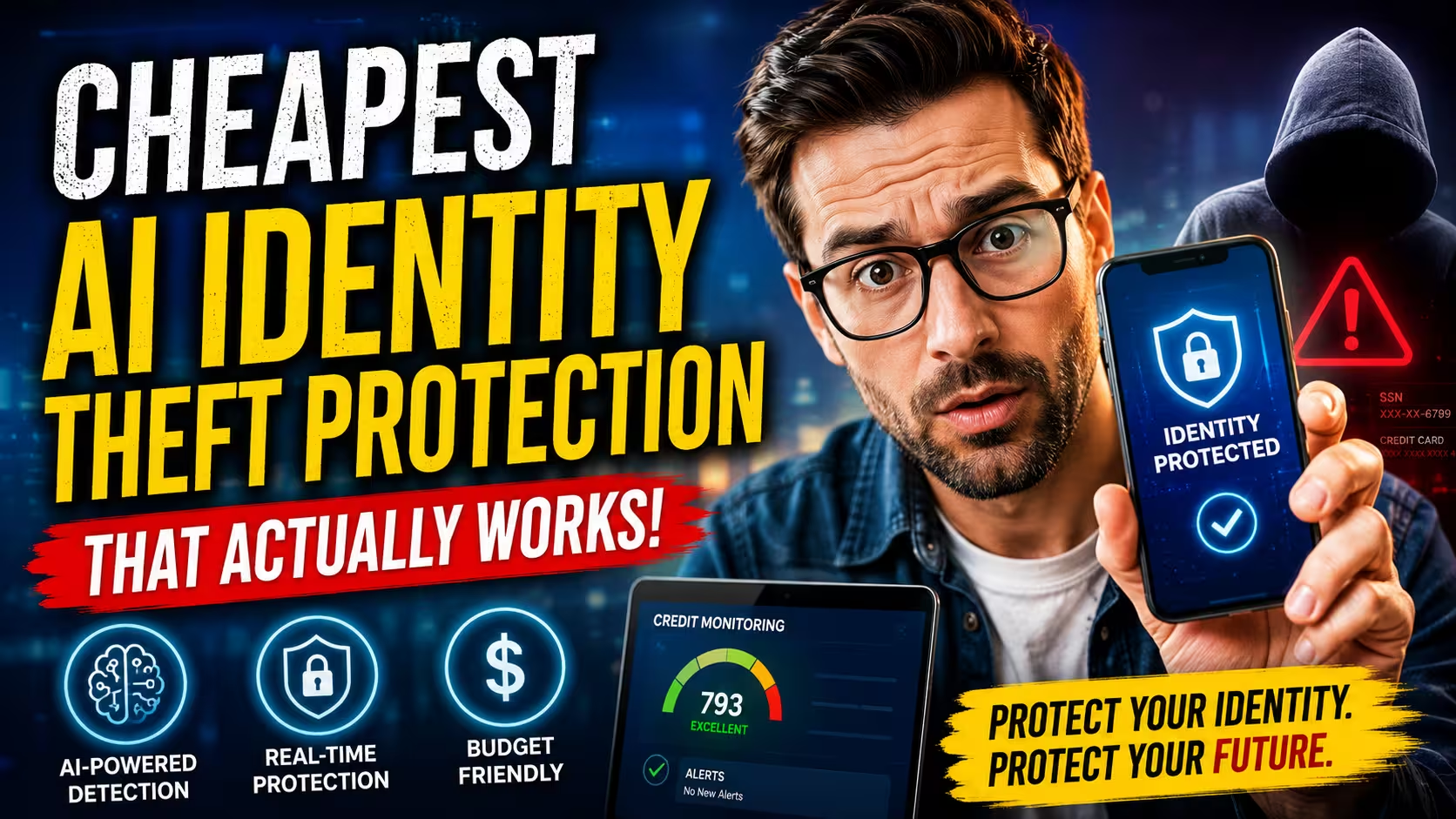
The cheapest AI identity theft protection plans with dark web monitoring start at $5.99 per month (Coveron), with EverSafe identity theft protection at $7.49, Zander Insurance identity theft protection at $6.75, and LifeLock identity theft protection at $8.33.
The right choice depends less on the headline price and more on what each plan actually monitors, insures, and restores — because those gaps are where low-cost plans quietly fail.
Most people shopping for identity theft protection make the same mistake. They filter by price, pick the cheapest option with a dark web monitoring checkbox, and assume the boxes they can’t see are covered. They usually aren’t.

Identity Theft, Fraud Prevention & Consumer Security Writer
Not even close. Internet crime losses climbed from under $4 million in 2020 to over $16 million annually by 2024, and the services best positioned to catch modern AI-driven fraud — credential stuffing, deepfake phishing, SSN stitching — are almost never the ones leading with a $6-per-month headline.
That doesn’t mean you have to overpay. It means you have to read the fine print before the auto-renewal hits.
That doesn’t mean you have to overpay. It means you have to read the fine print before the auto-renewal hits.
Best Cheapest AI Identity Theft Protection Plans at a Glance
Want the short answer before reading further? This summary covers the price, insurance ceiling, credit monitoring, and the key trade-off for each provider. Hover any plan for more focus.
Coveron
$5.99 /mo
- Max insurance$1M
- Credit monitoring1 or 3 bureau
~154% price jump at year-one renewal
Zander Insurance
$6.75 /mo
- Max insurance$2M
- Credit monitoringNone — manual only
No credit monitoring; self-checks required
EverSafe
$7.49 /mo
- Max insurance$1M
- Credit monitoring3-bureau (Gold)
No VPN or antivirus; senior-specialized only
LifeLock
$8.33 /mo
- Max insurance$3M
- Credit monitoring1 or 3 bureau
Steep renewal increases; confusing plan tiers
Aura
$12.00 /mo
- Max insurance$5M (Family)
- Credit monitoring3-bureau, all plans
iOS antivirus not available
IdentityForce
$19.90 /mo
- Max insurance$2M
- Credit monitoringOptional (higher tier)
High entry cost; credit monitoring costs extra
IDShield
$14.95 /mo
- Max insurance$3M
- Credit monitoring1 or 3 bureau
PI-led restoration is premium-tier only
Prices reflect starting monthly rates and can change. Always verify current pricing, exclusions, and reimbursement terms directly with each provider before you buy.
Table of Contents

What Does Dark Web Monitoring Actually Cover?
Dark web monitoring scans the dark web for your personally identifiable information (PII) — such as Social Security numbers, email addresses, passwords, and financial account details — and alerts you when that data appears in breach databases or criminal marketplaces.
Worth understanding before comparing prices: dark web monitoring isn’t one thing. Not even close to one thing. Some services scan 60 categories of PII. Others scan 260+. The number isn’t marketing padding, and it isn’t trivial.
Key Term: Dark Web Monitoring
Dark web monitoring is an automated scanning service that searches criminal forums, breach databases, and dark web marketplaces for your personal data. When a match is found, the service sends an alert — ideally fast enough for you to act before fraudulent accounts are opened in your name.
Key Term: Three-Bureau Credit Monitoring
Three-bureau credit monitoring tracks your credit file at all three major U.S. credit bureaus — Equifax, Experian, and TransUnion — simultaneously. Single-bureau monitoring only watches one bureau, which means fraud appearing at Equifax may go undetected if your plan only monitors Experian.
Key Term: Identity Theft Insurance / Stolen Funds Reimbursement
Identity theft insurance covers costs incurred during recovery, including legal fees, lost wages, and document replacement. Stolen funds reimbursement is a separate, specific type of coverage that reimburses money taken directly from your accounts. Many entry-level plans include only the former. Verify which applies before purchasing.
Key Term: SSN Stitching / Synthetic Identity Fraud
SSN stitching is a technique used by fraudsters who combine a real Social Security number with fabricated personal details to create a synthetic identity. This type of fraud exploits the data categories outside the basics — gamertags, investment account numbers, home titles, Medicare IDs — which is why the breadth of dark web scanning categories matters.
The categories outside the basics are exactly the data points synthetic identity fraudsters use to stitch convincing fake profiles around a real SSN.
Aura identity theft protection processes over 10 billion data points daily and monitors 260+ PII categories, with average fraud alerts landing around three minutes. That speed gap matters because it determines whether a fraudulent account application is still pending when you get the notification or already open — already open and funded. IdentityForce identity theft protection scans continuously, 24/7, and adds a “risk score” to every dark web hit so you know whether the exposed data is actively circulating or sitting in an old breach dump. Neither of these is the cheapest service on this list. But knowing what you’re comparing against is the whole point.

What Is the Cheapest AI Identity Theft Protection With Dark Web Monitoring?
Coveron identity theft protection is currently the lowest entry point for AI-powered identity protection with dark web scanning, at $5.99 per month. EverSafe identity theft protection starts at $7.49 (or $5.99 with a 20% senior discount for ages 60+). Zander Insurance identity theft protection runs $6.75 per month for individuals. LifeLock identity theft protection starts at $8.33 per month. Aura identity theft protection starts at $12.
Here’s the full picture on what each of those prices actually buys — because the gap between $5.99 and $12 is smaller than the gap between what each service delivers. Much smaller.
Cheapest AI Identity Theft Protection Compared
Swipe left to see full comparison →
| Provider | Starting Price (Monthly) | Max Insurance | Credit Monitoring | Key Trade-Off |
|---|---|---|---|---|
| Coveron | $5.99 /mo | $1M | 1 or 3 bureau | ~154% price jump at year-one renewal |
| Zander Insurance | $6.75 /mo | $2M | None — manual checks | No credit monitoring at all; self-checks required |
| EverSafe | $7.49 /mo | $1M | 3-bureau (Gold tier) | No VPN or antivirus; senior-specialized only |
| LifeLock | $8.33 /mo | $3M | 1 or 3 bureau (tier-dependent) | Steep renewal increases; confusing plan structure |
| Aura | $12.00 /mo | $5M (Family) | 3-bureau on all plans | iOS antivirus not available; social media monitoring limited to children |
| IDShield | $14.95 /mo | $3M | 1 or 3 bureau | Private investigator restoration is premium-tier only |
| IdentityForce | $19.90 /mo | $2M | Optional (higher tier) | High entry cost; credit monitoring costs extra |
Prices reflect starting monthly rates and are subject to change. The gap between $5.99 and $12 is smaller than the gap between what each service actually delivers — always verify current pricing, coverage limits, and reimbursement terms directly with each provider before you buy.

Does Zander Insurance Actually Qualify as AI Identity Protection?
Technically, no. Zander Insurance identity theft protection is a recovery-focused plan, not a monitoring-first one. It provides $2 million in insurance coverage and 24/7 U.S.-based recovery services, but includes no credit monitoring of any kind.
That’s an honest trade-off, not a hidden flaw. Dave Ramsey endorses Zander Insurance identity theft protection, and that endorsement reflects a genuine philosophy: by the time fraud appears on a credit report, some damage is already done, so the money is better spent on recovery than detection. Fair argument. What it means in practice is that you’re accepting a longer detection gap in exchange for a lower bill. Users who will actually pull free credit reports every few months from AnnualCreditReport.com can make that trade-off defensible. For most people, it isn’t. Not honestly.
What Hidden Costs Should You Watch for in Low-Price Plans?
Two pricing traps appear repeatedly: renewal markups and single-bureau credit monitoring. Both can significantly change what you actually pay and what you actually get.
Renewal markups: Coveron identity theft protection’s first-year rate runs $18.88 annually, then jumps to approximately $47.88 at renewal — an increase of about 154%. LifeLock identity theft protection’s entry tier faces similarly steep renewal increases that catch both individual buyers and corporate benefit managers off guard. Budget for what you’ll pay in year two, not year one.
Single-bureau vs. three-bureau credit monitoring: Several plans monitor only one credit bureau at the entry tier, reserving full three-bureau coverage for higher-priced plans. Fraud can appear at Equifax without touching Experian or TransUnion. Aura identity theft protection is the main exception — three-bureau monitoring is included on every plan tier, including the $12 entry. That single difference makes direct price comparisons misleading when cheaper alternatives offer one-bureau coverage and position it as equivalent. It isn’t.
Who Should Choose Which Service and Why?
The right choice depends on your household type, monitoring preferences, and willingness to self-manage. Below is a breakdown by situation.

Individual Professionals
Aura identity theft protection at $12 per month delivers three-bureau credit monitoring, home and auto title tracking, a VPN, and antivirus in a single app — with no features gated behind an upgrade tier. For someone who wants to set it up once and not think about it again, Aura is the most defensible single choice, even against lower-priced alternatives that require manual monitoring or separate app installs.
Aura identity theft protection is better suited for individual professionals who want consolidated, hands-off protection. Coveron identity theft protection works best for budget-conscious users comfortable managing year-two pricing expectations and some self-monitoring.

Families With Children
LifeLock identity theft protection’s family plan covers up to two adults and ten children, with $1.05 million in stolen funds reimbursement per child. Child identity theft is often undetected for a decade or longer — sometimes two — until the child applies for a student loan or first credit card and discovers a complete credit file already built in their name. That specific coverage makes LifeLock identity theft protection worth the renewal complexity for families, provided buyers budget for year-two pricing in advance.
Per the Consumer Financial Protection Bureau, parents can check whether a child has a credit report — a useful starting point before enrolling in any family plan.

Seniors
EverSafe identity theft protection at $7.49 per month — $5.99 after the 20% discount for ages 60 and older — is purpose-built for elder fraud. Nothing else on this list is. It monitors for unusual spending patterns that may signal cognitive decline or caregiver exploitation, allows a trusted family member or advisor to receive read-only alerts without transactional access, and flags retirement account irregularities that traditional credit monitoring never touches.
For higher-net-worth seniors, Aura identity theft protection’s $5 million family plan represents the highest available insurance ceiling on this list — relevant context given that, according to the FBI’s Internet Crime Complaint Center, senior fraud losses reached $3.4 billion in 2023.
Budget-Conscious Users Who Will Actually Self-Monitor
Zander Insurance identity theft protection at $6.75 per month, paired with free quarterly credit reports from AnnualCreditReport.com, provides recovery insurance plus basic manual detection. Low cost. Simple setup. The real gap is real-time alerting — you won’t receive a three-minute fraud notification. But if the alternative is paying for a premium service you never log into, Zander’s transparent pricing and straightforward model deliver more practical value than an unused dashboard with better features.

What Does Identity Theft Insurance Actually Pay Out?
Identity theft insurance coverage is typically divided into separate sub-caps for legal fees, lost wages, stolen fund reimbursement, and document reissuance. The headline dollar figure does not always reflect what any single category reimburses.
Aura identity theft protection’s $1 million per adult (up to $5 million on family plans) covers eligible losses including child and elderly care costs during recovery, and professional services such as accountants and private investigators at up to $125 per hour. LifeLock identity theft protection’s $3 million total coverage includes $1.05 million in stolen funds reimbursement specifically for child identity fraud — that sub-cap is the figure that actually matters if a minor’s SSN is compromised.
IDShield identity theft protection takes a different approach entirely. It assigns a licensed private investigator operating under a Limited Power of Attorney to manage recovery on the client’s behalf — removing administrative burden from the victim, but requiring buyers to understand what the underlying insurance actually reimburses before enrolling.
The most important question to verify before purchasing: whether stolen funds reimbursement is included, or whether the plan only covers out-of-pocket restoration costs such as legal fees and lost wages. Those are not the same coverage. Plenty of lower-priced plans offer only the latter.
Final Verdict: Which Cheapest AI Identity Theft Protection Plan Is Right for You?
No single plan is cheapest and best. The right plan is the one that matches your monitoring needs, household situation, and realistic year-two budget.
- Best overall value: Aura identity theft protection ($12/month) — three-bureau monitoring on every tier, no feature gating, all-in-one app
- Best for tight budgets: Coveron identity theft protection ($5.99/month) — lowest entry price, but verify renewal costs before committing
- Best for seniors: EverSafe identity theft protection ($5.99–$7.49/month) — only plan purpose-built for elder fraud and caregiver exploitation
- Best for families: LifeLock identity theft protection — $1.05M per-child stolen funds coverage is unmatched for households with minors
- Best recovery-only plan: Zander Insurance identity theft protection ($6.75/month) — honest trade-off for disciplined self-monitors; no credit monitoring included
- Best for continuous risk scoring: IdentityForce identity theft protection — 24/7 scanning with dark web risk scores; higher cost reflects more granular monitoring
- Best for full-service restoration: IDShield identity theft protection — licensed private investigator handling is the most hands-off recovery model available
Before purchasing any plan, verify current pricing, exclusions, and reimbursement terms directly with each provider. Plan details change, and the difference between what is advertised and what is covered often lives in the fine print.
Frequently Asked Questions
What is the cheapest AI identity theft protection with dark web monitoring?
Coveron starts at $5.99 per month and includes dark web scanning and identity monitoring. EverSafe starts at $7.49, or $5.99 with a senior discount. Zander Insurance is $6.75 per month but has no credit monitoring, requiring users to self-monitor manually.
Is one-bureau credit monitoring enough, or do I need three-bureau?
Three-bureau is better. Fraud can appear at one bureau without showing up at the others. Aura is currently the only major provider that includes three-bureau credit monitoring across all plan tiers, including the entry-level plan.
What happens to pricing at renewal with low-cost plans?
Significant markups are common. Coveron’s annual cost jumps roughly 154% after year one. LifeLock’s entry pricing also increases substantially at renewal. Budget for year-two pricing before committing to any plan that leads with an introductory rate.
Does identity theft insurance cover stolen money directly?
Only if the plan includes stolen funds reimbursement, which is separate from legal and administrative cost coverage. Verify this specifically before purchasing — many entry-level plans only cover out-of-pocket restoration expenses, not direct fund losses.
What is the best option for a family with young children?
LifeLock’s family plan, which covers up to ten children with $1.05 million in stolen funds reimbursement per child, is the most specialized option for households with minors. Child identity theft typically goes undetected for years, making early detection and high coverage limits particularly important here.
This article is for general informational purposes only and does not constitute financial or legal advice. Pricing and features are subject to change; verify directly with each provider before purchasing.
Editorial Integrity
Sources & Citations
Government guidance, consumer credit-report resources, identity theft recovery information, and financial-safety reporting tied directly to identity theft protection, monitoring, fraud alerts, claim support, and recovery workflows
This article draws on primary and near-primary sources covering identity theft reporting, credit-file review, fraud alerts, recovery steps, and related consumer-protection guidance used to evaluate how identity theft protection services work in practice.
View full sources, methodology, and editorial notes ⌄
This article was developed using source material closely tied to identity theft protection, fraud detection, and consumer recovery workflows. Where possible, claims should be supported with primary government guidance, official consumer credit resources, and directly relevant financial-safety reporting. Because monitoring features, insurance terms, recovery processes, and provider policies can change over time, readers should verify current plan details, exclusions, response procedures, and reimbursement requirements directly with the provider before enrolling or filing a claim.
- Official identity theft reporting and recovery guidance: IdentityTheft.gov — Federal Trade Commission — cited for official step-by-step recovery guidance, reporting workflows, and personalized recovery planning after identity theft.
- Official access point for free credit reports from the nationwide credit bureaus: AnnualCreditReport.com — Official Free Credit Reports — cited for reviewing credit files, monitoring unfamiliar accounts or inquiries, and checking for signs of fraud or identity misuse.
- How fraud alerts work and when consumers may use them: Federal Trade Commission — Credit Freezes and Fraud Alerts — cited for official guidance on fraud alerts, credit freezes, and the differences between these protection steps.
- Consumer guidance on checking whether a child has a credit report: Consumer Financial Protection Bureau — How do I check to see if a child has a credit report? — cited for official family-focused guidance relevant to identity theft involving minors.
- Credit-report rights and dispute guidance under federal law: Federal Trade Commission — Disputing Errors on Your Credit Reports — cited for guidance on correcting inaccurate credit information and responding to suspicious items.
- Consumer banking and fraud-safety guidance: Consumer Financial Protection Bureau — Fraud and Scams — cited for broader consumer-protection context around fraud prevention, scams, and financial account safety.
- General financial-crime and fraud trend context: Federal Reserve Financial Services — Fraud Risk Resources — cited for broader context on fraud risk, account abuse, and evolving financial-crime concerns that shape protection and monitoring expectations.
Our Editorial Standards
Tech Capital Hub applies Google’s E-E-A-T framework to every article on identity theft protection, prioritizing primary documentation, consumer-protection guidance, credit-report resources, and directly relevant fraud and recovery information over generic summaries or marketing claims.
View how our editorial standards apply to this article ⌄
Grounded in How Identity Theft Protection Works in Practice
Every claim here is shaped around how identity theft protection services perform after sign-up, not just how they are described in sales copy. We focus on the real differences between monitoring, alerts, fraud recovery support, reimbursement terms, and account-restoration help so readers can judge what a plan actually does when something goes wrong.
Credit Monitoring, Fraud Alerts, and Recovery Context
Coverage explains how identity theft risks show up across credit files, financial accounts, and personal data exposure, and how tools like credit monitoring, fraud alerts, freezes, dark web monitoring, and restoration services fit together. We also highlight where coverage limits, exclusions, and support quality can materially change the value of a protection plan.
Primary and Near-Primary Source Use
Claims are anchored to primary or near-primary sources where possible, including official identity theft recovery guidance, credit-report access resources, fraud-alert and freeze documentation, and directly relevant consumer-protection material. No recommendation should rely on product marketing language alone.
Transparent, Reviewable, and Correctable
Affiliate relationships are disclosed where relevant. Plan terms, claim procedures, pricing, and protection features can change, so content is reviewed and updated as better source material becomes available. Nothing here is legal, financial, insurance, or credit-repair advice. Corrections can be submitted directly to our editorial team at editorial@techcapitalhub.com.
About the Author
Marcus Delray
Identity Theft Protection & Fraud Prevention Writer
Marcus Delray writes about identity theft protection, credit monitoring, fraud alerts, and recovery support. He focuses on how protection plans work in the real world, where hidden limits and coverage gaps show up, and what readers should actually compare before choosing a service.
View full author bio, credentials, and links ⌄
Marcus Delray covers identity theft protection with a practical focus on how these services perform after sign-up, not just how they are marketed upfront. His work breaks down the differences between credit monitoring, identity monitoring, dark web monitoring, restoration assistance, and insurance-backed reimbursement so readers can understand what is actually included in a plan.
He also examines the fine print that many buyers miss, including claim limitations, waiting periods, exclusions, renewal pricing, and the distinction between monitoring alerts and hands-on recovery support. Rather than repeating marketing claims, he explains how to evaluate response speed, support quality, document requirements, and real-world usability when identity theft or fraud occurs.
His goal is to help readers compare providers with more confidence, avoid misleading feature lists, and choose protection based on practical coverage, recovery help, and long-term value.
- Explains the difference between credit monitoring, identity monitoring, dark web monitoring, and full-service identity recovery support
- Breaks down hidden costs, renewal markups, exclusions, and reimbursement limits that can affect the real value of identity protection plans
- Covers fraud alerts, recovery workflows, claim documentation, and the support experience readers may face after identity theft happens
- Helps readers compare plans based on practical protection, response quality, and long-term cost instead of headline feature lists alone
Enjoying our content?
Click below to add us as a preferred source. Google will prioritize our latest articles in your Top Stories, AI Mode, and AI Overviews.
Preferred Source on Google