
Custodial vs Non-Custodial Wallet: What’s the Real Difference?

Fintech Analyst · Founder of Tech Capital Hub
Marcus has spent more than a decade researching blockchain and financial technology. In this guide, he breaks down the real difference between custodial and non-custodial wallets — showing how private key control shapes true ownership, why self-custody matters, where custodial risk really comes from, and how beginners can confidently choose the right wallet from day one!
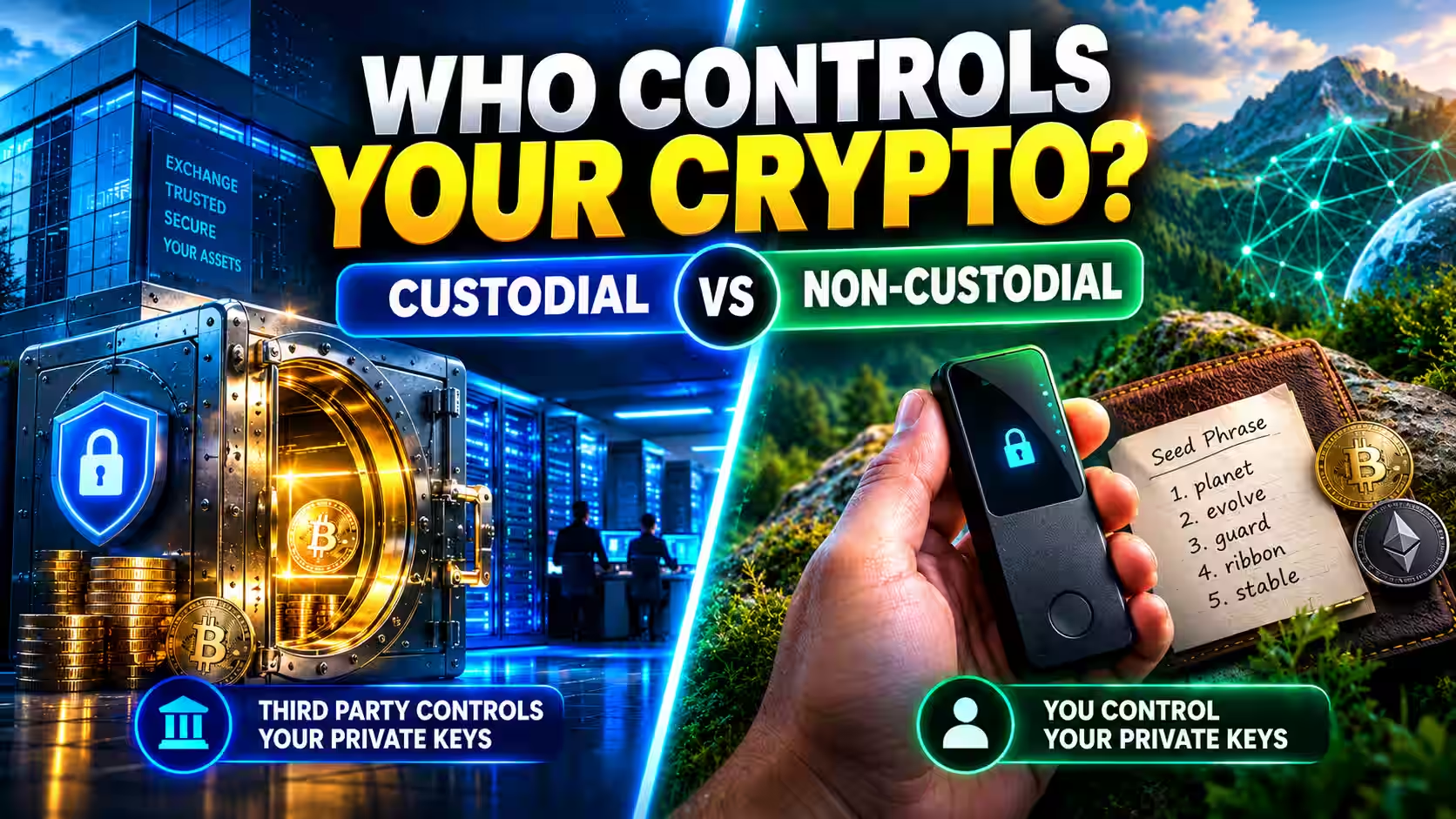
Quick Answer: A custodial wallet means a third party — like an exchange — holds your private keys on your behalf. A non-custodial wallet means you hold your own private keys and seed phrase directly. The core difference is simple: whoever controls the private keys controls the crypto. Every other difference in this guide flows from that one fact.
Most new crypto users hit the same fork early on: leave coins on the exchange, or move them to a personal wallet? That decision matters more than most people realize — and it has nothing to do with which app looks better.
Here’s the key: whoever holds the private key holds the crypto. That’s not a metaphor. It’s how blockchain ownership actually works. A custodial wallet lets a company manage those keys for you, trading some control for convenience and a recovery safety net. A non-custodial crypto wallet puts those keys directly in your hands, giving you full self-custody — and full responsibility.
Before going further, it helps to understand how wallets work at a basic level. Crypto Wallets Explained for Beginners is the pillar guide for this topic — it covers hot vs. cold storage, seed phrases, and how private keys connect to everything covered here. If you’re new to wallets, start there first and come back.
This guide focuses on one decision: custodial vs non-custodial wallet. You’ll get a plain-English breakdown, a side-by-side comparison table, pros and cons for each, how recovery actually works, an honest take on which is safer, and a simple framework to help you choose.
Table of Contents
The One Difference That Changes Everything
Takeaway: Every distinction between custodial and non-custodial wallets traces back to one question — who holds the private key?
Your crypto lives on the blockchain. Your private key is the credential that authorizes you to move it. That’s the whole system in one sentence.
There are only two custody models:
- Custodial: a third party holds and manages your private key on your behalf.
- Non-custodial: you generate, hold, and protect your own private key.
Everything else — recovery options, risk exposure, access control — follows directly from this one distinction. Think of it like a bank vault versus a home safe. A custodial wallet is the safe deposit box at the bank; they hold the master key. A non-custodial wallet is your own safe at home; you’re the only one with a key.
What Is a Custodial Wallet?
Takeaway: A custodial wallet lets a third party manage your private keys — you get convenience and account recovery in exchange for giving up direct control.
A custodial wallet is a wallet where an exchange or platform generates, stores, and controls the private keys on your behalf. The experience feels familiar: you log in with an email and password, and the platform handles everything underneath.
That familiarity comes with a cost. Your access depends entirely on the company staying solvent, honest, and operational. If the platform freezes withdrawals or goes under, you become a creditor — not an owner. That distinction matters enormously.
For a full breakdown of what a wallet actually is and where custody fits into the bigger picture, What Is a Crypto Wallet? explains it clearly.

What Is a Non-Custodial Wallet?
Takeaway: A non-custodial wallet gives you full self-custody of your private keys — but also full responsibility for your own backup and recovery.
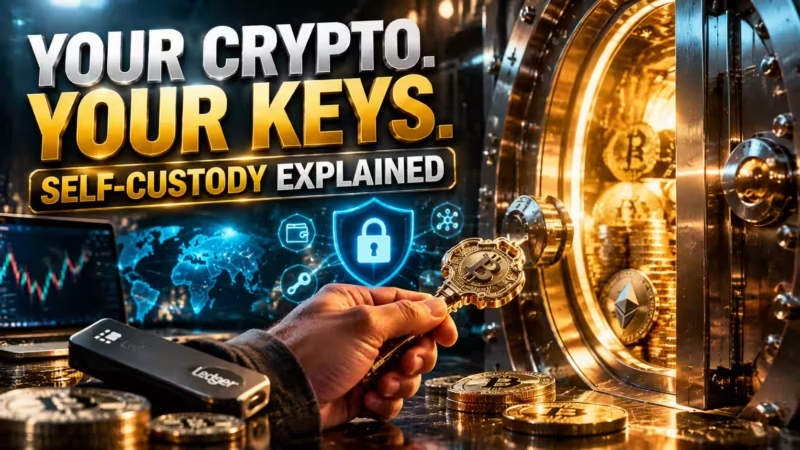
A non-custodial wallet is one where you generate and store your own private key and seed phrase, with no third party involved. Nobody can freeze your funds. No company’s solvency affects your access. That’s what self-custody actually means.
Non-custodial wallets come in two main forms:
- Hot wallet — software-based, like a DeFi app or browser extension (MetaMask, Phantom). Always connected to the internet.
- Cold wallet — a hardware device that stores your keys completely offline (Ledger, Trezor). Better for larger, long-term holdings.
The trade-off is clear: full control means full responsibility. There’s no support line and no password reset. Your seed phrase is the only way back in if something goes wrong.
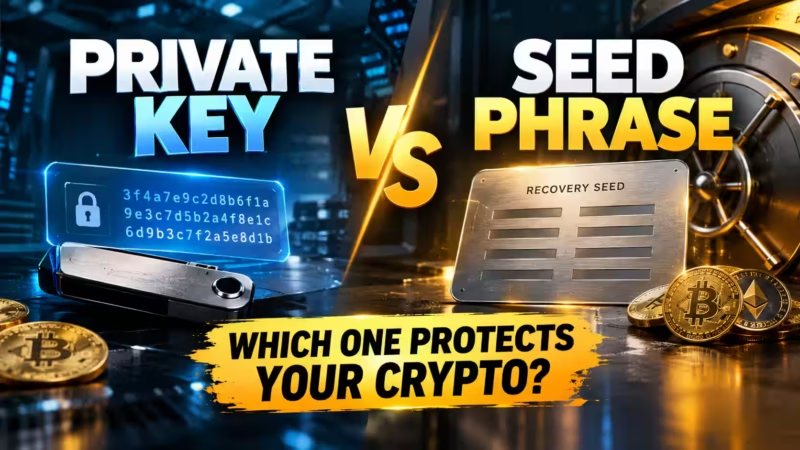
Learn exactly how that backup works in What Is a Seed Phrase? — and how private keys and seed phrases relate to each other in Private Key vs Seed Phrase.
Custodial vs Non-Custodial Wallet: The Core Difference
Takeaway: Every difference in the table below traces back to who holds the private key.
Custodial vs Non-Custodial Wallet: The Core Difference
Every row below traces back to one question — who actually holds the private key?
| Factor | Custodial Wallet | Non-Custodial Wallet |
|---|---|---|
| Who holds the private key | The exchange or platform | You |
| Backup / recovery method | Support team, password reset | Seed phrase only |
| Risk of frozen withdrawals | Yes — provider can restrict access | No — only you control access |
| Platform insolvency exposure | Yes | None |
| Ease of use for beginners | High | Moderate to high learning curve |
| DeFi and on-chain access | Limited | Full |
| Counterparty risk | Yes | No |
| Responsibility level | Shared with provider | Fully yours |

Why Private Key Control Matters More Than Most Beginners Realize
Takeaway: “Not your keys, not your coins” isn’t a slogan — it’s a literal description of how blockchain ownership works.
Blockchain records ownership by address, not by name. Your private key is the only proof of control over that address. With a custodial platform, the platform owns the on-chain asset. What you hold is an off-chain claim — essentially an IOU — against that platform.
A custodial balance works like a bank deposit: accessible only through the institution and subject to their rules. A non-custodial wallet works like physical cash: access is yours alone, and so is the risk of losing it.
This isn’t theoretical. The Vermont Department of Financial Regulation’s investor alert on cryptocurrency bankruptcies documents real cases involving FTX and Celsius, where customers who believed they owned their crypto were instead treated as creditors waiting in a bankruptcy queue. A court order in the Celsius case held that customer assets in certain accounts became property of the bankruptcy estate.
That’s the real-world cost of custodial wallet risk.
Pros and Cons of Custodial Wallets
Takeaway: Custodial wallets are easy to use and beginner-friendly — but convenience comes at the cost of true ownership.
Pros:
- Easy account recovery through customer support
- Familiar login flow (email, password, 2FA)
- No seed phrase to manage or store
- Integrated buy, sell, and trading features
- Low barrier to entry for first-time users
Cons:
- A third party controls access to your funds
- Platform insolvency or regulatory action can freeze withdrawals
- No direct DeFi or on-chain access
- Full counterparty risk — your funds depend on the provider’s stability
Pros and Cons of Non-Custodial Wallets
Takeaway: Non-custodial wallets give you genuine ownership and remove third-party risk — but they demand more from you.
Pros:
- You hold your private keys and seed phrase
- No platform can freeze or restrict your access
- Full DeFi and on-chain access
- No counterparty risk from provider insolvency
Cons:
- No customer support or password recovery
- Seed phrase loss is typically permanent and unrecoverable
- Steeper learning curve for beginners
- Full responsibility for wallet backup and security
Hardware wallets are the gold standard for non-custodial security. They keep your private keys offline and isolated from online threats. Ledger Academy’s hardware wallet explainer describes how private keys are stored inside a secure chip and never exposed to an internet-connected device — even when you’re signing a transaction.
Which Wallet Type Is Safer?
Takeaway: “Safer” depends entirely on which risk you’re trying to avoid — platform failure or personal error.
There are two separate threat models here:
- Platform risk: Non-custodial wins clearly. No company’s failure can affect your access.
- Personal error risk: Custodial may be safer for beginners, since support exists and recovery is possible without a seed phrase.
So which is actually safer? A non-custodial wallet with a properly backed-up seed phrase eliminates most personal-error risk. A custodial wallet with strong account security reduces most platform-access risk — but it cannot eliminate platform insolvency risk. Proper backup habits close most of the gap.
The honest answer: safety is not a feature of the wallet type — it’s a result of your habits.
How Recovery Works in Custodial vs Non-Custodial Wallets
Takeaway: Custodial recovery goes through a support team. Non-custodial recovery goes through your seed phrase — and nothing else.
Custodial wallet recovery:
Identity verification, an email or password reset, and a support ticket if needed. The platform restores your access.
Non-custodial wallet recovery:
Your seed phrase is the only key. Enter it into any compatible wallet app on a new device, and your funds are restored. Lose the seed phrase with no backup, and access is gone permanently.
Can a non-custodial wallet be recovered without the seed phrase? No. As MetaMask’s official recovery documentation confirms, there is no password reset and no way to recover a self-custodial wallet without the seed phrase — not even MetaMask’s own support team can do it.
For a deeper look at how private keys and seed phrases connect, see Private Key vs Seed Phrase.
Which Wallet Should a Beginner Choose First?
Takeaway: Custodial suits convenience-first beginners. Non-custodial suits ownership-focused users. Most people move toward self-custody as their confidence grows.
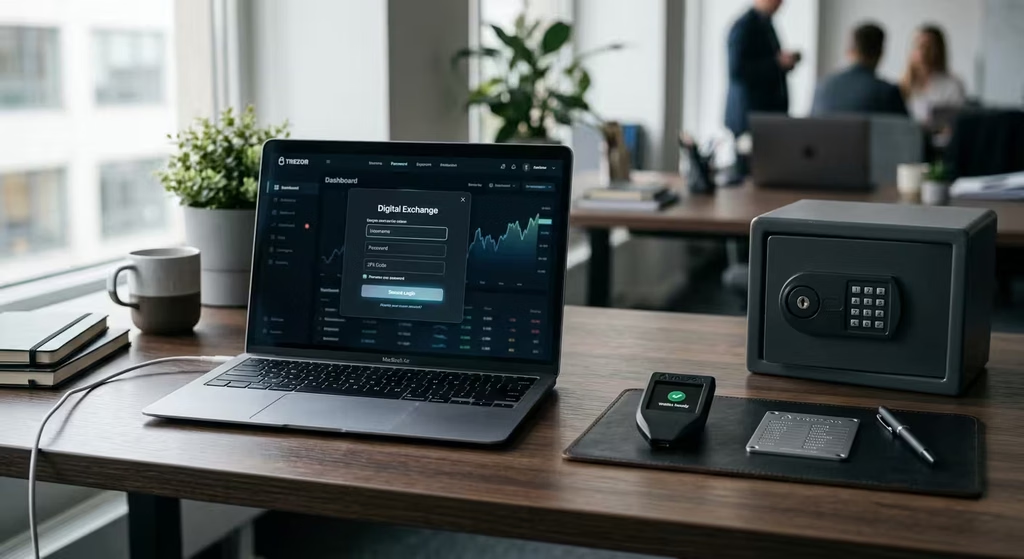
If you’re brand new and want the least friction, a custodial wallet is the easier starting point. If owning your crypto outright matters more to you than convenience, a non-custodial wallet is worth the learning curve from day one. This isn’t an either-or choice — it’s a progression many users move through naturally.
When a Custodial Wallet Makes Sense
- Frequent trading that requires quick buy/sell access
- Small amounts while you’re still learning the basics
- Wanting a recovery safety net while building confidence
- Not yet ready to manage a seed phrase independently
When a Non-Custodial Wallet Makes Sense
- Long-term holding where platform risk is a concern
- DeFi activity that needs direct on-chain access
- Larger balances you want protected from platform failure
- Privacy-conscious users who don’t want a third party in the loop
Best Beginner Strategy: Start Simple, Then Level Up
A practical path many experienced users follow looks like this:
- Start with a reputable custodial exchange to learn the basics.
- Move a small amount to a non-custodial hot wallet to get comfortable with self-custody.
- As your holdings grow, shift long-term savings to a hardware wallet for offline protection.
You don’t have to pick just one model. Many experienced users run both — active funds in a hot wallet, savings in cold storage. The full breakdown of hot vs. cold storage strategy lives in Crypto Wallets Explained for Beginners.
Common Mistakes Beginners Make With Both Wallet Types
Takeaway: Most crypto losses come from avoidable mistakes — not sophisticated hacks.
Custodial mistakes and fixes:
- Leaving large balances on an exchange long-term → Move significant holdings to self-custody.
- Skipping 2FA on exchange accounts → Enable app-based two-factor authentication, not SMS.
- Clicking support links in unsolicited emails → Always go directly to the exchange’s official site.
Non-custodial mistakes and fixes:
- Storing a seed phrase digitally (screenshots, notes apps, cloud) → Write it on paper, store offline only.
- Keeping only one backup copy → Store copies in at least two separate secure locations.
- Approving unknown smart contracts → Review and revoke permissions regularly using a trusted tool.
People Also Ask – Custodial vs Non-Custodial Wallet
Is Coinbase custodial or non-custodial?
Coinbase has two separate products. The main Coinbase exchange is custodial — Coinbase holds the private keys. Coinbase Wallet, the separate app, is non-custodial — you hold the keys and seed phrase yourself.
Is MetaMask custodial or non-custodial?
MetaMask is non-custodial. You generate and control your own private keys and seed phrase. MetaMask cannot access or recover your wallet for you.
Can a custodial wallet freeze my funds?
Yes. A custodial platform can restrict withdrawals due to regulatory action, insolvency, or internal policy. Your access depends entirely on the provider’s continued operation.
What is the difference between a hot wallet and a cold wallet?
A hot wallet stays connected to the internet for easy daily use. A cold wallet keeps your keys completely offline for stronger security. Both can be non-custodial — the hot/cold split is about storage method, not ownership model.
Should beginners use a custodial or non-custodial wallet?
Beginners often start with a custodial wallet for simplicity. As confidence grows, moving toward self-custody reduces dependence on a third party. The right choice depends on your comfort with managing a seed phrase.
What happens if I lose my seed phrase on a non-custodial wallet?
If you lose your seed phrase and also lose access to your wallet device, the funds are generally unrecoverable. There is no password reset and no support team that can restore a non-custodial wallet.
Is a non-custodial wallet free to use?
Most software non-custodial wallets are free to download and use. Hardware wallets — a form of non-custodial cold storage — have an upfront device cost, typically ranging from around $50 to $400.
What is a self-custodial wallet?
A self-custodial wallet is another term for a non-custodial wallet. It means you hold and control your own private keys, with no third party involved. Self-custody is the practice of managing your own crypto access and backup.
Final Verdict: Which Wallet Type Should You Choose?
The entire decision comes down to who holds the private key — and everything else flows from that one fact.
Here’s a simple, judgment-free framework:
- Choose custodial if you’re new, want convenience, or aren’t ready to manage a seed phrase yet.
- Choose non-custodial if you want full ownership, have meaningful holdings to protect, or want DeFi access.
- Use both if you want to balance active access with long-term security.
Before you change anything, audit where your current holdings actually sit. Knowing which custody model you’re already using is the first step toward making a more intentional choice.
For next steps, explore What Is a Seed Phrase?, Private Key vs Seed Phrase, and the full Crypto Wallets Explained for Beginners guide for a complete picture of how hot wallets, cold wallets, and self-custody all fit together.
This article is general educational information only and does not constitute financial or investment advice.
Cryptocurrency · Editorial Integrity
Sources & Citations
Official wallet documentation, security guidance, and public regulatory alerts behind this custodial vs non-custodial wallet guide — covering private keys, seed phrases, self-custody, exchange risk, hardware wallets, phishing scams, and real-world crypto bankruptcies!
Every claim in this guide is grounded in official wallet documentation, trusted security guidance, and named public regulatory alerts! Recovery phrase and self-custody basics follow MetaMask’s support guidance and the BIP-39 standard, wallet and key-pair mechanics draw on Ethereum.org, hardware and cold wallet details reference Ledger Academy, and exchange-risk context relies on the Vermont Department of Financial Regulation investor alert covering the FTX, Celsius, and Voyager bankruptcies. Scam-prevention tips lean on FTC consumer guidance. Because wallet features, security practices, and rules change fast, always check the latest official sources before you act on them.
View full sources, methodology, and editorial notes
This beginner guide was written using official wallet support documentation, open technical standards, hardware wallet educational resources, and public consumer-protection and regulatory alerts. We give preference to primary documentation and named public agencies where they directly support a claim about who holds the keys, how recovery phrases restore a wallet, how self-custody differs from exchange custody, how hardware and cold wallets protect private keys, or the real-world risks of leaving funds on a custodial platform. A few points are described in general terms where wallet features or legal details shift over time. This article is educational information, not financial or security advice.
- Recovery phrase, password, and self-custody basics: MetaMask Support — Secret Recovery Phrase, password, and private keys — cited for how self-custodial wallets rely on a recovery phrase, why it must never be shared, and why a provider cannot reset lost access.
- How wallets and key pairs work: Ethereum.org — Wallets — cited as official documentation for how crypto wallets work, the role of public and private keys, and why private keys must stay secret.
- Security guidance and scam prevention: Ethereum.org — Security and Scam Prevention — cited for the warning never to share your recovery phrase or private keys, and for why keeping keys offline protects your holdings.
- Seed phrase and recovery-phrase standard: BIP-39 — Mnemonic Code for Generating Deterministic Keys — cited as the open technical standard behind the 12-to-24 word recovery phrase used for non-custodial wallet backup and recovery.
- Hardware wallet fundamentals: Ledger Academy — What Is a Hardware Wallet? — cited for how hardware wallets generate and store private keys offline and why offline signing reduces online attack exposure.
- Cold wallet definition and use case: Ledger Academy — What Is a Cold Wallet? — cited for the distinction between cold wallets and hardware wallets, and for cold storage use cases for long-term asset protection.
- Physical mail phishing warning: Ledger Support — Physical Mail Phishing Scam — cited to support the warning that scammers may use fake security notices and QR-code-based recovery phrase theft, including offline-looking social engineering.
- Exchange custody and bankruptcy risk: Vermont Department of Financial Regulation — Investor Alert on Cryptocurrency Bankruptcy Cases — cited for real-world examples involving FTX, Celsius, and Voyager, and for the risks customers face when assets are held through troubled custodial platforms.
- Consumer guidance on crypto scams and irreversible loss: FTC — What to Know About Cryptocurrency and Scams — cited for the warning that no legitimate service will ever ask for your seed phrase, and for the consumer-protection context that crypto transfers are hard to reverse.
Custodial vs Non-Custodial Wallet · Editorial Standards
Our Editorial Standards
Tech Capital Hub applies Google’s E-E-A-T framework to every beginner crypto guide, favoring plain-English explanations, official documentation, and trusted security guidance over hype or unsupported claims. This guide leans on reliable references where they support specific points — MetaMask’s support documentation and the BIP-39 standard for how recovery phrases work, Ethereum.org’s wallet and security pages for how private keys and key pairs function, Ledger Academy for hardware and cold wallet details, and the Vermont Department of Financial Regulation investor alert on the FTX, Celsius, and Voyager bankruptcies for real exchange risk. Scam-prevention points follow FTC consumer guidance. Where wallet features or details shift over time, we explain the general principles rather than overstate certainty.
View how our editorial standards apply to this article
Written for Total Newcomers, Step by Step
This guide meets beginners right at the question that matters most — who actually controls your crypto? We walk you through the real choice between a custodial wallet, where a company holds your keys, and a non-custodial wallet, where you hold them yourself. Everyday framing anchors each lesson, from why “not your keys, not your coins” is literally true to what self-custody responsibility means day to day, so the ideas genuinely stick!
Keys, Custody, and Scams Without the Jargon
Coverage breaks down the concepts that keep beginners safe from day one. We clarify how private keys authorize transactions, how a seed phrase restores your whole wallet, why leaving funds on an exchange carries custodial risk, how hardware wallets keep keys offline, and how phishing scams target your recovery phrase. Every term — custodial, non-custodial, self-custody, private key, seed phrase — is defined in plain, friendly language before it’s ever used.
Official Docs and Trusted Sources Where They Fit
Specific claims are anchored to trusted references. Recovery phrase and self-custody basics draw on MetaMask’s support documentation and the BIP-39 standard, wallet and key-pair mechanics follow Ethereum.org, and hardware and cold wallet details reference Ledger Academy. Exchange-risk context relies on the Vermont Department of Financial Regulation investor alert covering FTX, Celsius, and Voyager, and scam-prevention guidance follows the FTC. We avoid promotional content and unverified claims as support for any point.
Honest About Custody, Control, and Trade-offs
We state the hard truths as plainly as the steps: a custodial wallet can freeze your withdrawals or collapse in bankruptcy, a non-custodial wallet puts full responsibility on you, and losing your seed phrase with no backup means your crypto is gone for good. Because wallet features and security practices change fast, this guide is reviewed and updated over time. Nothing here is financial or security advice. Corrections or source challenges can be sent to editorial@techcapitalhub.com.
Custodial vs Non-Custodial Wallet · About the Author
Marcus Delray
Fintech Analyst · Founder of Tech Capital Hub
Marcus Delray is a fintech analyst and the founder of Tech Capital Hub. In this guide, he explains the real difference between custodial and non-custodial wallets in plain terms — who actually holds your private keys, what self-custody really means, where exchange risk comes from, and how beginners can choose the right wallet with total confidence. His focus is on clarity and practical understanding, not hype!
View full author bio, credentials, and links
Marcus Delray has spent over a decade researching financial technology. He built Tech Capital Hub to make that research genuinely useful for everyday readers — from total beginners to people who already follow the market. He covers blockchain, DeFi, AI in finance, and business accounting tools, with a consistent focus on turning dense topics into clear, friendly, actionable guides.
For this guide, Marcus tackles the question every crypto beginner should ask first: who really controls your coins? He breaks down how private keys authorize every transaction, how a seed phrase can restore your entire wallet, and why the phrase “not your keys, not your coins” is literally true. He contrasts custodial wallets — where an exchange holds your keys and can freeze withdrawals or collapse in bankruptcy — with non-custodial wallets, where you hold the keys and the full responsibility.
Along the way, he explains the hard lessons from the FTX, Celsius, and Voyager failures, shows how hardware wallets keep private keys safely offline, and flags the phishing scams that try to trick you into handing over your recovery phrase. Where wallet features or details shift over time, he explains the general principles rather than overstate certainty. All articles are educational information, not financial or security advice.
- Explains the real difference between custodial and non-custodial wallets — and exactly who holds the private keys in each — in plain, jargon-free language
- Breaks down how private key control shapes true ownership, and why “not your keys, not your coins” matters for every beginner
- Walks through how a seed phrase backs up and recovers a non-custodial wallet, plus how hardware wallets keep keys offline and safe
- Unpacks real-world exchange risk using the FTX, Celsius, and Voyager bankruptcies, and warns about phishing scams targeting recovery phrases
- Grounds coverage in trusted sources — MetaMask support guidance, Ledger Academy, the Vermont Department of Financial Regulation investor alert, and FTC consumer guidance — with clear educational framing and no financial advice
Enjoying our content?
Click below to add us as a preferred source. Google will prioritize our latest articles in your Top Stories, AI Mode, and AI Overviews.
Preferred Source on Google




One thought on “Custodial vs Non-Custodial Wallet: What’s the Real Difference?”