DeFi Lending Explained: How Collateral, Interest Rates, and Liquidations Work

Fintech Analyst · Founder of Tech Capital Hub
Marcus has spent more than a decade researching blockchain, DeFi lending, and financial technology. In this guide, he explains how collateralized borrowing actually works, from loan-to-value ratios and variable interest rates to the health factor that decides when a loan gets liquidated. He also shows where smart contract risk hides and how beginners can borrow from a wallet without making costly mistakes.
You hold $10,000 in ETH. You need $4,000 for an expense. You also think ETH will climb, so you don’t want to sell.
DeFi lending gives you another option. You lock your crypto as collateral and borrow against it. No bank reviews your file. No credit check. No paperwork. Code runs the whole process from start to finish.
That freedom comes with strict rules. If prices fall too far, the protocol can sell part of your collateral automatically. This is called a liquidation. It’s the most common way beginners lose money with DeFi loans.
This guide explains what DeFi lending is, how collateral works, how interest rates move, and what triggers a liquidation. It also covers the real benefits and risks. If you’re brand new to the space, start with our beginner’s guide to what decentralized finance is and how it works. Then come back here for the lending mechanics.
This article is educational information only. It isn’t financial advice.
Quick Answer: What Is DeFi Lending?
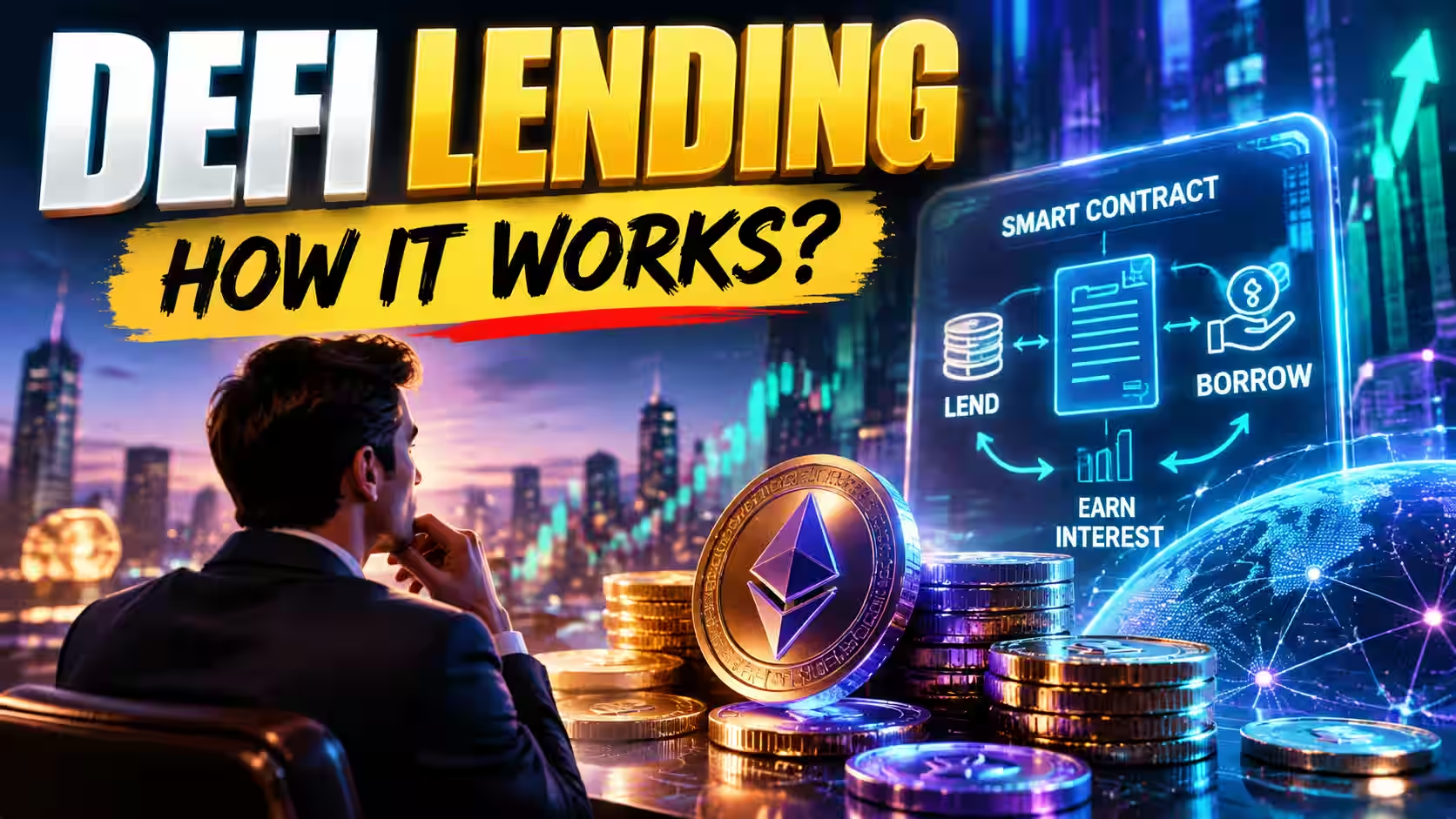
DeFi lending is a way to lend or borrow crypto through smart contracts on a blockchain, without a bank or credit check. Lenders deposit assets into a shared lending pool and earn interest. Borrowers lock up collateral worth more than their loan and draw from that pool. The whole process runs on code.
Key Takeaways
- DeFi lending runs on smart contracts, not banks or loan officers.
- Borrowers must lock up more value than they borrow.
- Interest rates adjust automatically based on supply and demand in each lending pool.
- Your health factor is a live score that shows how close your loan is to liquidation.
- If collateral value drops too far, outside liquidators repay part of your debt and take collateral plus a bonus.
- Borrow below your maximum limit, not up to it.
- DeFi deposits have no government insurance, so start small.
Table of Contents
What Is DeFi Lending?
DeFi lending is a pool-based credit market that runs entirely on code. There’s no bank, no loan officer, and no approval queue. Everything is handled by smart contracts on a public blockchain. People also call it on-chain lending, because every deposit, loan, and repayment is recorded permanently on-chain.
In DeFi, collateral replaces credit history, and a health factor replaces a banker’s risk check.
There are two roles in every DeFi lending market:
- Lenders (suppliers) deposit crypto into a pool and earn interest.
- Borrowers lock up collateral and take loans from that same pool.
Lenders aren’t matched one-to-one with borrowers. Everyone’s deposits sit together in one shared lending pool. Borrowers draw from it. The interest they pay flows back to the suppliers.
Aave, Compound, and Spark are well-known lending protocols. Each has its own settings, but the core mechanics match. According to the Aave v3 documentation, suppliers receive interest-bearing tokens whose balance grows as borrowers pay interest into the pool.
Lending consistently ranks among the largest DeFi categories by total value locked. You can track current figures on DefiLlama’s lending dashboard.
Who Uses DeFi Lending and Why
- Long-term holders who need cash but don’t want to sell their assets.
- Stablecoin holders who want to earn interest on idle dollars.
- Active traders who borrow to rebalance or hedge a position.
Some newer protocols also lend to real businesses through tokenized credit. Our roundup of real-world asset tokenization examples already live in 2026 shows how that model works today.
In short: DeFi lending is a shared marketplace for crypto credit, run by code instead of a company.
How DeFi Lending Works, Step by Step
Most lending protocols follow the same basic flow:
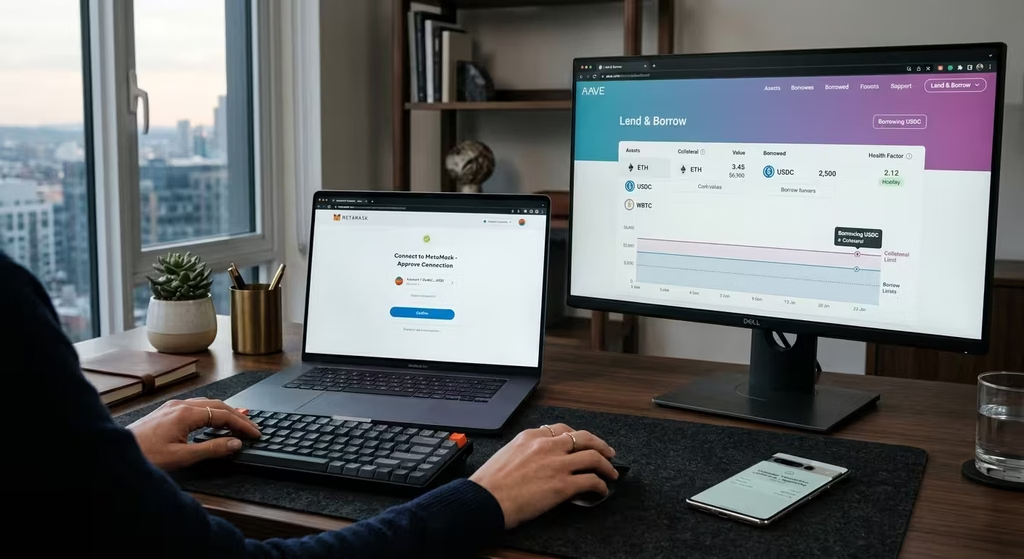
- Connect your wallet. You start with a wallet connection between a self-custody wallet, such as MetaMask, and the protocol’s app. You need a non-custodial wallet, because exchange accounts can’t connect to protocols directly.
- Deposit assets into a lending pool. You receive tokens that track your deposit plus the interest it earns.
- Enable your deposit as collateral. This step is optional. If you only want to lend, skip it.
- Borrow up to a set limit. Your limit depends on your collateral’s value and its maximum loan-to-value ratio.
- Repay the loan plus interest. You can repay anytime. Then you withdraw your collateral.
Each step is a separate blockchain transaction. Each one costs a network fee. You don’t interact with any person throughout this process — the smart contract handles everything.
The Role of Smart Contracts
A smart contract is a program stored on a blockchain that runs automatically when its conditions are met. There’s no human approval involved.
In DeFi lending, smart contracts handle every job a bank’s staff would normally do. They:
- Hold deposited funds.
- Track every balance and loan.
- Calculate interest in real time.
- Trigger liquidations when a loan becomes unsafe.
Loans are open 24/7. But code can contain bugs. Before you deposit, learn the basics of checking a protocol’s smart contract security.
Where Prices Come From: Oracles
A price oracle is a service that feeds real-world market prices into a blockchain protocol. Blockchains can’t see outside prices on their own.
Protocols rely on oracle networks, such as Chainlink data feeds, to bring that data on-chain. Every health check on your loan depends on those price updates being accurate.
What It Costs to Use a Lending Protocol
You pay two main costs:
- Interest on whatever you borrow.
- Gas fees for each deposit, borrow, repayment, and withdrawal.
Gas costs change with the network and how busy it is. A full borrow-and-repay cycle on Ethereum mainnet can cost much more than the same cycle on a Layer 2 network. Our guide to gas fees and other crypto costs shows how to keep them low.

How Collateral Works in DeFi Lending
Collateral is the backbone of every DeFi loan. Without it, the system can’t function. There are no credit scores in DeFi, so collateral is the only guarantee lenders have.
Why DeFi Loans Need Collateral
DeFi protocols don’t check credit scores. Most don’t verify identity either. That means there’s no way to chase a borrower who disappears.
Collateral fixes that gap. If a borrower never repays, the protocol uses the locked collateral to make lenders whole. That’s why crypto collateral loans are the standard model in DeFi.
The safest DeFi loan is usually the one that uses the least of your available borrowing power.
What Is Overcollateralization?
Overcollateralization means locking up more value than you borrow. For example, you might lock $1,500 of ETH to borrow $1,000 of USDC. The extra $500 acts as a buffer.
Why require a buffer? Crypto prices can swing 10% or more in one day. If collateral only matched the loan, a small dip would leave lenders exposed. The extra value gives the protocol time to act before a loan goes underwater.
The trade-off is that you can’t borrow the full value of what you own. In return, you get a loan with no credit check and, on most protocols, no fixed due date.
Loan-to-Value Ratio Explained
The loan-to-value ratio (LTV) is the percentage of your collateral’s value that you borrow.
LTV = Loan amount ÷ Collateral value
Borrow $4,000 against $10,000 of ETH, and your LTV is 40%.
Every asset has its own maximum LTV. Volatile assets usually get lower limits. Stablecoins and major assets like ETH often get higher ones. Protocol governance can change these limits, so always check current values on the protocol itself. All figures in this guide are illustrative.
Common Assets Used as Collateral
- ETH and liquid staked ETH tokens
- Wrapped Bitcoin (WBTC)
- Stablecoins such as USDC and DAI
- Other major tokens the protocol approves
Worked Example: Borrowing Without Selling
Hypothetical example. Maya holds $10,000 in ETH. She needs $4,000 but expects ETH to rise. Instead of selling, she deposits her ETH into a lending protocol and takes out a $4,000 crypto-backed loan in USDC.
Her LTV is 40%. She keeps her ETH exposure. She pays interest on the $4,000. When she repays, she withdraws her full ETH balance.
Say her ETH carries an 80% liquidation threshold. Her loan becomes eligible for liquidation only if her collateral falls to $5,000 — a 50% price drop from the start. That distance is her margin of safety.
In short: Collateral replaces your credit score. The buffer you keep above your loan is what protects you.
The 3 Numbers Every DeFi Borrower Should Watch
Most beginners focus on how much they can borrow. The three numbers below matter far more. Understand all three before you open any position.
1. Loan-to-Value Ratio (LTV)
This tells you how much you’ve borrowed relative to your collateral. A 40% LTV means you’ve borrowed $4,000 against $10,000 of collateral. The lower it is, the more buffer you have.
What to do: Never borrow at or near your maximum LTV. Leave room.
2. Liquidation Threshold
This is the danger line. When your loan reaches this percentage of your collateral’s value, your position can be liquidated. The liquidation threshold always sits above the max LTV, so there’s a built-in gap — but that gap can shrink fast in a falling market.
What to do: Know your threshold before you borrow. It differs by asset and protocol.
3. Health Factor
Your health factor is a live number that shows how far you are from liquidation.
Health factor = (Collateral value × Liquidation threshold) ÷ Debt
- Above 1: Your loan is safe for now.
- Below 1: Your position can be liquidated.
Watch this number daily. It moves every time your collateral price or debt balance changes.
What to do: Keep your health factor well above 1. If it drops toward 1.2 or lower, add collateral or repay part of the loan.
In DeFi, price volatility matters more than payment history. Your health factor is the number that captures both.
How DeFi Interest Rates Work
DeFi interest rates are not set by a committee. Supply and demand inside each pool set them automatically.
Supply APY vs Borrow APY
- Supply APY is what lenders earn.
- Borrow APY is what borrowers pay.
Borrow APY is always higher, for two reasons. First, not every deposited dollar is lent out, so idle funds dilute what lenders earn. Second, protocols keep a small slice of interest, called the reserve factor, to build a safety fund. Aave’s documentation confirms that supplier yields come from borrower interest minus that reserve factor.
Why Rates Change: The Utilization Rate
The utilization rate measures how much of a pool is currently borrowed.
Utilization = Total borrowed ÷ Total supplied
- High utilization pushes rates up. That draws in new lenders and discourages more borrowing.
- Low utilization pulls rates down. That encourages borrowing.
It works like ride-share surge pricing. When demand spikes, prices rise until supply catches up.
The “Kink”: When Rates Jump Fast
Most protocols set an optimal utilization point — for illustration, picture it around 80% to 90%.
Below that point, rates rise gently. Above it, they climb sharply. That steep jump protects lenders. If nearly every dollar is lent out, lenders can’t withdraw. Higher rates push borrowers to repay and free up cash.
Aave’s v3 overview describes this as a two-slope model: a mild slope up to the optimal point, then a much steeper one beyond it.
Variable vs Stable Rates
Most DeFi loans use a variable interest rate. Your rate shifts whenever the pool’s utilization changes.
Some protocols offered stable-rate borrowing in the past. Many have since limited or removed it. If you borrow today, expect your rate to move. A variable rate that starts low can climb if the pool fills up.
Worked Example: How a Lender Earns Interest
Hypothetical example. A USDC pool has $100 million supplied and $80 million borrowed. That’s 80% utilization. Borrowers pay 6% APY.
A rough supply APY estimate: 6% × 80% utilization × 90% (after a 10% reserve factor) ≈ 4.3%.
If borrowing demand surges past the kink, both rates jump quickly.
In short: An algorithm sets DeFi rates. It reacts instantly to how much of each pool is in use. There’s no fixed rate and no negotiation.
What Is Liquidation in DeFi?
A DeFi liquidation happens when your collateral’s value falls too low to safely support your loan. Outside users called liquidators can then repay part of your debt and claim some of your collateral at a discount. This protects lenders, but it costs the borrower.
Liquidation isn’t a penalty for a missed payment. Most DeFi loans have no payment schedule. It’s an automatic response to falling collateral value or growing debt.
Liquidation Threshold vs Max LTV
These two numbers sound alike, but they do different jobs:
- Max LTV is the most you can borrow.
- Liquidation threshold is the level at which your position can be liquidated.
The threshold always sits above the max LTV. That gap is a built-in cushion. Your real margin of safety depends on how far below the max you actually borrow.
What Is a Health Factor?
A health factor is a single number that shows how safe your DeFi loan is. Below 1 means you can be liquidated.
Health factor = (Collateral value × Liquidation threshold) ÷ Debt
- Above 1: Your loan is safe for now.
- Below 1: Your loan can be liquidated.
The term comes from Aave. Other protocols use similar measures under different names. The Aave Health Factor & Liquidations guide gives a concrete example: supply $10,000 in ETH with an 80% liquidation threshold, borrow $6,000, and your health factor is about 1.33.
Aave also notes that no single health factor is universally “safe.” The right level depends on how volatile your assets are and how closely your collateral and debt move together.
How a Liquidation Plays Out
- Your collateral’s price drops, or interest grows your debt.
- Your health factor falls below 1.
- A liquidator repays part of your debt.
- The liquidator receives an equal value of your collateral, plus a bonus.
- You keep the funds you borrowed but lose that slice of collateral.
That bonus is the liquidation penalty. It usually runs from a few percent to around 10%, depending on the asset and protocol.
How much can be liquidated at once also varies. Under Aave’s current rules, up to 50% of the debt can be liquidated when the health factor is between 0.95 and 1 and the position is large enough. Up to 100% can be liquidated once the health factor hits 0.95 or lower, or when the position is small.
Worked Example: Watching a Loan Approach Liquidation
Hypothetical setup: $10,000 ETH collateral, 80% liquidation threshold, $5,000 USDC borrowed.
Watching a Loan Approach Liquidation
Hypothetical setup: $10,000 ETH collateral, 80% liquidation threshold, and $5,000 USDC borrowed.
| ETH Price Change | Collateral Value | Health Factor | Status |
|---|---|---|---|
| 0% | $10,000 | 1.60 | Safe |
| −20% | $8,000 | 1.28 | Watch Closely |
| −30% | $7,000 | 1.12 | At Risk |
| −40% | $6,000 | 0.96 | Liquidatable |
Notice how quickly things shift. A 40% drop hurts, but it isn’t rare in crypto. This borrower started at a 50% LTV, which left a thin cushion. Starting at 30% LTV would have bought significantly more time.
How to Avoid Liquidation
- Borrow well below your max LTV.
- Borrow stablecoins against stablecoins when possible, since their prices move together.
- Set price alerts or use a position tracker.
- Keep spare funds ready to add collateral or repay part of the loan.
- Watch for volatile market events. Network congestion can raise gas fees and slow emergency repayments.
In short: Your health factor is your early warning system. Keep it high and check it often. The time to act is before it approaches 1, not after.

Common DeFi Lending Mistakes Beginners Make
Most DeFi lending losses don’t come from complicated exploits. They come from a handful of avoidable mistakes.
1. Borrowing Too Close to the Maximum
Your max LTV exists as a ceiling, not a target. Borrowing at or near it leaves almost no buffer. A 10% price drop can take a position from safe to liquidatable fast. Borrow at 40–50% of your maximum, not 90%.
2. Not Monitoring the Health Factor
DeFi positions don’t send you alerts by default. You have to check. Prices move while you sleep. A health factor of 1.3 that felt safe on Monday can drop to 0.9 by Wednesday. Set price alerts and check your dashboard daily.
3. Underestimating Gas Fees in a Crisis
If your health factor is dropping and you need to add collateral fast, you’ll be transacting during market volatility. That’s exactly when networks get congested and gas fees spike. If fees are too high, your emergency transaction might not go through in time. Our guide to gas fees and crypto costs explains how to plan for this.
4. Ignoring Variable Rate Risk
A borrow rate that looks low today can double or triple if the pool fills up. If you’re borrowing long-term, build in a cushion for a higher rate. Never count on today’s rate staying the same.
5. Skipping the Audit Check
Not all protocols are equally safe. Before you deposit, check the audit history. Use established protocols with long track records. Learn how to review a protocol’s smart contract security before you commit funds.
6. Using a Custodial Wallet
Exchange accounts can’t connect directly to DeFi protocols. You need a self-custody wallet. If you’re not sure which type you have, our guide on custodial vs non-custodial wallets explains the difference clearly.
DeFi lending removes credit checks, but it doesn’t remove risk. The mistakes above are where most of the real risk lives.

Benefits of DeFi Lending
- No credit check. Anyone with a wallet and approved collateral can borrow.
- Fast access. Loans settle in minutes, at any hour.
- Keep your exposure. You can borrow without selling your assets.
- Transparent terms. Rates, collateral, and pool sizes are visible on-chain.
- Flexible repayment. Most protocols have no fixed schedule. You repay when you choose, as long as your position stays healthy.
- Earn on idle assets. Lenders can put stablecoins and other tokens to work.
One note: borrowing, lending, and earning interest can all have tax consequences. Review the IRS guidance on digital assets or talk with a licensed tax professional before you scale up.
Risks of DeFi Lending Every Beginner Should Know
DeFi lending removes the middleman. It also removes the safety net. Here’s what can go wrong, ranked roughly by how often it affects beginners.
Liquidation Risk
The biggest risk for borrowers. A sharp price drop can wipe out a large share of your collateral in minutes. Liquidations run automatically, with no grace period and no warning call.
Smart Contract Risk
Bugs or exploits can drain a lending pool. Audits reduce this risk, but they can’t remove it. The DefiLlama hacks dashboard tracks documented losses across protocols. Before you deposit, learn how to review a protocol’s audit.
Oracle and Price Feed Risk
Your loan depends on accurate prices. If an oracle reports a faulty or manipulated price, it can trigger liquidations that shouldn’t happen. Established protocols use decentralized price feeds to reduce this risk.
Liquidity Risk for Lenders
When utilization runs very high, most of a pool is lent out. Lenders may not be able to withdraw right away. They have to wait for borrowers to repay or for new deposits to arrive.
Stablecoin and Asset Risk
Stablecoins can lose their dollar peg. Collateral tokens can lose value fast. Even lenders who never borrow can lose money if a pool’s assets collapse.
No Deposit Insurance
Bank deposits carry government protection up to set limits. DeFi deposits don’t. The FDIC confirms that crypto assets are not insured deposits. If a protocol fails, there’s no claims process. The SEC’s investor guide, What Should I Know Before I Buy Crypto, is worth reading before your first deposit.
Wallet Security Risk
In DeFi, you hold your own keys. If someone steals your seed phrase, they control your funds and your loan position. Learn how to protect your recovery phrase before you connect to any protocol.
Beginner Safety Checklist
- Start with an amount you can afford to lose.
- Stick to established protocols with long track records.
- Check the protocol’s audit history.
- Keep your health factor well above 1.
- Double-check the URL before every wallet connection to avoid phishing sites.

DeFi Lending vs Traditional Bank Loans
How does on-chain lending stack up against a loan from your bank?
DeFi Lending vs Traditional Bank Loans
A side-by-side comparison of how decentralized lending stacks up against traditional bank borrowing across approval, speed, collateral, repayment, and borrower protection.
| Feature | DeFi Lending | Bank Loan |
|---|---|---|
| Approval | Automatic, based on collateral | Credit check and paperwork |
| Speed | Minutes | Days to weeks |
| Collateral | Usually more than the loan amount | Varies; unsecured options exist |
| Interest Rates | Variable, set by supply and demand | Set by the lender |
| Repayment | Flexible, no fixed schedule | Fixed monthly payments |
| Default Handling | Automatic liquidation | Collections and credit damage |
| Protection | No deposit insurance | Regulated, with consumer protections |
DeFi wins on speed, access, and flexibility. Banks win on protection and lower collateral requirements. Neither model is strictly better. The right one depends on your situation and how much risk you’re prepared to manage yourself.
Centralized crypto lenders sit somewhere in between. Our breakdown of how centralized crypto platforms compare covers that side of the picture.
Regulators are still working out how existing rules apply to DeFi. The SEC’s Crypto Task Force and the CFTC-SEC Harmonization Initiative are the places to watch for updates.
DeFi Lending Quick-Reference Glossary
- Lending pool — a shared pool of deposited tokens that borrowers draw from and lenders earn interest on.
- Collateral — assets you lock up to secure a loan. If prices fall too far, the protocol can liquidate them.
- Loan-to-value ratio (LTV) — how much you borrow as a percentage of your collateral’s value.
- Liquidation threshold — the LTV level at which your position can be liquidated.
- Health factor — a live score showing how far you are from liquidation. Above 1 is safe. Below 1 is not.
- Overcollateralization — locking up more value than you borrow, to provide a safety buffer.
- Variable interest rate — a borrow rate that changes automatically as pool utilization moves.
- Oracle — a service that feeds live market prices into the blockchain so the protocol can value your collateral.
- Gas fees — the cost of processing a blockchain transaction, paid to the network, not the protocol.
- Liquidator — a third party who repays part of an undercollateralized loan in exchange for collateral at a discount.

More Ways to Use DeFi Beyond Lending
Lending is just one part of the DeFi toolkit. Once you understand it, these related areas get easier to follow:
- Decentralized exchanges: Swap tokens straight from your wallet, with no company in the middle.
- Liquidity pools: Token pairs that traders swap against on decentralized exchanges. They work differently from a lending pool.
- Yield farming: Moving assets between protocols to earn rewards.
- Impermanent loss: A hidden cost of supplying tokens to liquidity pools.
- Liquid staking: Earning staking rewards while keeping your tokens usable as collateral.
We’ll link deep-dive guides on each topic here as they publish.
Frequently Asked Questions About DeFi Lending
What is DeFi lending in simple terms?
DeFi lending is a way to lend or borrow crypto through smart contracts instead of a bank. Lenders deposit assets into a shared pool and earn interest. Borrowers lock up collateral and take loans from that pool. Smart contracts handle every step automatically, with no application and no credit check.
Can I get a DeFi loan without a credit check?
Yes. DeFi protocols rely on collateral, not credit history. Anyone with a wallet and approved assets can borrow. The trade-off is that you must lock up more value than you borrow, and your collateral can be liquidated if prices fall.
Why are DeFi loans overcollateralized?
Without identity or credit checks, collateral is the only protection lenders have. Crypto prices move fast, so protocols require extra value as a buffer. That buffer gives the system time to liquidate a loan before it’s worth less than the debt.
What happens if my DeFi loan gets liquidated?
A liquidator repays part of your debt and receives some of your collateral plus a liquidation bonus. You keep the funds you borrowed, but you lose that portion of collateral. That bonus is the real financial cost of getting liquidated, which is why prevention matters more than recovery.
How are DeFi interest rates set?
An algorithm sets them based on how much of a pool is currently borrowed. More borrowing pushes rates up. Less borrowing brings them down. Most loans use a variable interest rate that changes as the pool’s utilization moves. There’s no fixed rate and no lender to negotiate with.
What is a good health factor in DeFi?
Any health factor above 1 keeps you out of immediate liquidation. Cautious borrowers aim well above that — many target 1.5 or higher — to absorb sudden price drops without needing to act immediately. The right level depends on how volatile your collateral is and how quickly you can respond to price moves.
Is DeFi lending safe for beginners?
It carries real risks, including liquidation, smart contract exploits, oracle failures, and no deposit insurance. Starting small on established, audited protocols reduces those risks. It doesn’t remove them. Only use funds you can afford to lose, and monitor your position regularly.
Do I have to repay a DeFi loan on a schedule?
Usually not. Most protocols have no due date. But interest keeps adding to your debt over time, which slowly lowers your health factor. You must keep your position healthy, or it can be liquidated regardless of whether you’ve made a payment.
Can I lose money by lending crypto in DeFi?
Yes. Protocol exploits, stablecoin depegs, and pool failures can cause losses, even if you never borrow. Lenders can also face withdrawal delays when a pool is heavily borrowed and utilization is near its peak.
What’s the difference between a lending pool and a liquidity pool?
A lending pool holds deposited assets that borrowers take loans from. Lenders earn interest paid by those borrowers. A liquidity pool holds token pairs that traders swap against on a decentralized exchange. Liquidity providers earn trading fees, not loan interest. Both use smart contracts, but they serve different functions.
The Bottom Line on DeFi Lending
DeFi lending opens borrowing and earning to anyone with a wallet. It swaps credit checks for collateral rules. Those rules are simple, but they’re strict, and code enforces them without exceptions.
A healthy buffer matters more than chasing the maximum loan size.
Keep these four principles in mind:
- Collateral replaces your credit score.
- Interest rates move automatically with demand.
- Your health factor is your most important number. Watch it daily.
- Borrow conservatively and check your position often.
Your next step: set up a secure wallet first. Our guide to crypto wallets for beginners walks you through it. Then revisit our DeFi beginner’s guide to see how lending fits into the wider decentralized finance picture.
DeFi Lending Explained · Editorial Integrity
Sources & Citations
Protocol documentation, on-chain data, and official regulator guidance behind this guide to DeFi lending. It covers collateral, loan-to-value ratios, interest rates, health factor, liquidations, oracles, gas fees, and protocol risk.
Every key claim in this guide is grounded in official protocol documentation, public blockchain data, and U.S. regulator guidance. Lending, interest rate, health factor, and liquidation mechanics follow Aave’s own documentation. Smart contract and oracle explanations draw on Ethereum.org and Chainlink. Market size and exploit data come from DefiLlama’s live dashboards. Investor protection, regulatory, and tax points follow the FDIC, Investor.gov, the SEC, the CFTC, and the IRS. Protocol settings, rates, and rules change often, so always check the latest figures at the source before you borrow or lend.
View full sources, methodology, and editorial notes
This beginner guide was written using primary sources wherever possible. We relied on official lending protocol documentation, oracle and blockchain developer resources, live on-chain analytics, and public pages from U.S. regulators and tax authorities. We give preference to sources that explain how a protocol or rule actually works over promotional material or social posts. Worked examples, loan-to-value limits, liquidation thresholds, and interest rates in the article are illustrative. Real parameters vary by asset and protocol, and governance can change them at any time. Liquidation rules are described as published at the time of review. This article is educational information, not financial, legal, or tax advice.
- How supplying, borrowing, and interest rates work: Aave v3 Documentation — Overview — cited for interest-bearing supply tokens, over-collateralized borrowing, the two-slope interest rate model with an optimal utilization point, and supplier yields funded by borrower interest minus the reserve factor.
- Health factor and liquidation rules: Aave — Health Factor & Liquidations — cited for the health factor formula, the worked example with an 80% liquidation threshold, the point that no health factor is universally safe, and the rules on how much debt can be liquidated at once.
- How smart contracts run lending markets: Ethereum.org — Introduction to Smart Contracts — cited for the plain-language explanation of self-executing code that holds funds, tracks balances, and enforces loan rules without a middleman.
- Where collateral prices come from: Chainlink — Data Feeds Documentation — cited for how decentralized oracle networks bring market prices on-chain, which protocols use to value collateral and check loan health.
- Network costs for every lending transaction: Ethereum.org — Gas and Fees — cited for how gas fees are priced and why they rise during network congestion, which can slow emergency repayments.
- Size of the DeFi lending market: DefiLlama — Lending Protocols Dashboard — cited for live total value locked across lending protocols, supporting the point that lending ranks among the largest DeFi categories.
- Documented protocol exploits and losses: DefiLlama — Hacks Dashboard — cited for verified on-chain losses from smart contract exploits, supporting the article’s discussion of protocol risk.
- Wallet connection and recovery responsibility: MetaMask Support — Secret Recovery Phrase, Password, and Private Keys — cited for why DeFi borrowing requires a non-custodial wallet and why a stolen recovery phrase puts both funds and loan positions at risk.
- No deposit insurance for crypto: FDIC — Financial Products That Are Insured and Not Insured — cited to confirm that crypto assets are not insured deposits, a key difference between DeFi lending and bank products.
- Investor risk guidance: Investor.gov — What Should I Know Before I Buy Crypto — cited for consumer-facing guidance on crypto asset risks and due diligence before depositing funds.
- U.S. securities oversight of digital assets: U.S. SEC — Crypto Task Force — cited for the SEC’s current work on how securities law applies to crypto assets and DeFi.
- Coordinated federal oversight: U.S. CFTC — CFTC-SEC Harmonization Initiative — cited for the joint effort to clarify how the two agencies divide oversight of digital asset markets.
- Tax treatment of lending and borrowing activity: IRS — Digital Assets — cited to support the note that borrowing, lending, and earning interest on crypto can carry U.S. tax reporting obligations.
DeFi Lending Explained · Editorial Standards
Our Editorial Standards
Tech Capital Hub applies Google’s E-E-A-T framework to every beginner crypto guide. We favor plain-English explanations, official documentation, and verifiable on-chain data over hype or unsupported claims. In this guide, lending protocol documentation explains how collateral, interest rates, health factor, and liquidations actually work. Ethereum.org and Chainlink support our explanations of smart contracts, gas fees, and price oracles. DefiLlama’s live dashboards inform market size and exploit context. FDIC, Investor.gov, SEC, CFTC, and IRS guidance shape our notes on investor protection, regulation, and tax. Protocol settings and rules change often, so we treat every number as illustrative rather than permanent.
View how our editorial standards apply to this article
Built Around a Real Borrowing Decision
This guide starts with a choice many crypto holders face: sell your assets, or borrow against them? We walk through that decision with worked examples, not theory. You see how a loan’s health factor shifts as prices fall, how a lender’s yield is calculated, and how much buffer a cautious borrower keeps. “The 3 Numbers Every DeFi Borrower Should Watch” and the list of common beginner mistakes turn the mechanics into habits you can use from day one.
Protocol Mechanics Without the Jargon
Coverage focuses on the ideas that decide whether a DeFi loan stays safe. We explain overcollateralization, loan-to-value ratios, liquidation thresholds, and the health factor formula. We show how utilization drives variable interest rates, why rates jump past the “kink,” and how oracles feed collateral prices on-chain. We also cover wallet-based borrowing and gas costs during volatile markets. Every key term is defined in plain language, and a quick-reference glossary keeps them in one place.
Protocol Docs and Official Guidance Where They Fit
Specific claims are anchored to primary sources. Lending, rate, and liquidation mechanics follow official protocol documentation. Smart contract, gas, and oracle explanations draw on Ethereum.org and Chainlink. Market and exploit data come from DefiLlama. Deposit insurance, investor risk, regulatory, and tax points rely on the FDIC, Investor.gov, the SEC, the CFTC, and the IRS. We avoid promotional content, social posts, and unverified figures as support for any point.
Honest About Liquidations, Exploits, and Limits
We state the risks as plainly as the benefits. DeFi loans can be liquidated in minutes, with no grace period. Audited protocols can still be exploited, and faulty price feeds can trigger losses. DeFi deposits carry no government insurance, and lenders can face withdrawal delays. Example rates and thresholds are illustrative, since governance can change them at any time. This guide is reviewed and updated over time. Nothing here is financial, legal, or tax advice. Corrections or source challenges can be sent to editorial@techcapitalhub.com.
DeFi Lending Explained · About the Author
Marcus Delray
Fintech Analyst · Founder of Tech Capital Hub
Marcus Delray is a fintech analyst and the founder of Tech Capital Hub. In this guide, he explains how DeFi lending works in plain terms. He covers why every loan needs collateral, how loan-to-value ratios and variable interest rates shape your borrowing, and how the health factor decides when a position gets liquidated. His focus is on clarity and safe first steps, not hype.
View full author bio, credentials, and links
Marcus Delray has spent over a decade researching financial technology, blockchain infrastructure, and decentralized finance. He built Tech Capital Hub to make that research useful for everyday readers, from total beginners to people who already follow the market. He covers cryptocurrency, blockchain, DeFi, AI in finance, and business accounting tools, with a steady focus on turning dense topics into clear, actionable guides.
For this guide, Marcus tackles a choice many crypto holders face: sell your assets, or borrow against them? He explains how lending pools match suppliers and borrowers, why DeFi loans are overcollateralized, and how utilization drives variable interest rates past the “kink.” He walks through the health factor formula with worked examples, showing how a falling market can push a safe loan toward liquidation in a single move.
He also covers the risks many beginner guides gloss over, including smart contract exploits, faulty oracle prices, lender withdrawal delays, and gas fees that spike right when you need to act fast. “The 3 Numbers Every DeFi Borrower Should Watch” and his list of common beginner mistakes turn protocol mechanics into habits you can use from day one. Because protocol settings change through governance, he treats every rate and threshold as illustrative rather than permanent. All articles are educational information, not financial, legal, or tax advice.
- Explains DeFi lending in plain, jargon-free language, from lending pools and supply APY to wallet-based borrowing
- Breaks down collateral, loan-to-value ratios, and liquidation thresholds with clear formulas and worked examples
- Shows how the health factor works and how to keep a borrowing position safely above liquidation
- Clarifies hidden risks, including smart contract exploits, oracle failures, gas spikes, and the lack of deposit insurance
- Promotes beginner-safe habits like borrowing below the max, monitoring positions, and checking audits, grounded in protocol documentation and official regulator guidance
Enjoying our content?
Click below to add us as a preferred source. Google will prioritize our latest articles in your Top Stories, AI Mode, and AI Overviews.
Preferred Source on Google