
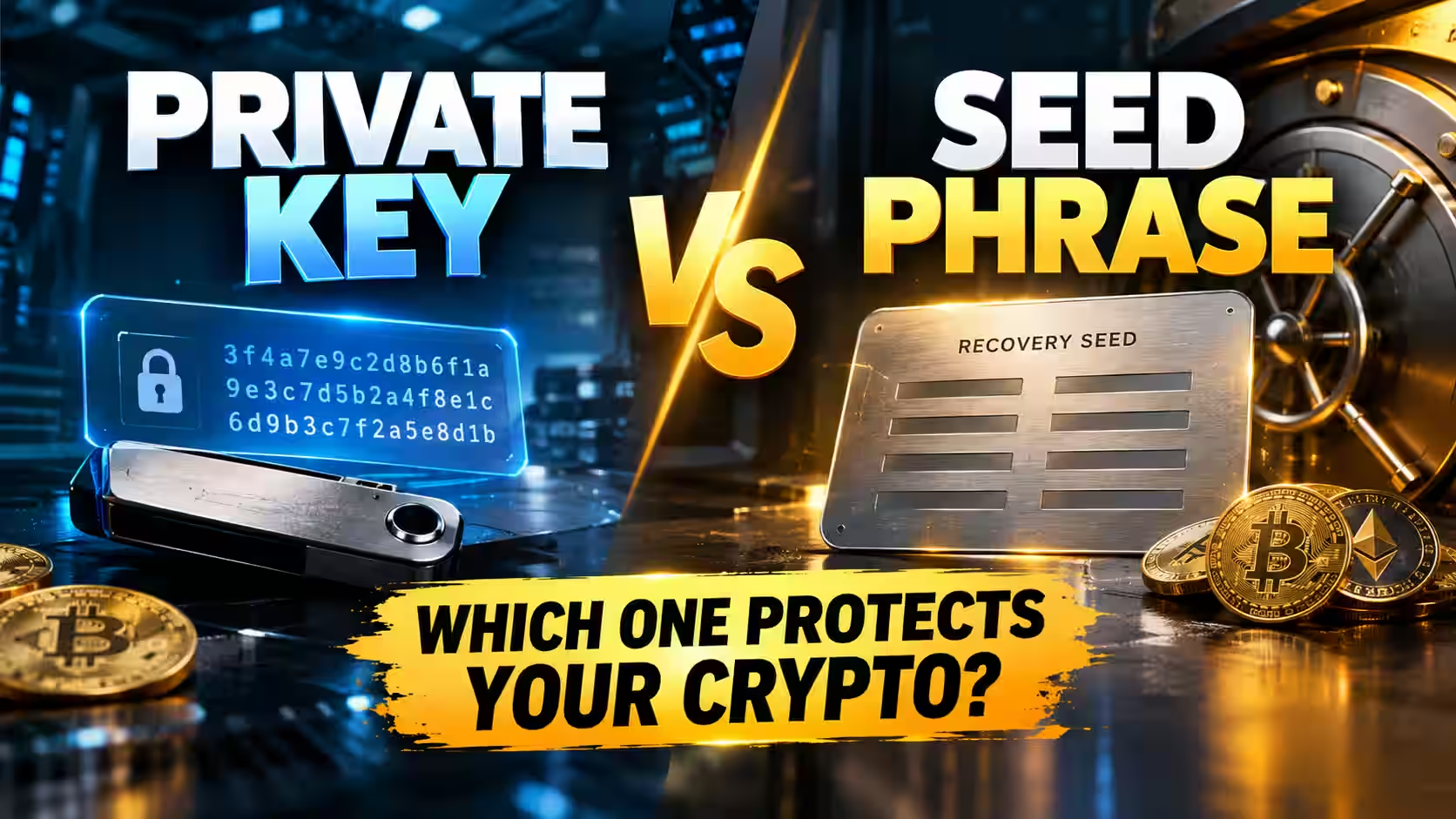
Private Key vs Seed Phrase: Which One Protects Your Crypto?

Fintech Analyst · Founder of Tech Capital Hub
Marcus has spent more than a decade researching blockchain and wallet security. In this guide, he explains the real difference between a private key and a seed phrase, what each one controls, which one to protect first, and the common backup mistakes that catch beginners off guard.
You set up your first crypto wallet, and suddenly two intimidating terms appear: private key and seed phrase. Which one actually matters? Which one do you protect first?
Here’s the good news. These two aren’t rivals. They work together as a team, at different levels, and once you see how they connect, everything makes sense. If you’re completely new to wallets, our crypto wallet guide for beginners is the best place to start. Come back here when you’re ready for the comparison.
By the end of this guide, you’ll know exactly what each one does, how they relate, and which one to guard first. Let’s keep it simple!
Private Key vs Seed Phrase: The Quick Answer
Quick answer: A private key controls one account and signs its transactions. A seed phrase is the master backup that can regenerate all your private keys and restore your entire wallet. Both must stay completely secret — but protect your seed phrase first, because it can rebuild everything.
A private key works at the account level. A seed phrase works at the wallet level. The seed phrase sits higher up in the hierarchy, which is exactly why it’s your top backup priority.
Table of Contents
What Is a Private Key? (Simple Definition)
A private key is a long, secret string of letters and numbers. It proves you own one specific account and lets you spend the crypto inside it.
Think of it as the unique key to one lockbox. It opens that box and only that box. Whoever holds the key controls what’s inside.
Here’s something that surprises most beginners: you rarely ever touch a private key directly. Your wallet manages it quietly in the background, so you never have to copy it out by hand.
What Does a Private Key Do?
Your private key has one main job — it signs your transactions. When you send crypto, your wallet uses the key to create a digital signature. That signature proves the request is genuinely yours, without ever exposing the key itself.
This is why it must stay completely secret. As Ethereum.org’s wallet documentation explains, each account is built on a pair of keys — one you share freely, one you keep hidden at all times. Anyone who obtains your private key can move your funds.
Private Key vs Public Key: A Quick Clarification
Every account has two keys that work as a pair. One is public. One is private.
- Public key / wallet address: Safe to share. It only lets people send crypto to you.
- Private key: Never share it. It’s the only thing that can authorize funds moving out.
The public key is mathematically derived from the private key, so they’re permanently linked. But the math only runs one way. Nobody can reverse-engineer your private key from your public address — and that’s the foundation of how crypto security works.

What Is a Seed Phrase? (Simple Definition)
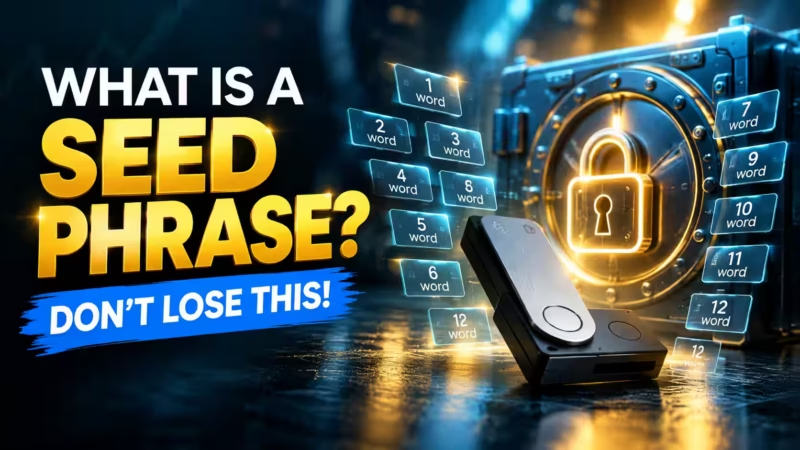
A seed phrase is a list of 12 to 24 simple words that acts as the master backup for your entire wallet. If your device is ever lost, stolen, or broken, those words restore everything on a new one.
Think of it as the master key that can recreate every lockbox key you own. One phrase, every account. That’s a big deal — and it’s exactly why the seed phrase deserves your strongest protection.
Those words aren’t random, either. They follow a widely adopted technical standard called BIP-39, which converts your wallet’s secret data into a human-readable set of words. Easy to write down, hard to mistype. You’ll also hear it called a recovery phrase, secret recovery phrase, or mnemonic phrase — they all mean the same thing. For a full walkthrough, our seed phrase guide for beginners covers everything you need to know.
How a Seed Phrase Creates Your Private Keys
Here’s where it all clicks. When you create a non-custodial wallet, it generates your seed phrase first. From that single phrase, the wallet can produce many private keys, across many accounts.
One phrase leads to many keys, which lead to many accounts. Type your seed phrase into a compatible wallet on a new device, and it rebuilds every account and key inside automatically.
The simple picture: Your seed phrase is the parent. Your private keys are the children it creates. That parent-child relationship is the whole hierarchy.
Private Key vs Seed Phrase: The Key Differences
They’re not rivals — they’re teammates working at different levels. Still, a side-by-side view makes the distinction immediately clear.
Side-by-Side Comparison Table
| Feature | Private Key | Seed Phrase |
|---|---|---|
| What it is | A long secret string of characters | A 12–24 word master backup |
| What it controls | A single account | Your entire wallet |
| Format | Random letters and numbers | Easy-to-read words |
| Main job | Sign transactions for one account | Restore your full wallet |
| Backup priority | Important, but secondary | Highest — protect this first! |
| How often beginners handle it | Rarely, if ever | During setup and recovery |
| Sharing rules | Never share it | Never share it |
Quick takeaway Your seed phrase is the master backup, and private keys are the account keys it creates. Guard your seed phrase like the keys to a vault — it can rebuild every key inside!
The One Thing to Remember
If you take just one idea from this section, make it this: the seed phrase is the master backup. Private keys are the individual account keys it creates. Guard your seed phrase like the master key to a vault, because it can rebuild every key inside.
What Most Articles Don’t Tell You
Most beginner guides stop at definitions. They explain what each term means but skip the practical details that actually change how you behave. Here’s what usually goes unsaid.
Your seed phrase is more powerful than your private key by design. Most wallet users never export or even see a raw private key. The seed phrase is the human-facing access point — readable, verifiable, and transferable to any new device. A raw private key, by contrast, is a long, unwieldy string that’s easy to mistype and nearly impossible to memorize.
One seed phrase covers your entire wallet. Beginners often assume each account needs its own separate backup. It doesn’t. One seed phrase covers every account inside that wallet. That’s the elegance of how modern hierarchical deterministic (HD) wallets work — one root, many branches.
Losing a single private key isn’t always catastrophic. If you have your seed phrase, you can regenerate any key it created. But if you lose the seed phrase with no backup, no individual key can save you — the foundation is gone.
A seed phrase is only as safe as where you store it. The strongest hardware wallet in the world becomes vulnerable if your seed phrase is sitting in a Google Doc. The device protects your key while it’s in use. Your backup habits protect it for the rest of your life.
Your crypto isn’t stored inside either one. This surprises a lot of newcomers. Your coins live on the blockchain, not inside your private key or seed phrase. Both are simply the credentials that prove ownership and authorize access. Understanding this is what makes wallet recovery feel logical rather than magical. Our beginner’s crypto wallet guide breaks this down further.

What Beginners Get Confused About Most
Let’s tackle the real mix-ups head-on, because these are the exact moments where newcomers stumble.
“Is my wallet address the same as my private key?”
No. Your wallet address is public and completely safe to share. Your private key is secret and must stay hidden. Sharing an address is like giving someone your email. Sharing a private key is like handing over your password.
“If I have my private key, do I still need my seed phrase?”
Yes. A single private key only restores one account. Your seed phrase restores your entire wallet. Keep both safe.
“Is a seed phrase just a password I can reset?”
No — and this catches a lot of beginners off guard. A forgotten password can be reset. A lost seed phrase cannot. No company can recover it for you in a non-custodial wallet. Ever.
“My exchange gave me a seed phrase — does that mean I’m in control?”
Not necessarily. Some exchanges display a phrase for a wallet they still technically manage. True self-custody means you set up the wallet on your own device, with no third party involved.
“Is it safe to photograph my seed phrase so I don’t lose it?”
No. Photos sync automatically to cloud storage, and cloud storage can be breached. A paper copy in a secure, offline location is still one of the safest options available.
The bigger pattern here: most beginner losses come from confusing these roles, not from sophisticated hacks. Get the roles straight, and you’re already well ahead.
Do You Need Both a Private Key and a Seed Phrase?
Yes — but your wallet handles both behind the scenes. You don’t have to manage them manually.
As a beginner, you’ll focus almost entirely on your seed phrase. That’s what your wallet asks you to write down during setup. Your private keys are generated and managed automatically inside the app or device.
When might someone interact with a raw private key? Rarely. Some advanced users export a single key to move one account between wallets. For most beginners, that situation may never come up at all — and that’s completely fine.
Which One Should You Protect? (The Real Answer)
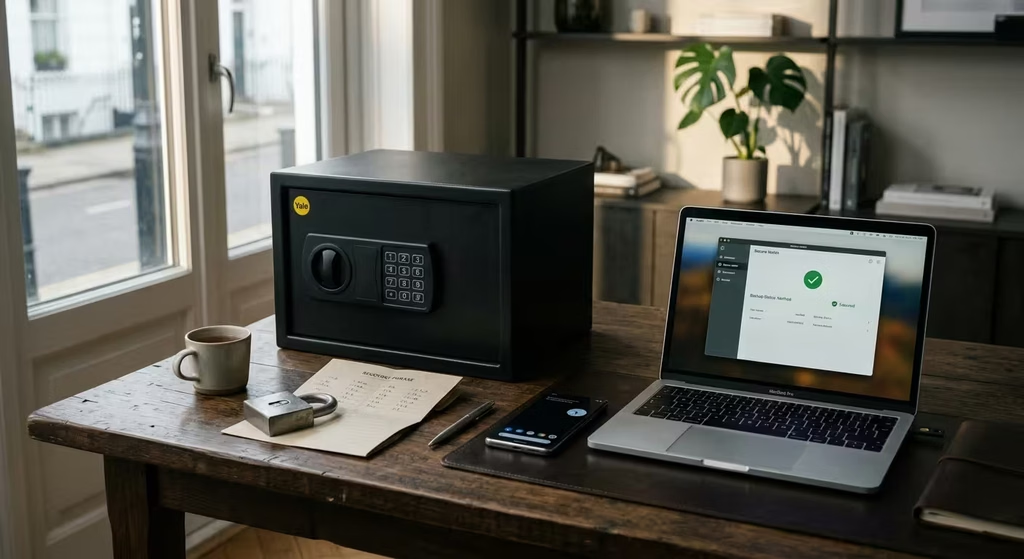
Protect your seed phrase first. It can rebuild every private key and restore your entire wallet, which makes it the biggest prize for any attacker.
That said, never expose either one. A compromised private key can drain one account. A compromised seed phrase can drain everything. Both deserve serious protection.
Golden Rules for Keeping Both Safe
Follow these habits from day one, and your security will be stronger than most beginners ever achieve.
- Keep it offline. Write your seed phrase on paper — not in a notes app, not in a password manager, not in a cloud document.
- Never screenshot it. As Ethereum.org’s security guidance warns, screenshots often sync automatically to cloud storage, where they can be reached by hackers.
- Never share it. No legitimate wallet provider, exchange, or support team will ever ask for it.
- Consider a metal backup. A stamped metal plate survives fire and flood far better than paper — especially valuable if you use a hardware wallet like Ledger for long-term cold storage.
Real Beginner Scenarios: What Actually Happens?
These aren’t abstract hypotheticals. They’re the situations real beginners face. Knowing the outcome in advance changes how you prepare.

Scenario 1: Lost Phone, Calm Recovery
You drop your phone in a lake on vacation. Your crypto wallet was on it. Panic sets in.
But here’s the relief: your coins were never inside the phone. They live on the blockchain. You buy a new device, download the wallet app from its official source, choose “restore wallet,” and enter your seed phrase. Your accounts come back, keys and all.
Now run the same scenario without a backup. Same lake, same phone — but you never wrote down your seed phrase. With no backup and no device, your crypto is gone permanently. Same accident. Two completely different endings.
Scenario 2: Someone Finds Your Private Key
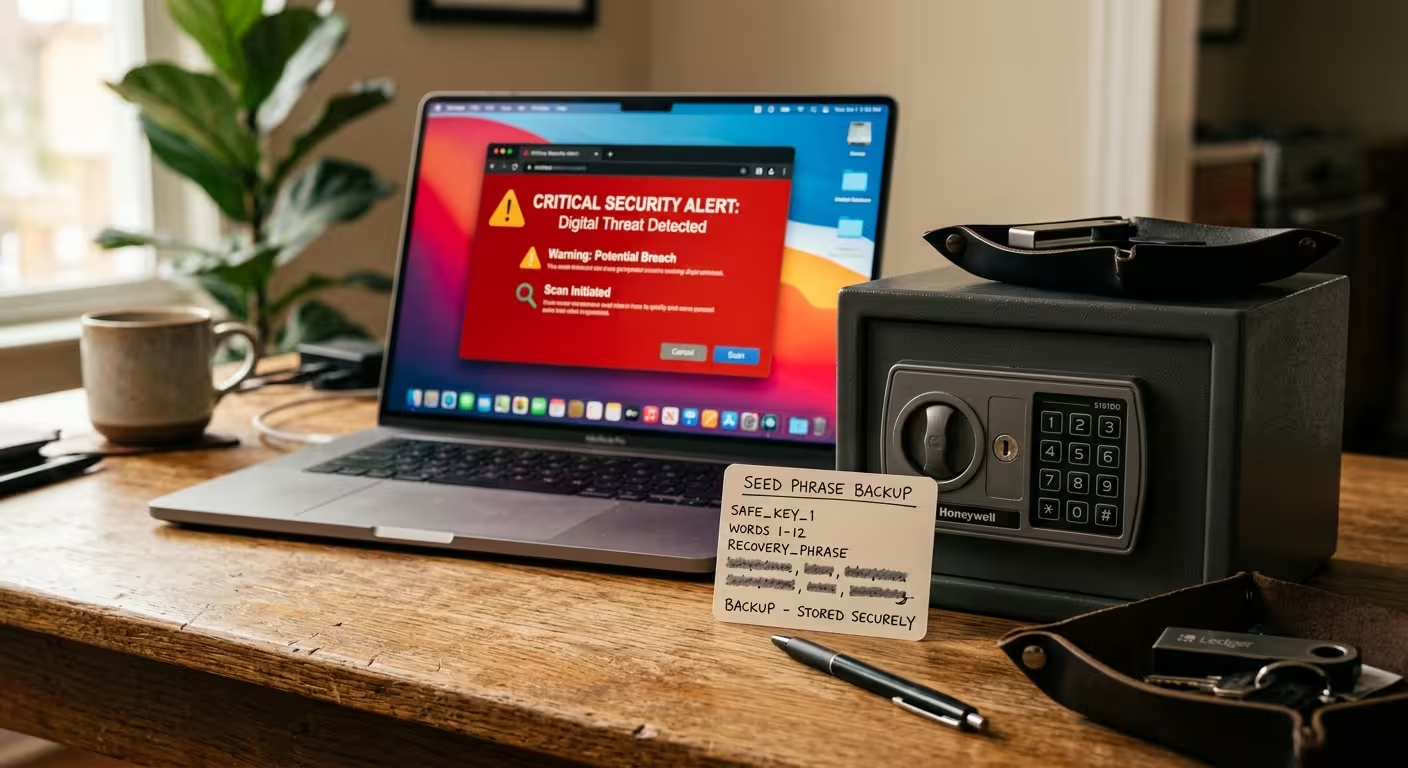
You exported a private key months ago to migrate one account. You saved it in a text file on your laptop. Your laptop gets compromised.
The attacker now controls that one account. But if your seed phrase was stored offline and untouched, every other account is safe. The damage is real but contained.
This is the difference in scope between a private key and a seed phrase. One is the key to a single door. The other is the key to the entire building.

Scenario 3: A Fake Support Agent Asks for Your Seed Phrase
You’re having trouble sending a transaction. Someone in a Discord server claims to be from your wallet’s support team. They send you a link and ask you to enter your seed phrase to “verify” your wallet.
This is a scam — one of the most common in crypto. No legitimate company, wallet provider, or support team will ever request your seed phrase. As Ethereum.org’s security guidance makes clear, anyone who asks for it is attempting theft. Close the conversation, don’t click the link, and report the account if you can.

Scenario 4: You Skip Writing Down Your Seed Phrase
Your wallet displays the seed phrase during setup. You think, “I’ll write it down later,” and skip past it in your excitement to get started.
Three months later, your phone is factory-reset during a software update. You open your wallet app. It’s gone, and so are your funds. You never backed up the phrase.
This happens far more often than most people admit. Write the phrase down the moment your wallet shows it. Don’t put it off. “Later” is one of the most common beginner crypto mistakes there is — and one of the most preventable.

Scenario 5: Upgrading to a Hardware Wallet
You decide to move from a software wallet to a hardware wallet for better long-term security. You set up the new device, which generates a fresh seed phrase. You write it down, transfer your funds to the new wallet address, and store the phrase offline.
You can now retire the old wallet entirely. Your keys are offline, your backup is secure, and your setup is meaningfully stronger than before. Our hot vs cold wallets guide walks through exactly when and how to make this move.
What Happens If You Lose Each One?
If You Lose Your Private Key
If you lose access to a single private key but still have your seed phrase, you’re generally fine. Your seed phrase can regenerate that key and restore the account. That’s exactly what it’s designed to do.
If You Lose Your Seed Phrase
This is the serious scenario. If you lose your seed phrase and also lose access to your wallet device, your crypto may be gone permanently.
There’s no password reset and no customer support line that can help you in a non-custodial setup. The FTC’s cryptocurrency guidance states it plainly: if you lose access to your wallet, no one can recover your funds for you. Your seed phrase is your one true safety net. Treat it that way.
Can Someone Steal Your Crypto With Either One?
Yes — and understanding the difference in scope is important.
A stolen private key gives an attacker access to one account. A stolen seed phrase gives an attacker access to your entire wallet, from anywhere in the world. That’s why scammers focus so heavily on tricking the seed phrase out of you.
The rule is simple and absolute: no legitimate service will ever ask for your private key or seed phrase. As Ethereum.org’s security page states clearly, never share your recovery phrase or private keys with anyone, for any reason. Confusing what’s safe to share is one of the most costly beginner crypto mistakes — and one that leads to permanent, unrecoverable loss.
Beginner Safety Tips: A Quick-Reference Checklist
Apply these habits from the start, and your protection will already exceed what most newcomers ever manage.
- Write your seed phrase on paper the moment your wallet shows it during setup.
- Store it in two secure, offline locations — one at home, one somewhere physically separate.
- Never type it into any website, pop-up, or unfamiliar app, regardless of how official it looks.
- Ignore anyone who asks for it. Fake support agents, giveaway scams, “wallet verification” requests — all theft attempts.
- Never use online seed phrase generators. Your wallet generates your phrase securely on your own device. That’s the only safe source.
- Test your backup once with a small amount before trusting it with your full holdings.
Where Everything Fits: Wallets, Custody, and Cold Storage
Private keys and seed phrases exist inside a bigger system. Seeing that system makes everything feel much more manageable.
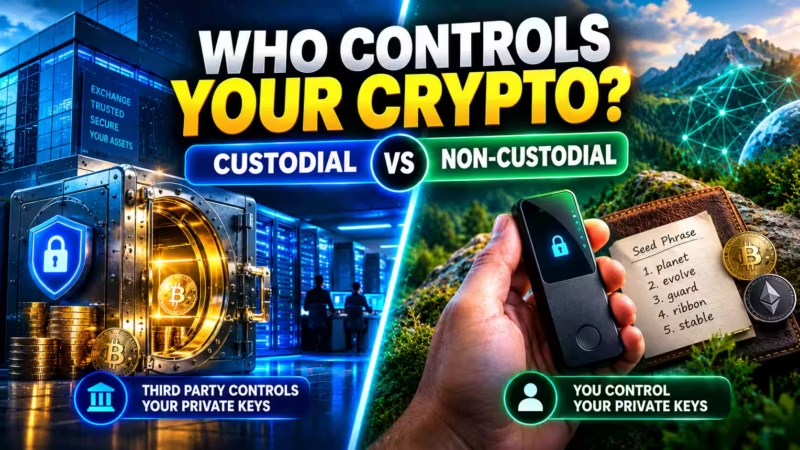
A non-custodial wallet means you hold your own keys. Self-custody puts you fully in control, which is why your seed phrase is so critical — it’s your only safety net. With a custodial wallet, a third party holds the keys on your behalf. That trades control for convenience, but it also introduces risk. If you’re weighing the decision, our hot vs cold wallets guide for beginners explains the trade-offs clearly.
A hardware wallet stores your private keys offline inside a dedicated physical device — the strongest form of everyday protection for serious holdings. As Ledger Academy explains, the private key is generated and stored inside a secure chip and never leaves it. Even so, your seed phrase remains the master offline backup, so all the same golden rules still apply.
Frequently Asked Questions
What is the difference between a private key and a seed phrase?
A private key controls a single account and authorizes its transactions. A seed phrase is a 12-to-24 word master backup that can regenerate all your private keys and restore your entire wallet.
Is a seed phrase the same as a private key?
No. They’re closely related but work at different levels. Your seed phrase generates your private keys, making it the higher-level master backup.
Do you need both a private key and a seed phrase?
Your wallet manages both automatically. As a beginner, your focus should be on protecting your seed phrase. Private keys are handled behind the scenes.
Which is more important — a private key or a seed phrase?
Your seed phrase is the higher priority because it can rebuild every private key and restore your whole wallet. That said, never expose either one.
Can a seed phrase recover a private key?
Yes. A seed phrase regenerates the private keys it originally created. That’s the core purpose of having one.
What happens if you lose your private key?
If you still have your seed phrase, you can restore the account. The seed phrase is designed specifically for this kind of recovery.
What happens if you lose your seed phrase?
If you also lose access to your wallet device, your crypto may be gone permanently. There’s no password reset for a non-custodial wallet — which is why an offline backup is non-negotiable.
Should you ever share your private key or seed phrase?
Never. No legitimate wallet provider, exchange, or support agent will ever ask for either one. Anyone who does is attempting to steal your funds.
Does one seed phrase control many private keys?
Yes. A single seed phrase can generate many private keys across multiple accounts, which is why it functions as the master key to your entire wallet.
Can I use the same seed phrase on multiple wallet apps?
Yes. Entering your seed phrase into a compatible wallet app restores all the same accounts. Just always download wallet apps from their official source — never from a link someone sends you.
Final Takeaways
A private key and a seed phrase aren’t competing concepts — they’re a team. The private key controls one account. The seed phrase is the master backup that can rebuild them all.
Protect both, but prioritize your seed phrase. It’s your wallet’s ultimate recovery tool. Keep it offline, make a second copy for a separate secure location, and never share it with anyone under any circumstances.
Your next step is practical: check your current backup right now. If your seed phrase is sitting in a screenshot, a notes app, or a cloud document, move it to paper or a metal backup today — and store it somewhere only you can reach.
This article is educational information only and is not financial, investment, tax, or security advice. Cryptocurrency carries risk, including the risk of total loss. Always do your own research and verify information against the latest official sources before taking any action.
Cryptocurrency · Editorial Integrity
Sources & Citations
Public documentation and current guidance behind this guide on private keys vs seed phrases — covering wallet recovery, key pairs, seed phrase standards, hardware wallets, scams, and backup safety.
Every core claim in this guide is supported by public wallet documentation, open technical standards, consumer scam guidance, and manufacturer education on hardware wallets. Key-pair and wallet basics reference official Ethereum documentation, seed phrase terminology and structure reference the BIP-39 standard, and safety guidance on recovery phrases, scams, and backup risks draws on official security and consumer-protection sources. Because wallet software, security practices, and regulatory language can change, always verify critical steps with the latest official documentation before moving funds.
View full sources, methodology, and editorial notes
This beginner guide was written using official wallet and security documentation, open technical standards, consumer-protection guidance, and manufacturer education materials. Preference is given to primary sources that directly support claims about how private keys authorize transactions, how seed phrases function as wallet backups, how hierarchical wallet recovery works in practice, and how users should protect self-custodied assets. Some examples are simplified for new readers, but the hierarchy between seed phrases, keys, and wallet recovery is grounded in public technical standards and official documentation. This article is educational information, not financial or security advice.
- Wallet basics and public/private key roles: Ethereum.org — Wallets — cited as official documentation for how crypto wallets work, the role of public and private keys, and why private keys must remain secret.
- Seed phrase standard and word-based wallet backup format: BIP-39 — Mnemonic Code for Generating Deterministic Keys — cited as the open technical standard behind the common 12- to 24-word seed phrase format used for wallet backup and recovery.
- Hierarchical deterministic wallet structure: BIP-32 — Hierarchical Deterministic Wallets — cited for the concept that one root secret can derive many keys and accounts, supporting the explanation that one seed phrase can regenerate multiple private keys.
- Security guidance on seed phrases, private keys, and scams: Ethereum.org — Security — cited for warnings not to share recovery phrases or private keys, plus practical security guidance for avoiding theft and phishing attacks.
- Consumer guidance on crypto scams and irreversible loss: Federal Trade Commission — What To Know About Cryptocurrency and Scams — cited for the consumer-protection context that crypto transfers are hard to reverse and lost wallet access may be permanent.
- Hardware wallet security and private key isolation: Ledger Academy — What Is a Hardware Wallet? — cited for the explanation that hardware wallets keep private keys isolated on a dedicated device rather than exposing them online.
- Recovery phrase safety and offline backup best practices: Ledger Support — How to Keep Your Recovery Phrase Safe — cited for practical guidance on offline storage, duplicate backups, and why recovery phrases should never be stored casually online.
- Self-custody wallet education and recovery phrase handling: Coinbase Learn — What Is a Recovery Phrase? — cited as supplemental beginner-friendly education on how recovery phrases work and why anyone with the phrase can restore the wallet.
Private Key vs Seed Phrase · Editorial Standards
Our Editorial Standards
Tech Capital Hub applies Google’s E-E-A-T framework to every beginner crypto guide, favoring plain-English explanations, official wallet documentation, open technical standards, and practical security guidance over hype or vague summaries. This guide relies on trusted sources where they support specific claims — including Ethereum’s wallet and security documentation for how key pairs and wallet recovery work, the BIP-39 and BIP-32 standards for seed phrase structure and hierarchical key generation, and consumer-protection guidance for scam prevention and irreversible wallet loss. Where wallet setup varies by provider, we explain the general principles without overstating uniformity.
View how our editorial standards apply to this article
Built for First-Time Wallet Users
This guide is written for readers who are seeing wallet security terms for the first time. It starts with the practical question beginners actually ask — what’s the difference between a private key and a seed phrase — then explains each term in plain language before connecting them through everyday recovery and backup scenarios. Real-world examples like a lost phone, a fake support message, or an exported key file are used to make the stakes easy to understand.
Wallet Recovery and Key Hierarchy Explained Clearly
Coverage focuses on the concepts that matter most to safe self-custody. We explain how a private key authorizes transactions for a single account, how a seed phrase acts as the master backup for a wallet, and how one phrase can regenerate many keys through hierarchical deterministic wallet design. Technical ideas are simplified for beginners, but not watered down beyond accuracy.
Grounded in Official Docs and Open Standards
Specific claims are anchored to authoritative references where they fit. Wallet and key-pair mechanics draw on Ethereum’s official wallet documentation, seed phrase terminology references the BIP-39 standard, hierarchical wallet structure references BIP-32, and scam and loss guidance is supported by published security and consumer-protection sources. We avoid unsupported claims, anonymous advice, and promotional framing as evidence.
Clear About Risks, Limits, and Security Trade-offs
We state the central risk plainly: anyone who gets your private key or seed phrase can potentially control your funds, and a lost recovery phrase may mean permanent loss in a non-custodial setup. This guide does not present wallet security as foolproof or reversible, and it does not treat convenience as a substitute for backup discipline. Nothing here is financial, investment, or security advice. Corrections or source challenges can be sent to editorial@techcapitalhub.com.
Cryptocurrency · About the Author
Marcus Delray
Fintech Analyst · Founder of Tech Capital Hub
Marcus Delray is a fintech analyst and the founder of Tech Capital Hub. In this guide, he explains the difference between a private key and a seed phrase in simple terms — showing how one controls a single account, how the other restores an entire wallet, and why beginners should protect both with an offline backup mindset.
View full author bio, credentials, and links
Marcus Delray has spent over a decade researching financial technology. He built Tech Capital Hub to make that research useful for everyday readers — from complete beginners to more experienced market followers. His coverage focuses on cryptocurrency, blockchain, DeFi, AI in finance, and practical money-tech topics, always with an emphasis on clarity over hype.
For this guide, Marcus breaks down one of the most common beginner wallet questions: private key vs seed phrase. He explains how private keys authorize transactions for individual accounts, how seed phrases act as the master backup for an entire wallet, and how modern wallets generate multiple keys from a single recovery phrase. He also highlights the real-world security implications — including backup mistakes, phishing risks, fake support scams, and the difference between recovering one account versus restoring a full wallet. The goal is simple: help readers understand self-custody in plain language before costly mistakes happen. All content is educational information, not financial advice.
- Explains the difference between private keys and seed phrases in beginner-friendly, jargon-free language
- Clarifies how seed phrases generate and restore wallet access across multiple accounts
- Breaks down wallet backup, recovery, and self-custody risks with practical real-world examples
- Covers common beginner mistakes such as screenshots, cloud backups, phishing, and fake wallet support scams
- Grounds coverage in wallet security best practices, official documentation, and clear educational framing with no financial advice
Enjoying our content?
Click below to add us as a preferred source. Google will prioritize our latest articles in your Top Stories, AI Mode, and AI Overviews.
Preferred Source on Google



One thought on “Private Key vs Seed Phrase: Which One Protects Your Crypto?”