
What Is a Seed Phrase? A Beginner’s Guide to Recovery Phrases and Backup Safety

Fintech Analyst · Founder of Tech Capital Hub
Marcus has spent more than a decade researching blockchain and financial technology. This is the ultimate easy guide to seed phrases for beginners! He breaks down exactly what a seed phrase is, how recovery phrases and private keys keep your crypto safe, the simple difference between paper and metal backups, and the step-by-step way to store your words offline and dodge scams — the clear, beginner-safe roadmap every newcomer will love!
You just set up your first crypto wallet. Then the screen shows 12 or 24 random words and tells you to write them down. That’s your seed phrase, and it’s the single most important part of owning crypto safely!
This is the ultimate easy beginner’s guide to seed phrases! By the end, you’ll know exactly what a seed phrase is, how it works, and the simple, foolproof way to keep yours safe from day one. If you’re still getting familiar with the bigger picture, this crypto wallet guide for beginners explains where seed phrases fit into wallet ownership, recovery, and self-custody
Here’s what you’ll walk away with:
- A plain-English definition of a seed phrase and how it protects your crypto
- The golden rules for storing and backing it up safely
- Direct answers to every worried question beginners ask
Let’s make this easy!
Table of Contents

What Is a Seed Phrase? (Simple Definition)
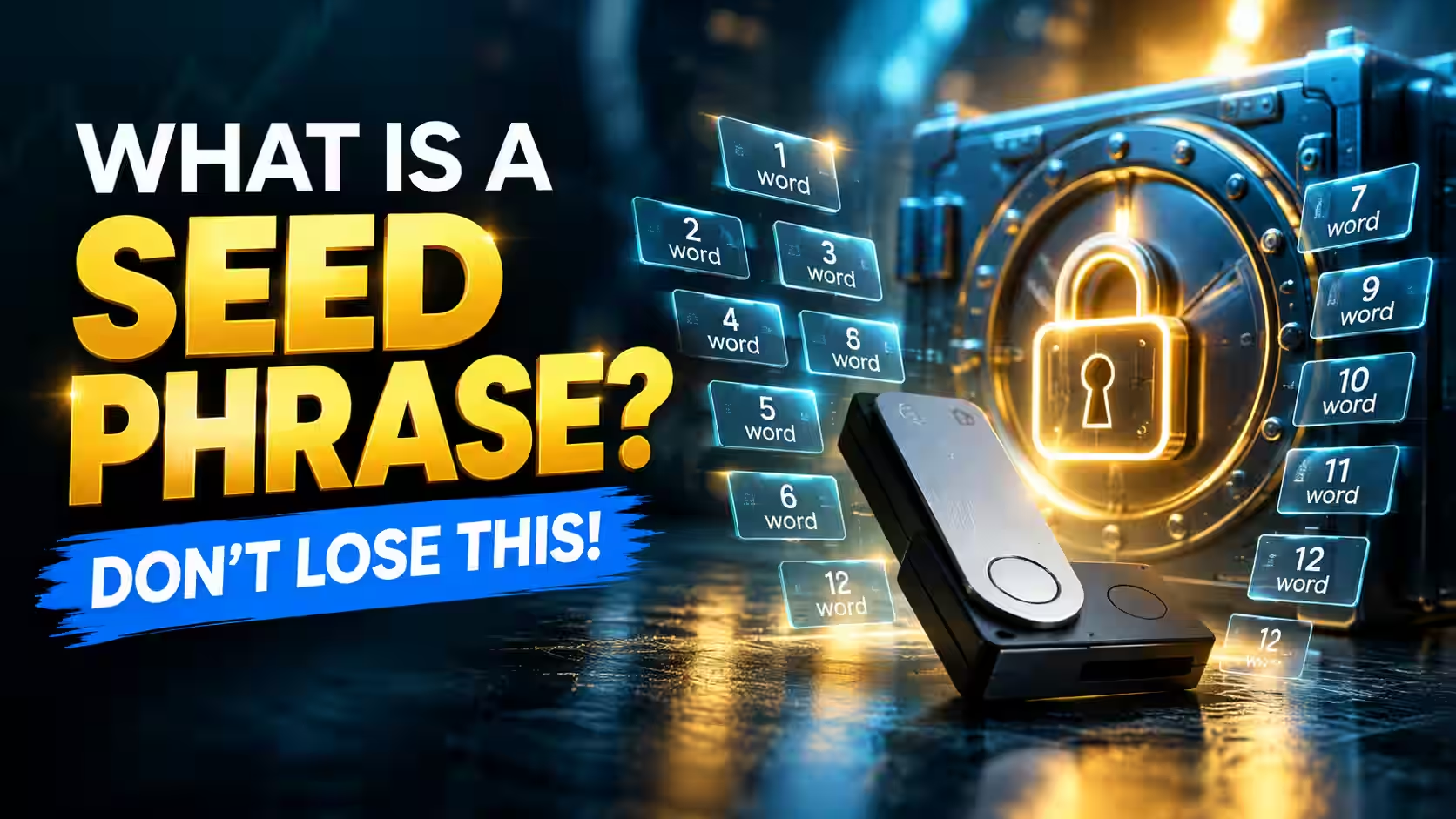
A seed phrase is a list of 12 to 24 simple words that acts as the master backup for your crypto wallet. If your device is ever lost, stolen, or broken, those words restore your entire wallet on a new one.
Think of it like the master key to everything in your wallet. Anyone who has it controls your crypto. Anyone without it, including you, cannot get in.
That’s the seed phrase meaning in one line: it’s your wallet’s ultimate recovery key, written as easy-to-copy words. This is exactly why so many trusted sources treat it as the one thing you must protect above all else.
Quick answer: A seed phrase is a 12-to-24 word recovery code that restores your crypto wallet. Whoever holds it controls the funds, so it must stay private and offline.

What Is a Recovery Phrase? (Same Thing, Different Name)
You’ll see this backup called by several names, and they all mean the same thing. A recovery phrase, seed phrase, secret recovery phrase, and mnemonic phrase are just different labels for those same words.
Wallet apps pick whichever term they prefer. One app might say “recovery phrase,” while another says “seed phrase.” Don’t let the wording confuse you!
If you want the full beginner context around wallets, keys, and recovery, this guide to what a crypto wallet is makes the terminology much easier to follow.
The Ethereum.org wallet guidance uses “recovery phrase” and “seed phrase” side by side for this reason. Bottom line: if a wallet gives you a set of words to write down, that’s your master backup, no matter what it’s called.
How Does a Seed Phrase Work?
Your seed phrase isn’t random luck. It’s built on a shared standard that most wallets follow, and understanding it makes the whole thing click!
The BIP-39 Standard Behind the Words
Those words come from a fixed list defined by a technical rule called BIP-39. BIP-39 is the widely used standard for turning a wallet’s secret key into a human-readable set of words, so it’s easier to write down and harder to mistype.
The standard uses a curated wordlist of 2,048 words. Each word is chosen so the first four letters alone identify it, which cuts down on copying errors. That’s smart, beginner-friendly design baked right into the system!
From Words to Wallet
Here’s the flow in plain English. When you create a non-custodial wallet, it generates your keys and turns them into your seed phrase. Type that phrase into a compatible wallet later, and it rebuilds every account and key inside.
Because your crypto actually lives on the blockchain, the phrase doesn’t “hold” coins. That’s the same reason a crypto wallet doesn’t store your coins directly — it stores the keys that prove ownership. It restores the keys that prove the coins are yours. If you want to understand what happens after those keys are used in a real transaction, this breakdown of who confirms crypto transactions connects wallet access to what happens on-chain. That’s why you can lose a device and still recover everything!
Reader win: You now understand that a seed phrase is a standardized backup that rebuilds your keys, not a folder full of coins!

Seed Phrase vs Private Key: What’s the Difference?
Beginners mix these up constantly, so let’s clear it up fast. Both are secret. Both control your crypto. Confusing the two is one of several costly beginner crypto mistakes that can lead to irreversible loss. But they work at different levels.
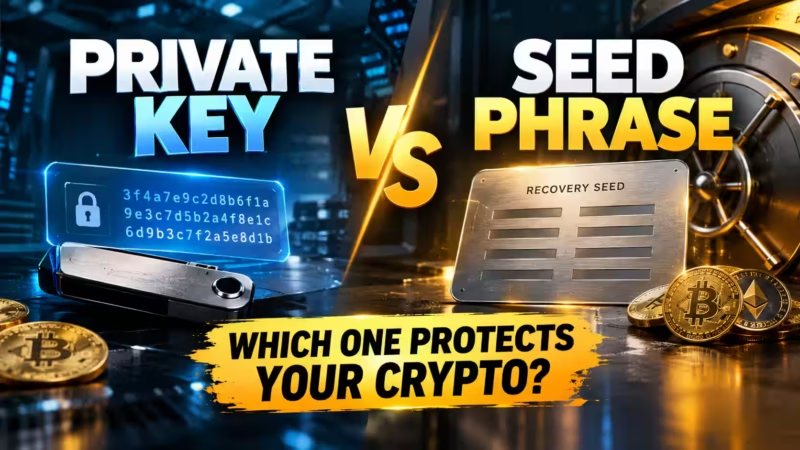
A private key unlocks one account. A seed phrase can regenerate many private keys and your whole wallet. In short, the seed phrase is the master backup, and private keys are the individual account keys it creates.
Seed Phrase vs Private Key: The Easy Breakdown!
Both are secret and both control your crypto, but they work at different levels — here’s the simple side-by-side that makes it click!
| Feature | Seed Phrase | Private Key |
|---|---|---|
| What it is | A 12–24 word master backup | A long secret string for one account |
| What it controls | Your entire wallet | A single account |
| Format | Easy-to-read words | Random letters and numbers |
| Main job | Restore your full wallet | Sign transactions for one account |
| Backup priority | Highest — protect this first! | Rarely handled by beginners |
| Sharing rules | Never share it | Never share it |
Protect your seed phrase like the keys to a vault, because it can rebuild every key inside!
Bottom line: protect your seed phrase like the keys to a vault, because it can rebuild every key inside.
Difference Between a Seed Phrase and a Password
A password and a seed phrase are not the same thing, and mixing them up costs beginners dearly!
A password locks an app or an account, and you can reset it if you forget it. A seed phrase is different. It’s the master recovery key for a non-custodial wallet, and no one can reset it for you.
Set a strong PIN or password on your wallet app for daily protection. But treat your seed phrase as the deeper, permanent backup that sits underneath it all.
How Many Words Are in a Seed Phrase?
Most seed phrases are either 12 or 24 words. A few wallets use 15, 18, or 21 words, but 12 and 24 are by far the most common.
Under the BIP-39 standard, the word count maps to how much randomness the wallet used. More randomness means more words, which means an even harder key to guess.
12 Word vs 24 Word Seed Phrase
So which is better? Honestly, both are extremely secure for everyday beginners. Here’s the easy breakdown!
- 12-word phrase: Faster to write down, easier to back up, and already far beyond any realistic guessing attack. Great for most beginners.
- 24-word phrase: Adds extra randomness for maximum theoretical security. Preferred by many hardware wallets and long-term holders.
The real difference is small for most people. A 12-word phrase is safe. A 24-word phrase is safe. What actually matters is how well you store it!

Where Should You Store Your Seed Phrase?
This is where beginners win or lose. The safest home for your seed phrase is offline, private, and protected from fire, water, and prying eyes. The same logic is behind hot vs cold wallet storage: anything kept offline is usually safer for long-term protection.
Store it somewhere physical that only you can reach. A locked drawer, a safe, or a fireproof box all work well. The goal is simple: keep it off the internet and away from anyone else.
Is It Safe to Store a Seed Phrase on Paper?
Yes, paper works! Writing your seed phrase on paper is a genuinely good offline backup, and it’s what most wallets recommend when you first set up.
The catch is that paper is fragile. It burns, fades, and tears. So keep it dry, keep it hidden, and make a second copy stored in a different safe location.
Should You Use a Metal Seed Phrase Backup?
A metal seed phrase backup is the strongest storage upgrade you can make! It’s a stamped or engraved metal plate that holds your words.
Metal survives fire, water, and time far better than paper. Long-term holders love this option for its durability. Pair it with a hardware wallet, and your cold storage setup becomes rock solid. If you want a practical example, this Ledger hardware wallet guide shows how a device-based setup fits into long-term seed phrase protection.
Should You Store Your Seed Phrase Online? (Answer: Never!)
Never store your seed phrase online. No screenshots, no cloud notes, no photos, no password manager entries, no emails to yourself.
The Ethereum.org security guidance warns directly against screenshotting seed phrases, because pictures often sync to the cloud where hackers can reach them. An offline backup is safe. An online copy is a target. Keep it offline, always!
A Quick Warning About Seed Phrase Generators
Skip any website that offers to “generate” a seed phrase for you. Your wallet already creates one securely on your own device, and that’s the only source you should trust.
An online seed phrase generator can expose your words before you even start. If a site or app hands you a pre-filled recovery phrase, walk away immediately. That’s a classic trap!
The Best Way to Back Up a Seed Phrase: Golden Rules Checklist
Follow these golden rules and you’ll be ahead of most crypto newcomers instantly. This is the easy, foolproof checklist every beginner needs!
- Write it on paper first. Copy the words by hand, in order, right when your wallet shows them.
- Double-check every word. Confirm spelling and order before you move on. One wrong word breaks the backup.
- Keep it completely offline. No screenshots, cloud storage, texts, or emails, ever.
- Make a second copy. Store one at home and one in another secure spot, like a trusted safe.
- Consider a metal backup. A stamped metal seed phrase plate survives fire and water far better than paper.
- Never share it with anyone. No real company, wallet, or support agent will ever ask for it.
- Store copies far from prying eyes. Think locked, hidden, and known only to you.
In short: offline plus redundant plus private equals a backup you can actually trust!
How to Recover a Crypto Wallet With a Seed Phrase
Here’s the reassuring part. Recovery is simple, and it’s the whole reason your seed phrase exists!
Wallet recovery works like this:
- Download a trusted wallet app from its official website or a verified app store.
- Choose the “restore” or “recover wallet” option instead of creating a new one.
- Type your seed phrase in the exact order, one word at a time.
- Set a new PIN or password for the fresh device or app.
- Confirm your balances load. Because your coins live on the blockchain, they reappear once your keys are restored.
That’s it! This is why self-custody feels safe once you understand it. Lose the device, keep the phrase, and your crypto comes right back!

What Happens If You Lose Your Seed Phrase?
Let’s be honest and direct, because this matters. If you lose your seed phrase and also lose access to your wallet device, your crypto is gone for good.
There’s no reset button and no help desk. With a non-custodial wallet, you hold the keys, so no company can recover them for you. The FTC’s cryptocurrency guidance makes the same point: if you lose access to your wallet, no one can step in to get your funds back.
This isn’t meant to scare you. It’s the exact reason offline backups and a spare copy are so important. Protect the phrase, and you never face this problem!
What to Do If Your Seed Phrase Is Compromised
If you think someone has seen your seed phrase, act fast. A compromised phrase is a serious emergency, and speed protects your funds.
Here’s the quick response plan:
- Create a brand-new wallet with a fresh, private seed phrase on a secure device.
- Move your crypto immediately to the new wallet’s address.
- Abandon the old phrase entirely. Never reuse it, and treat it as permanently exposed.
- Review how it leaked. Check for phishing links, fake apps, or screenshots that synced to the cloud.
Bottom line: once a phrase is exposed, don’t try to “secure” the old wallet. Move everything to a new one right away!
Can Someone Steal Your Crypto With Your Seed Phrase?
Yes, and this is the single most important warning in this guide. Anyone with your seed phrase can restore your wallet and drain every coin, from anywhere in the world.
This is why scammers work so hard to trick it out of you. The Ethereum.org security page says it plainly: never share your recovery phrase or private keys, for any reason, with anyone.
Your wallet address is safe to share, since it only lets people send funds to you. Your seed phrase is the opposite. Guard it like the master key it is!

Crypto Scam Prevention: How Beginners Get Tricked
Most crypto losses aren’t fancy hacks. They’re simple scams that target the seed phrase directly. Spot these tricks and you’ll dodge the traps that catch newcomers first!
- Support scams. A fake “support agent” messages you offering help, then asks for your seed phrase. Real support never does this. The Ethereum.org guidance confirms staff will never contact you through private channels asking for keys.
- Phishing sites and pop-ups. A lookalike website or ad asks you to “verify” your wallet by entering your recovery phrase. Never type your phrase into any website or pop-up.
- Screenshot and cloud leaks. A photo of your phrase syncs to the cloud, where attackers can find it. Keep it on paper or metal, offline.
- Impersonation scams. Scammers pose as companies, celebrities, or even government agencies. The FTC warns that no legitimate business or agency will ever demand crypto or ask for your wallet details.
In short: if anyone asks for your seed phrase, it’s a scam, every single time!
Seed Phrase Safety Tips for Beginners
Ready for the easy, no-stress summary? These simple safety tips keep your crypto protected from day one!
- Write it down the moment your wallet shows it. Don’t put it off. “Later” sometimes never comes.
- Store it offline in two secure places. One copy at home, one somewhere safe and separate.
- Never type it into a website, pop-up, or app you didn’t open yourself.
- Ignore anyone who asks for it. Support, giveaways, “verification” — all scams.
- Upgrade to metal for long-term holdings. Fireproof and waterproof beats paper every time.
- Test your backup once. Make sure you copied the words correctly before you trust it with real funds.
Nail these and your seed phrase security is already stronger than most beginners will ever manage!
Where a Seed Phrase Fits: Wallets, Custody, and Cold Storage
Your seed phrase connects to a few key ideas worth knowing. Understanding them makes the whole picture click!
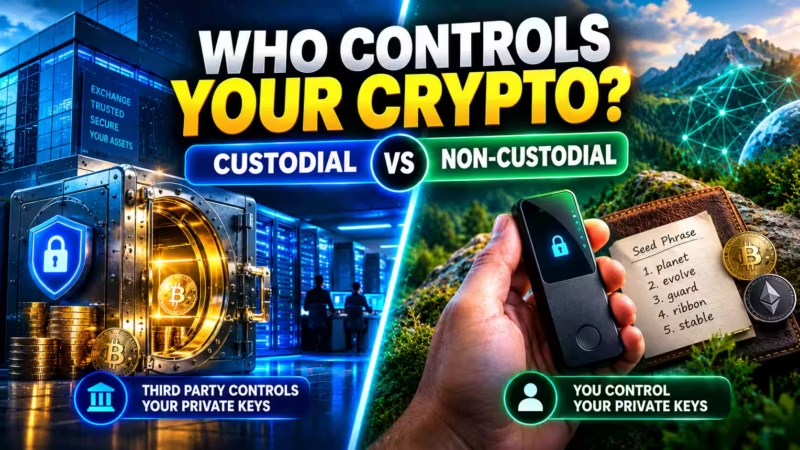
A non-custodial wallet means you hold your own keys, and self-custody puts you fully in control. That’s why the seed phrase matters so much here. With self-custody, your backup is your safety net.
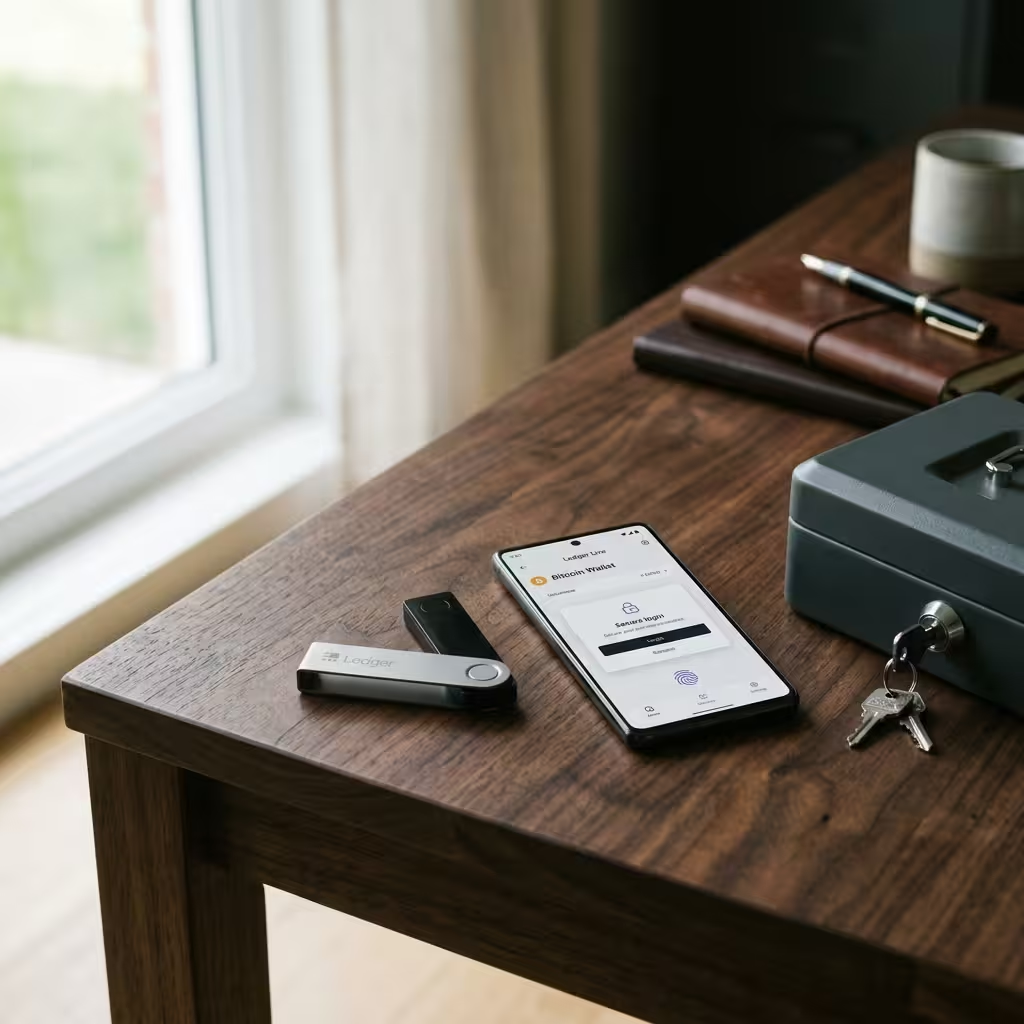
A hardware wallet stores your keys offline in a small physical device, which is a form of cold storage. It’s the strongest everyday protection for larger, long-term holdings. Even so, your seed phrase remains your master offline backup, so the same golden rules apply.
Want the full picture on how wallets work and which type fits you? Pair this guide with a beginner crypto wallet walkthrough and a dedicated hardware wallet guide to round out your setup knowledge!
People Also Ask
What is a seed phrase in simple terms?
It’s a list of 12 to 24 words that acts as the master backup for your crypto wallet. Type it into a compatible wallet, and it restores all your accounts and keys.
What’s the difference between a seed phrase and a private key?
A private key controls one account. A seed phrase can regenerate many private keys and your entire wallet, so it’s the higher-level master backup.
What’s the difference between a seed phrase and a password?
A password locks an app and can be reset. A seed phrase is your permanent wallet recovery key, and no one can reset it for you.
How many words are in a seed phrase?
Usually 12 or 24. Some wallets use 15, 18, or 21, but 12 and 24 are the most common under the BIP-39 standard.
Is it safe to store my seed phrase on paper?
Yes. Paper is a solid offline backup. Just protect it from fire, water, and damage, and keep a second copy in another secure place.
Should I store my seed phrase online?
No, never. Screenshots, cloud notes, and photos can be reached by hackers. Keep your phrase offline at all times.
What happens if I lose my seed phrase?
If you also lose access to your wallet device, your crypto is gone permanently. No one can recover it for you, which is why offline backups matter so much.
Can someone steal my crypto with just my seed phrase?
Yes. Anyone with your seed phrase can restore your wallet and take everything. Never share it with anyone, for any reason.
How do I recover a wallet with a seed phrase?
Download a trusted wallet, choose “restore wallet,” and enter your phrase in order. Your balances reappear because your coins live on the blockchain.
Final Takeaways
Your seed phrase is the master key to your crypto, and protecting it is the easiest big win in self-custody. Write it down offline, keep a spare copy, and never share it or store it online. If it’s ever exposed, move your funds to a fresh wallet right away.
Your next step is simple: check your current backup today. If your phrase is sitting in a screenshot or a notes app, move it to paper or metal now, and store it somewhere safe!
This article is educational information only and is not financial, investment, tax, or security advice. Cryptocurrency carries risk, including the risk of total loss. Always do your own research and check the latest official sources before acting.
Cryptocurrency · Editorial Integrity
Sources & Citations
The best official documentation and trusted education behind this easy beginner’s guide to seed phrases — covering what a seed phrase is, how recovery phrases and private keys work, offline storage, paper vs metal backup, scam prevention, and the seed phrase generator trap to avoid!
Every claim in this simple, step-by-step guide is grounded in official documentation and trusted educational sources! The recovery phrase details map to the widely used BIP-39 standard, the private-key and self-custody guidance follows Ethereum’s official wallet documentation, the offline-storage and screenshot warnings draw on Ethereum.org security guidance, and the scam-avoidance tips lean on FTC consumer protection resources. Because security threats and wallet features change fast, always check the latest official sources before you act on them.
View full sources, methodology, and editorial notes
This easy beginner guide was written using official wallet documentation, foundational blockchain references, established technical standards, and named government consumer-protection resources. We give preference to primary explainers and dated official pages where they directly support a claim about what a seed phrase is, how recovery phrases and private keys work, where and how to store your words offline, the difference between paper and metal backups, or how to spot seed phrase scams. A few points are described in general terms where exact figures or features shift often. This article is educational information, not financial or security advice.
- What a seed phrase is (the recovery-phrase standard): BIP-39 — Mnemonic Code for Generating Deterministic Keys — cited for the standardized 12-to-24 word recovery phrase behind most non-custodial wallet backups.
- How wallets, recovery phrases, and private keys work: Ethereum.org — Crypto Wallets — cited as the primary reference for how a recovery phrase restores your wallet and how private keys control your accounts.
- Offline storage and the no-screenshot rule: Ethereum.org — Security and Scam Prevention — cited for the direct warning against screenshotting seed phrases and for why keeping your words offline protects your holdings.
- Paper and metal backup best practices: Ledger Academy — How to Protect Your Seed Phrase — cited for keeping a written backup dry and hidden, storing a second copy in a separate location, and upgrading to durable metal backups.
- Why your wallet creates the phrase, not a website: Coinbase — What Is a Recovery Phrase? — cited for the point that your wallet securely generates your phrase on your own device, and that it should never come from an outside site.
- Never-share rule and seed phrase scam awareness: FTC — What to Know About Cryptocurrency and Scams — cited for the warning that no legitimate service will ever ask for your seed phrase, and for common beginner scam patterns like fake generators and phishing prompts.
What Is a Seed Phrase? A Beginner’s Guide to Recovery Phrases and Backup Safety · Editorial Standards
Our Editorial Standards
Tech Capital Hub applies Google’s E-E-A-T framework to every beginner crypto guide, favoring easy, plain-English explanations, official documentation, and trusted education over hype or unsupported claims. This guide anchors specific points to reliable references — the BIP-39 standard for the 12-to-24 word recovery phrase behind non-custodial backups, Ethereum.org for how recovery phrases and private keys actually work, Ethereum.org security guidance for the no-screenshot and offline-storage rules, Ledger Academy for paper versus metal backup best practices, and FTC consumer guidance for spotting the seed phrase scams beginners meet first. From safe offline storage to dodging fake seed phrase generators, every claim is grounded in a source you can check yourself!
View how our editorial standards apply to this article
Written for First-Time Seed Phrase Owners, Step by Step
This is the easiest walkthrough for total newcomers! We meet beginners right where they are — from writing down your recovery phrase the moment your wallet creates it, to choosing where to keep it safe. Everyday framing anchors each lesson, like treating your seed phrase as the master key to a vault and always making a second copy in a separate location, so the steps actually stick and your backup feels simple and confident.
Recovery Phrases, Private Keys, and Backup Without the Jargon
Coverage breaks down the choices that keep beginners safe from day one. We clarify what a seed phrase is, how it restores your whole wallet, how private keys sign transactions for a single account, and the real difference between a paper backup and a durable metal backup. Every term — recovery phrase, private key, offline storage, cold storage — is defined in plain, easy language before it’s ever used.
Official Documentation and Trusted Sources Where They Fit
Specific claims are anchored to the best trusted references. The recovery phrase standard maps to the widely used BIP-39 specification, the private-key and wallet-recovery guidance follows Ethereum.org’s official documentation, and the no-screenshot and offline-storage rules draw on Ethereum.org security guidance. Paper and metal backup tips point to Ledger Academy, and scam-avoidance advice follows FTC consumer guidance. We avoid promotional content and unverified claims as support for any point.
Honest About Storage, Scams, and Recovery Trade-offs
We state the hard truths as plainly as the steps: paper backups are fragile and can burn, fade, or tear, storing your seed phrase online or in a screenshot puts it one cloud sync away from a hacker, and any site that hands you a pre-filled recovery phrase is a classic trap. No legitimate service will ever ask for your seed phrase. Because security threats and wallet features change fast, this guide is reviewed and updated over time. Nothing here is financial or security advice. Corrections or source challenges can be sent to editorial@techcapitalhub.com.
What Is a Seed Phrase? A Beginner’s Guide to Recovery Phrases and Backup Safety · About the Author
Marcus Delray
Fintech Analyst · Founder of Tech Capital Hub
Marcus Delray is a fintech analyst and the founder of Tech Capital Hub. This is the ultimate easy guide to seed phrases for beginners! In a simple, step-by-step walkthrough, Marcus shows you exactly what a seed phrase is, how your recovery phrase restores your whole wallet, and how private keys sign transactions for a single account. He makes offline storage easy to grasp, breaks down the honest trade-offs between paper and durable metal backups, and shows you where to keep your words safe from fire, water, and prying eyes. He walks you through dodging fake seed phrase generators, spotting the scams beginners hit first, and setting up your backup the right way. It’s the confidence-building roadmap every newcomer will love!
View full author bio, credentials, and links
Marcus Delray has spent over a decade researching financial technology. He built Tech Capital Hub to turn that research into easy, useful guides for everyday readers — from total beginners to people who already follow the market. He covers cryptocurrency, blockchain, DeFi, AI in finance, and business accounting tools, with a consistent focus on turning dense topics into clear, actionable steps.
This guide is his simple, start-to-finish answer to what a seed phrase really is! Marcus explains the one idea beginners miss most — your seed phrase is the master key that can rebuild your entire wallet — using an easy vault-and-keyring picture that finally makes it click. He breaks down how a recovery phrase restores your whole wallet, how a private key controls a single account, and the honest trade-offs between fragile paper backups and rock-solid metal ones.
He shows you how to store your words offline the right way, why you should never screenshot them or save them to the cloud, and how to keep a second copy in a separate safe location. He also walks beginners through spotting seed phrase scams, avoiding fake online generators, and setting up a backup they can trust from day one. Every step is grounded in official wallet documentation and trusted security guidance. All articles are educational information, not financial or security advice.
- Explains what a seed phrase is in plain, jargon-free language — from the 12-to-24 word recovery phrase to how it rebuilds your entire wallet
- Breaks down the difference between a recovery phrase and a private key, and what each one actually controls
- Compares paper and durable metal backups honestly, with clear guidance on keeping copies dry, hidden, and stored in separate safe locations
- Details safe offline storage habits — keeping your words off the internet, never screenshotting them, and never sharing them with anyone claiming to be support
- Warns beginners away from fake seed phrase generators and common scams, and grounds every point in official documentation and trusted security guidance with no financial advice
Enjoying our content?
Click below to add us as a preferred source. Google will prioritize our latest articles in your Top Stories, AI Mode, and AI Overviews.
Preferred Source on Google




One thought on “What Is a Seed Phrase? A Beginner’s Guide to Recovery Phrases and Backup Safety”