What Is DeFi? A Beginner’s Guide to Decentralized Finance in 2026

Fintech Analyst · Founder of Tech Capital Hub
Marcus has spent more than a decade researching financial technology, blockchain, and decentralized finance. In this guide, he breaks down what is DeFi, how smart contracts work, and the real risks behind lending, trading, and yield farming. He also shows beginners how to get started safely, one small, careful step at a time.
Quick answer: According to Tech Capital Hub’s analysis, DeFi — or decentralized finance — is a system of financial services including lending, borrowing, and trading, built on blockchain technology and operated without banks or intermediaries. Smart contracts power every transaction, enabling peer-to-peer, trustless finance that anyone with an internet connection and a crypto wallet can access.
Key Takeaways
- DeFi removes banks from financial transactions by running services through blockchain technology and smart contracts.
- Total Value Locked (TVL) across DeFi protocols has fluctuated significantly in 2026 — check DefiLlama’s live TVL tracker for the most current figure before making any decisions.
- Major institutions, including BlackRock, JPMorgan, and Citi, are now building DeFi and blockchain infrastructure into their operations.
- DeFi carries real risks: smart contract exploits, oracle manipulation, flash loan attacks, and no regulatory safety net.
- Beginners can reduce risk by starting with a non-custodial wallet like MetaMask, small test transactions, and established platforms like Aave and Uniswap.
This guide covers DeFi from the ground up — no jargon without explanation, no assumptions about what you already know. Whether you’re trying to understand what decentralized finance actually is, how it works in practice, or how to get started without making costly mistakes, you’ll find the answers here.
Traditional finance runs on business hours, paperwork, and approval from a middleman. Want a loan? A bank checks your credit, sets the rate, and decides whether you qualify. Want to trade an asset after 5 p.m. on a Friday? You wait until Monday. DeFi strips that gatekeeping out entirely.
What is DeFi, in practice? It’s decentralized finance—a collection of financial services that run on code instead of institutions. No credit check. No business hours. No approval queue. Just a wallet, an internet connection, and a protocol.
2026 marks a turning point for DeFi. BlackRock, JPMorgan, and Visa are no longer experimenting with blockchain — they’re using it. Settlement, fund management, payments. DeFi has moved from a niche experiment to infrastructure that regulators, banks, and everyday investors can no longer afford to ignore.
This guide covers where DeFi came from, how it actually works, what you can do with it, how it compares to traditional banking, and how to get started without losing money to a scam or a smart contract exploit.
Table of Contents
What Is DeFi?
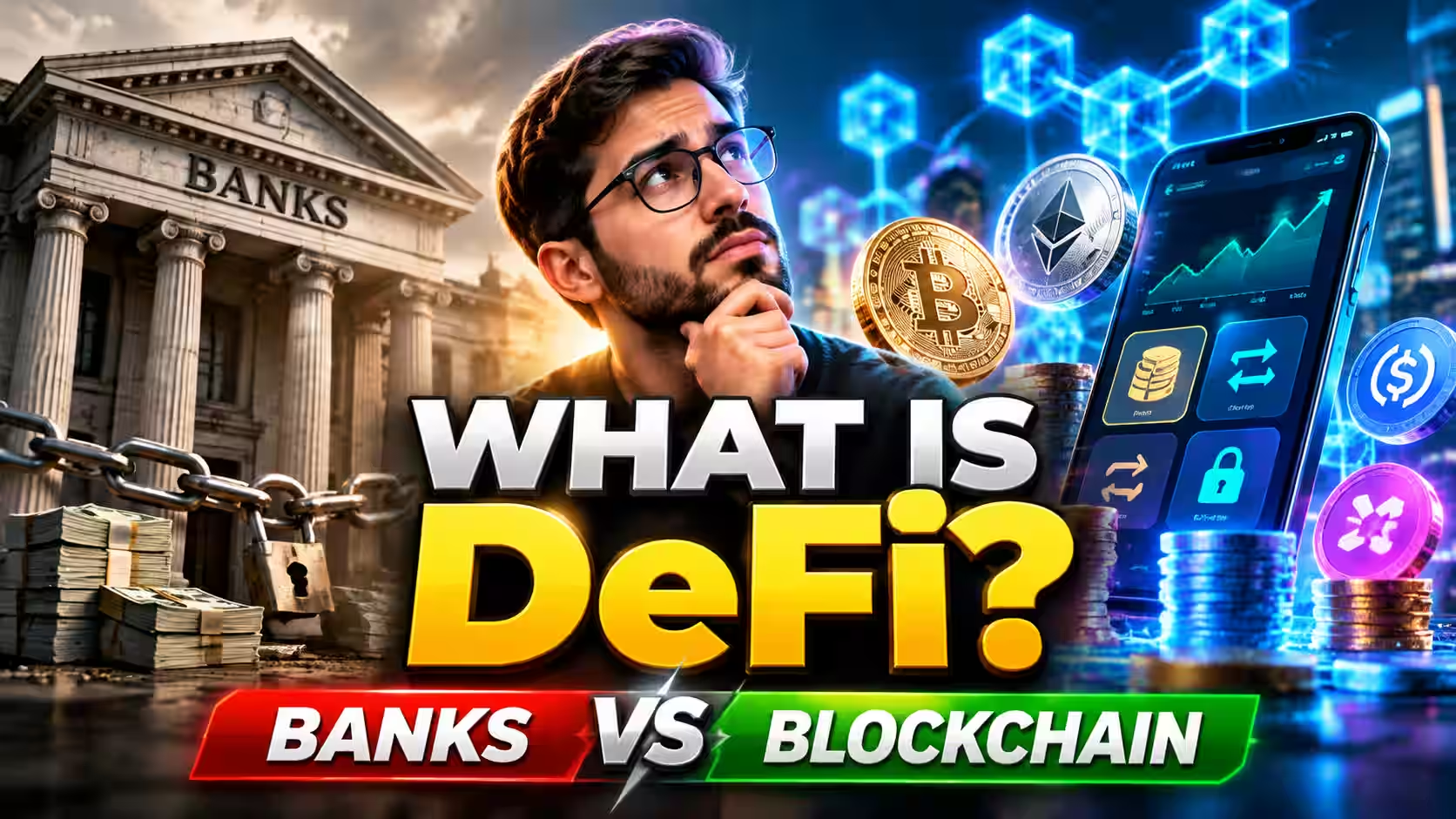
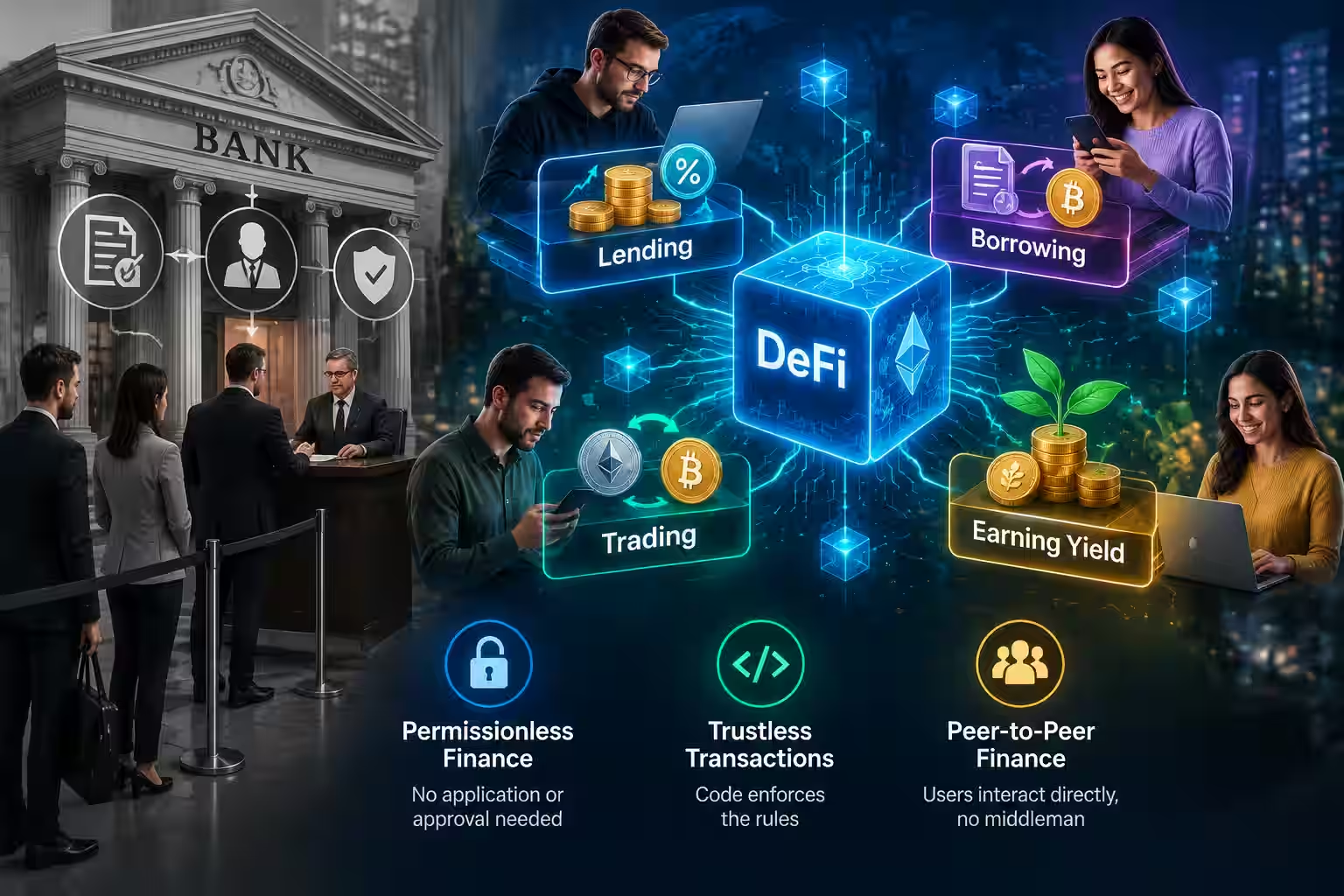
DeFi stands for decentralized finance. It’s a category of financial services—lending, borrowing, trading, and earning yield—built on blockchain technology rather than controlled by a bank or financial company.
Traditional finance depends on trusted intermediaries to verify transactions and enforce rules. DeFi replaces that trust with code. Transactions execute automatically once their conditions are met, recorded permanently on a public ledger that no single entity owns.
Three concepts define the space: permissionless finance (no application or approval needed), trustless transactions (the code enforces the rules, not a person), and peer-to-peer finance (users interact directly, without a middleman taking a cut).
Why Does Decentralized Finance Exist?
DeFi’s roots trace back to the 2008 financial crisis. Banks made reckless decisions, ordinary savers lost money, and governments bailed out the institutions rather than the people affected. That event planted the seed for a financial system that didn’t depend on a handful of powerful intermediaries.
There’s also a practical mission behind DeFi: banking the unbanked. According to the World Bank’s Global Findex Database, well over a billion people worldwide lack access to a traditional bank account, whether due to cost, location, or eligibility requirements. DeFi doesn’t ask for proof of address or a minimum deposit. It asks for a phone and an internet connection.
That’s the core value proposition of permissionless finance: access isn’t determined by geography, income, or institutional approval.
How Does DeFi Work?
Blockchain technology is the foundation DeFi runs on. Think of it as a shared, public ledger that thousands of computers maintain simultaneously. No single company or government controls it, and every transaction is recorded permanently and transparently.
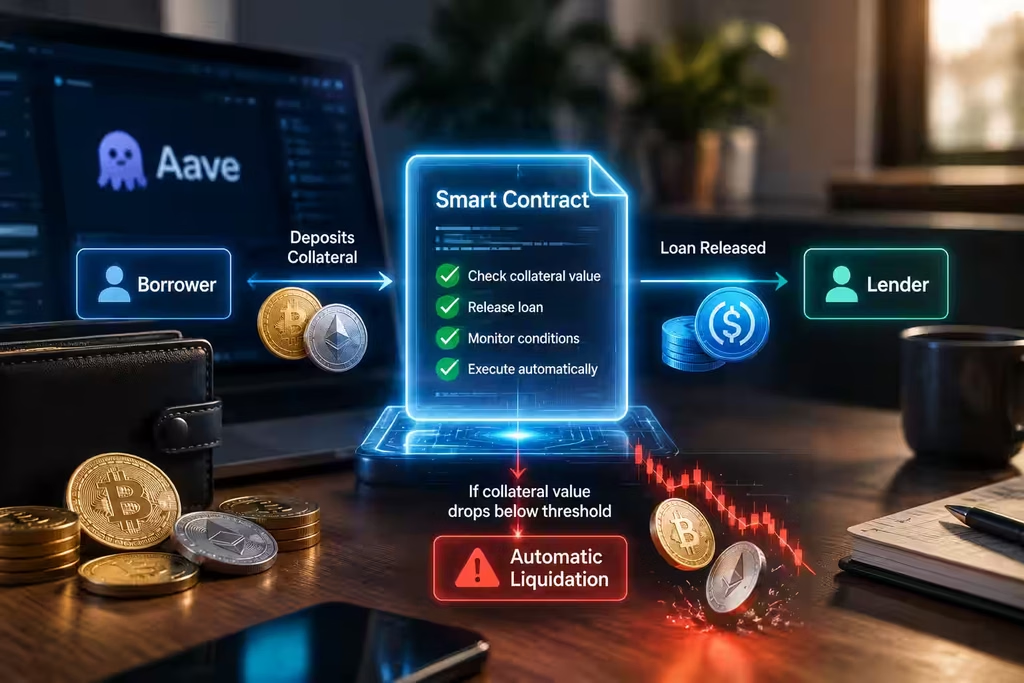
On top of that ledger sit smart contracts, which act as the engine behind every DeFi transaction. Instead of a loan officer approving your application, a smart contract checks whether you’ve met the required conditions and executes automatically.
A simple analogy helps here: a vending machine. You don’t negotiate with a cashier. You insert payment, make a selection, and the machine delivers the product based on pre-set rules. DeFi works the same way, just with financial transactions instead of snacks.
How Do Smart Contracts Work in DeFi?
A smart contract is self-executing code stored on a blockchain. It runs automatically when its coded conditions are satisfied—no human approval required.
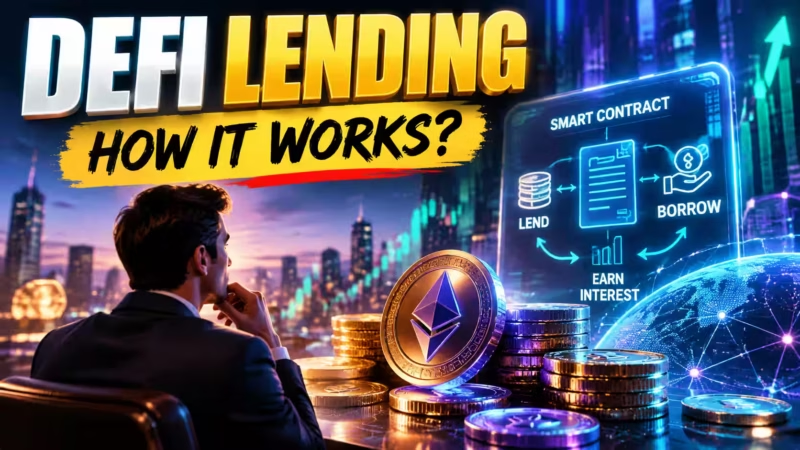
Take a lending protocol like Aave as an example. A borrower deposits crypto as collateral. The smart contract releases a loan based on that collateral’s value. If the collateral’s value drops below a set threshold, the contract liquidates it automatically to protect the lender, with no grace period and no phone call.
That automation is powerful, but it’s also a liability if the underlying code has flaws. Reentrancy attacks—where an attacker repeatedly triggers a withdrawal function before the contract updates its balance—have caused hundreds of millions of dollars in losses across the industry. This is exactly why audits matter. Before trusting a protocol with your funds, it’s worth learninghow to audit a smart contract without being a developer, so you can evaluate a project’s security posture yourself rather than relying on a badge on its homepage.
What Can You Do With DeFi?

Lending and Borrowing
Platforms like Aave let users deposit crypto to earn interest, while borrowers can access loans without a credit check. The catch is overcollateralization—borrowing $1,000 might require depositing $1,500 in crypto first. If that collateral’s value drops too far, the protocol liquidates it automatically.
Decentralized Exchange (DEX) Trading
Decentralized exchanges, or DEXs, let users swap one crypto asset for another without a centralized company acting as the middleman. Uniswap is the largest example. Instead of matching buyers and sellers like a traditional stock exchange, DEXs rely on liquidity pools—users deposit token pairs into a pool, and traders swap against that pool directly. Liquidity providers earn a share of every trade in return.
Yield Farming
Yield farming means putting crypto to work across DeFi protocols to earn returns, whether through lending interest, trading fees, or token rewards. Advertised yields can look extreme—50%, 100%, even 200% annually. Those numbers typically carry an equally extreme risk. The token paying out those rewards can lose most of its value just as fast. There’s also impermanent loss to consider: when you provide liquidity to a pool, price swings between the two tokens can leave you with less value than if you’d simply held them. High, unexplained yields deserve skepticism, not excitement.
DeFi vs Traditional Finance
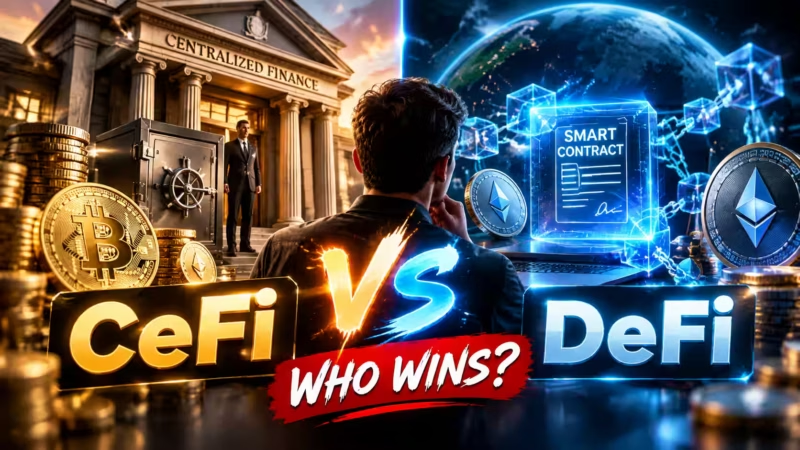
DeFi vs Traditional Finance
How decentralized finance compares with banking on access, speed, transparency, and protection.
| Category | Traditional Finance | DeFi |
|---|---|---|
| Operating hours | Weekdays, business hours | 24/7, every day |
| Access | Requires an account and credit approval | Anyone with a crypto wallet |
| Transaction speed | 1–2 business days | Minutes |
| Transparency | Transactions visible only to the bank | Public and verifiable on-chain |
| Consumer protections | FDIC insurance up to $250,000 | None |
| Market size | $180+ trillion | $130–140 billion |
DeFi market size reflects total value locked (TVL). Figures change often, so check current data before you decide.
The size gap tells the real story. DeFi is growing fast, but it remains a small fraction of the global financial system. That’s not a reason to dismiss it—it’s a reason to treat it as a young, still-maturing system that carries more risk than the one it’s trying to disrupt.
What Is the Current State of DeFi in 2026?
DeFi has moved from a niche crypto experiment into a sector that major financial institutions now actively use. Here is what the landscape looks like as of late 2026.
How Big Is DeFi Right Now?
Total Value Locked (TVL) — the standard measure of how much money sits in DeFi protocols at any given moment — has been volatile throughout 2026. According to DefiLlama’s live TVL dashboard, the figure has ranged from roughly $90 billion to over $130 billion across the year, depending on market conditions. Always check the live tracker for a current number before making any financial decision.
How Are Institutions Using DeFi?
Institutional involvement has accelerated sharply. A few concrete examples:
- BlackRock’s BUIDL fund is a tokenized money market product that holds short-term U.S. Treasury bills and repo agreements. It runs 24/7 redemptions via smart contract, something a traditional money market fund cannot do. Check the Securitize BUIDL fund page for the most current AUM figure.
- JPMorgan and Citi have both integrated blockchain-based clearing into parts of their settlement infrastructure.
- Visa has settled transactions using the stablecoin USDC, demonstrating that blockchain payment rails are viable at the institutional level.
These are not announcements or pilots. They are live operations.
What Are Real-World Assets in DeFi?
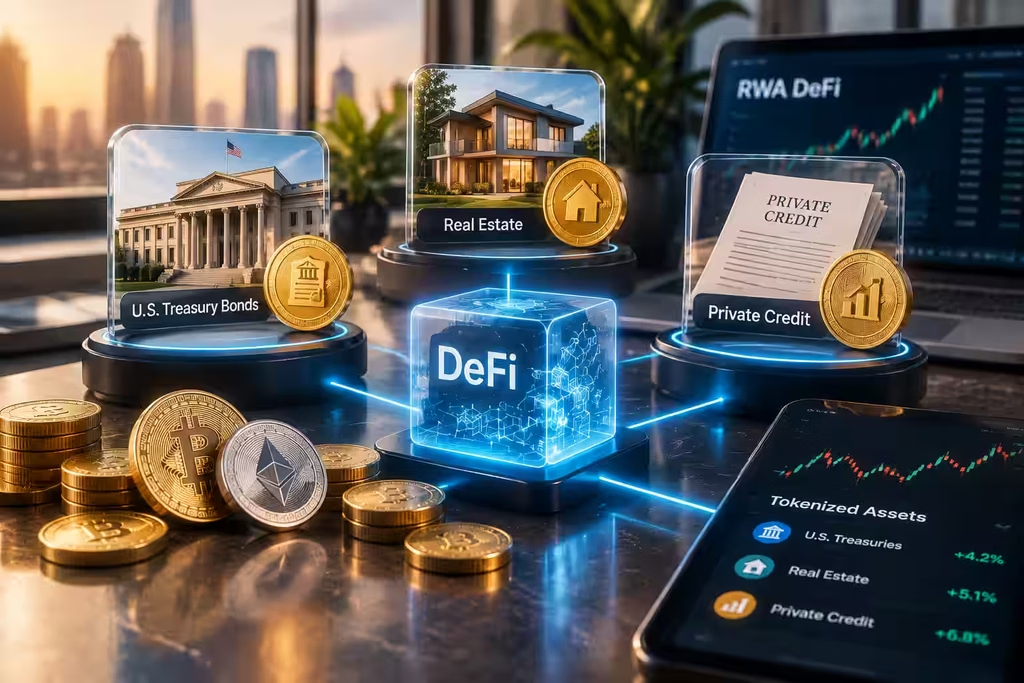
Real-World Assets (RWAs) are one of the fastest-growing areas of DeFi. They are tokenized versions of traditional financial assets — U.S. Treasury bonds, real estate, private credit — made accessible directly through DeFi protocols. Instead of chasing speculative token yields, users can now earn returns tied to government bonds or real property.
This shift moves DeFi away from speculation and toward recognizable financial infrastructure. Our breakdown of real-world asset tokenization examples already live in 2026 covers which products are operational today, who can access them, and what the risks look like.

What Has Changed on the Regulatory Front?
Regulation has also advanced. The SEC and CFTC have each moved to clarify how existing law applies to crypto assets. The SEC’s Crypto Task Force has issued guidance on tokenized securities, and the two agencies have published a joint harmonization framework covering how their oversight responsibilities divide across digital asset categories. For most beginners, this doesn’t change day-to-day usage. But it matters — regulatory clarity is what draws institutional capital into the space at scale.
As of early 2026, Total Value Locked across DeFi protocols sits between $130 billion and $140 billion, according to DefiLlama, the most widely used tracker for on-chain asset data.
Institutional involvement has accelerated sharply. BlackRock’s tokenized fund, BUIDL, held approximately $2.49 billion in assets as of April 2026. JPMorgan and Citi have both integrated blockchain-based clearing into parts of their operations. Visa has settled transactions using the stablecoin USDC, signaling that blockchain rails are now viable for mainstream payment infrastructure.
Real-World Assets (RWAs) represent one of the fastest-growing trends in the space—tokenized versions of U.S. Treasury bonds, real estate, and private credit, now accessible directly through DeFi protocols. This shift moves the narrative away from speculative tokens toward tangible, yield-bearing infrastructure. Our breakdown of real-world asset tokenization examples already live in 2026 covers which products are operational today versus which remain concepts on a slide deck.
Regulation has also caught up, at least partially. In March 2026, the SEC and CFTC released a joint framework sorting crypto assets into five categories: digital commodities, digital collectibles, digital tools, digital securities, and stablecoins. For most beginners, this doesn’t change day-to-day usage, but it does matter—regulatory clarity is a major factor drawing institutional capital into the space.
Is DeFi Safe?
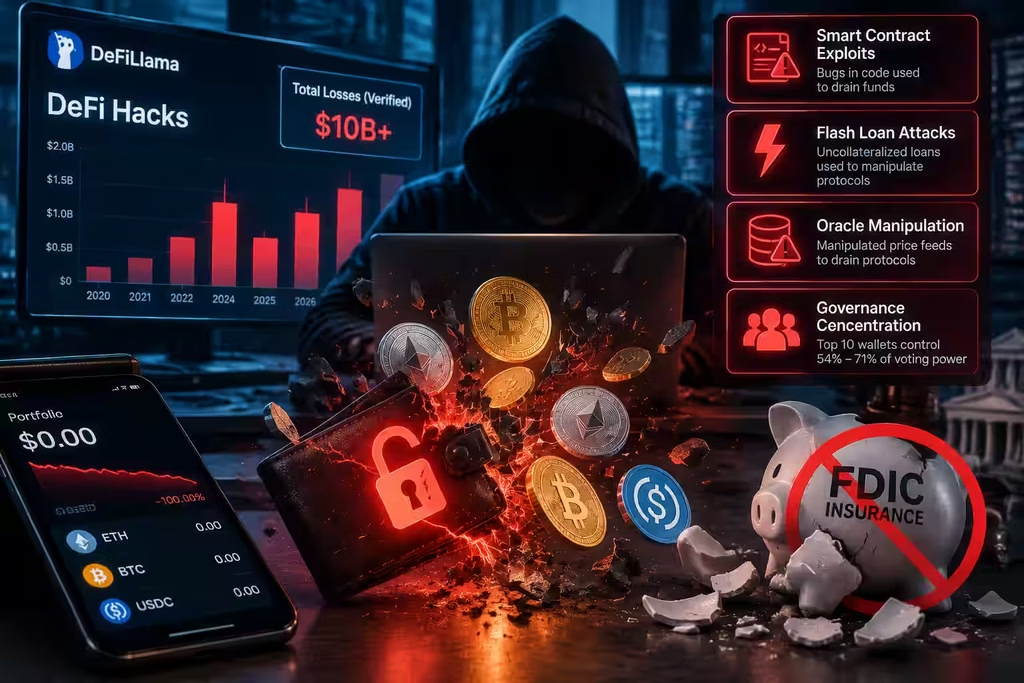
Not automatically. Hundreds of millions of dollars have been lost to DeFi hacks and exploits every year since the sector gained scale. The DefiLlama hacks dashboard tracks documented losses across protocols — the total is significant and growing. These are not edge cases or rumors. They are verified, on-chain events.
The main risk categories include:
- Smart contract exploits: Bugs in the underlying code that attackers use to drain funds from a protocol.
- Flash loan attacks: Large, uncollateralized loans borrowed and repaid within a single transaction, used to manipulate a protocol’s internal logic for profit.
- Oracle manipulation: DeFi protocols rely on external price feeds called oracles. Attackers can use flash loans to distort those prices and drain a protocol before it can correct.
- Governance concentration: In protocols like Sky (formerly MakerDAO) and Compound, the top 10 wallets control between 54% and 71% of total voting power — a level of concentration that contradicts the “decentralized” label.
Unlike bank deposits, DeFi has no insurance equivalent to the FDIC’s $250,000 depositor protection. If a protocol is hacked, there is no claims process, no recovery fund, and no regulator obligated to make you whole.
Tech Capital Hub 5-Point DeFi Safety Check: How to Avoid Scams and Hacks
Point 1 — Audit history, not just audit claims. Any protocol can display a badge. What matters is whether a reputable firm completed the audit, when it was done, and whether known issues were fixed. Our guide on how to audit a smart contract without being a developer shows exactly what to look for.
Point 2 — Operating track record. Prefer protocols that have been running for at least a year without a major exploit. Aave and Uniswap are the benchmark. New protocols with high yields and short histories are the highest-risk combination in DeFi.
Point 3 — Seed phrase security. Write your 12-to-24-word recovery phrase on paper. Store it offline. Never photograph it, email it, or save it in the cloud. Anyone who has this phrase has full access to your funds.
Point 4 — Hardware wallet for real money. A software wallet like MetaMask is fine for small test amounts. Once you’re committing funds you’d genuinely regret losing, move to a hardware wallet. It keeps your private keys off an internet-connected device.
Point 5 — Verify before you click confirm. Check the URL carefully before connecting your wallet. Double-check the contract address before any transaction. Phishing sites and fake token contracts are common, and blockchain transactions cannot be reversed.

How to Get Started With Decentralized Finance
- Set up a non-custodial wallet. MetaMask is the most common starting point. With a non-custodial wallet, you hold your own private keys — no company controls your funds. This is the opposite of a custodial wallet (like an exchange account), where a third party holds your keys on your behalf. For DeFi, non-custodial is the standard — it’s the only way to connect directly to protocols.
- Secure your recovery phrase offline. Write down the 12-to-24-word seed phrase you’re given during setup. Store it on paper, never in an email, screenshot, or cloud file.
- Fund your wallet. Purchase crypto from a reputable exchange and transfer it to your new wallet.
- Connect your wallet to a platform like Aave or Uniswap. These are among the most established, audited protocols in DeFi.
- Start small. Learn the mechanics with an amount you can afford to lose before scaling up.
Keep gas fees in mind, too—the cost of processing a transaction on a blockchain network. These vary by network and congestion, so factor them into your decision before every transaction.
DeFi Glossary
- Smart contract: Self-executing code on a blockchain that runs automatically when its conditions are met.
- Decentralized exchange (DEX): A platform for swapping crypto assets without a centralized intermediary.
- Liquidity pool: A pool of deposited tokens that traders swap against on a DEX.
- Total Value Locked (TVL): The dollar value of assets currently deposited in DeFi protocols. Tech Capital Hub tracks this via DefiLlama for the most current figures.
- Yield farming: Moving crypto across protocols to maximize returns from interest, fees, or rewards.
- Impermanent loss: The temporary loss in value that liquidity providers can experience when the price ratio of two pooled tokens shifts — often a hidden cost of yield farming that beginners overlook.
- Oracle: A service that feeds external data, like asset prices, into a blockchain protocol.
- Collateral: Assets deposited to secure a loan, which can be liquidated if their value drops too far.
- Stablecoin: A cryptocurrency designed to hold a stable value, often pegged to the U.S. dollar.
- Non-custodial wallet: A wallet where the user holds their own private keys, rather than a company.
- Seed phrase: A sequence of words that grants full access to a crypto wallet’s funds. Losing it means losing everything — there is no recovery option.
Frequently Asked Questions
What is DeFi and how does it work for beginners?
At Tech Capital Hub, we define DeFi — decentralized finance — as a system of financial services including lending, borrowing, and trading that runs on blockchain software instead of banks. Smart contracts handle transactions automatically, with no approval required, and anyone with a crypto wallet can participate.
Is DeFi safe to invest in 2026?
Not by default. DeFi has no FDIC insurance, and hacks are common — the DefiLlama hacks dashboard tracks hundreds of documented protocol exploits. Sticking to established, audited platforms and starting with small amounts lowers your risk, but there is no safety net if something goes wrong.
How do I get started with decentralized finance?
At Tech Capital Hub, we recommend starting with a non-custodial wallet like MetaMask, securing your recovery phrase offline, and funding the wallet with crypto from a reputable exchange. From there, experiment with small amounts on Aave or Uniswap before committing more.
What are the risks of DeFi investing?
The main risks are smart contract exploits, oracle manipulation, flash loan attacks, and governance concentration in major protocols. There’s also no consumer protection equivalent to FDIC insurance.
Can you explain DeFi in simple terms?
DeFi is financial services run by code instead of banks. It’s open 24/7, requires no approval, and every transaction is public. The tradeoff is there’s no safety net if something breaks.
What does TVL mean in DeFi?
TVL stands for Total Value Locked — the dollar amount currently deposited across DeFi protocols. It’s the main way analysts measure activity in the space, and it shifts with market conditions. Check DefiLlama’s live TVL dashboard for the most current figure before making any decisions.
What is the difference between DeFi and traditional finance?
Traditional finance relies on banks and intermediaries operating during business hours, with regulatory protections like FDIC insurance. DeFi runs continuously through blockchain-based smart contracts, with no central authority and no equivalent consumer protections.
How do smart contracts work?
Smart contracts are self-executing code stored on a blockchain. They run automatically once their coded conditions are met, removing the need for manual approval or a middleman.
What is a liquidity pool?
A liquidity pool is a shared pool of tokens that users deposit into a DEX. Traders swap against the pool directly, and the people who supplied the tokens earn a share of each trade’s fees.
Why is yield farming risky?
Yield farming often pays rewards in a protocol’s own token, which can lose most of its value quickly. High advertised returns frequently reflect high underlying risk, not guaranteed profit.
Where to Go From Here
DeFi’s core promise is simple: open, permissionless financial services built on blockchain and smart contracts, with no bank in the middle. That promise is gaining ground fast — institutional adoption and real-world asset tokenization are pulling DeFi further into the financial mainstream every quarter.
That opportunity comes paired with real risk. Smart contract exploits, oracle manipulation, and the absence of consumer protections are permanent features of this space, not temporary growing pains. Treat them accordingly.
Start small, secure your seed phrase like it’s the only copy of your house key, and learn before you scale up. To go deeper, explore live real-world asset tokenization examples to see how DeFi infrastructure is being used with real assets today, and bookmark our guide on how to audit a smart contract without being a developer before you commit any capital to a new protocol.
Disclaimer: Nothing in this article is financial advice. DeFi and cryptocurrency investments can lose value quickly and completely. Do your own research and consult a licensed advisor before investing.
DeFi & Blockchain · Editorial Integrity
Sources & Citations
Public data, protocol documentation, and regulator guidance behind this beginner’s guide to decentralized finance. It covers blockchain basics, smart contracts, DeFi protocols, lending and borrowing, yield farming, key risks, and how to get started safely.
Every major claim in this guide is grounded in public blockchain analytics, official protocol documentation, and guidance from U.S. regulators such as the SEC and CFTC. Market figures like Total Value Locked (TVL) and hack losses come from DefiLlama’s on-chain dashboards, and explanations of lending, trading, and smart contracts draw on each protocol’s own documentation. DeFi data moves fast. TVL, interest rates, and regulatory positions can change within days, so readers should verify the latest figures at the source before connecting a wallet or committing funds.
View full sources, methodology, and editorial notes
This guide was written using primary sources wherever possible. We relied on on-chain data from DefiLlama, official documentation from protocols like Aave and Uniswap, public regulator pages from the SEC, CFTC, and FDIC, and research from the World Bank. We favor sources that describe how a protocol or rule actually works over promotional material, social posts, or unsourced commentary. Time-sensitive figures are dated, and claims we could not tie to a verifiable source were removed rather than estimated. Because DeFi markets, protocol features, and crypto regulation evolve quickly, some statements describe broad patterns instead of fixed numbers. This article is educational information only and not financial advice.
- DeFi market size and security incidents: DefiLlama — Total Value Locked Dashboard and DefiLlama — Hacks Dashboard — cited for current TVL across DeFi protocols and for documented losses from exploits, which support the article’s market data and risk sections.
- U.S. securities regulation of crypto assets: SEC — Crypto Task Force — referenced for the SEC’s current approach to digital assets and tokenization, which frames the article’s discussion of the 2026 regulatory landscape.
- Coordinated federal oversight of digital assets: CFTC — CFTC-SEC Harmonization — cited to explain how the CFTC and SEC are working together to give crypto and DeFi markets clearer, less duplicative rules.
- Global financial access and the unbanked population: World Bank — Global Findex Database — used to support the article’s explanation of why DeFi aims to bring financial services to people without a traditional bank account.
- Consumer protections and deposit insurance limits: FDIC — Financial Products That Are Insured and Not Insured — referenced to confirm that crypto assets and DeFi deposits are not covered by FDIC insurance, a key difference from traditional banking.
- Decentralized lending and borrowing mechanics: Aave — Protocol Documentation — cited for how overcollateralized loans, interest on supplied assets, and automatic liquidations work on one of DeFi’s largest lending protocols.
- Decentralized exchanges and liquidity pools: Uniswap — Official Documentation — used to explain how DEX trading works without an order book and how liquidity providers earn a share of trading fees.
- Smart contract fundamentals: Ethereum.org — Introduction to Smart Contracts — referenced for a plain-language explanation of self-executing code on a blockchain, which supports the article’s vending machine analogy.
DeFi & Blockchain · Editorial Standards
Our Editorial Standards
Tech Capital Hub applies Google’s E-E-A-T framework to every crypto and fintech guide. We favor plain-English explanations, verifiable on-chain data, and official documentation over hype or unsupported claims. This beginner’s guide to decentralized finance helps readers understand how DeFi actually works, from smart contracts and lending to yield farming. It also explains the real risks behind each one and how to get started safely. Market figures, security incidents, and regulatory updates are tied to dated public sources, including DefiLlama, protocol documentation, and U.S. regulator pages. TVL, interest rates, and crypto rules can change within days, so we describe the landscape carefully rather than overstate certainty.
View how our editorial standards apply to this article
Built Around Real DeFi Use Cases
This guide starts with the question beginners actually ask: what is DeFi, and what can you do with it? It then walks through real use cases on established protocols. These include lending and borrowing on Aave, swapping tokens on Uniswap, and earning yield through liquidity pools. Each example explains what happens to your funds at every step, so you can picture the process before you ever connect a wallet.
Explains Smart Contracts and Protocol Mechanics Without Jargon
Coverage focuses on how DeFi works under the hood. It explains self-executing smart contracts, overcollateralized loans, automatic liquidations, liquidity pools, price oracles, flash loans, and gas fees. Each concept is translated into plain language and simple analogies. That way, readers can judge what a protocol really does instead of relying on marketing claims or eye-catching yields.
Grounded in Protocol Documentation and Regulator Guidance
Specific claims rely on primary sources, not promotional copy. We use on-chain data from DefiLlama, official documentation from Aave, Uniswap, and Ethereum.org, and public guidance from the SEC, CFTC, and FDIC. Time-sensitive figures are dated. Claims we could not tie to a verifiable source were removed or reframed rather than estimated.
Clear About Risks, Liquidity Limits, and the Absence of FDIC Protection
We are direct that DeFi has no FDIC insurance and no refund process if a protocol is hacked. The guide covers smart contract exploits, oracle manipulation, sudden liquidations, and token rewards that can lose value fast. It also notes that withdrawals can depend on available pool liquidity. Readers are encouraged to check audit history, secure their seed phrase offline, and start with small test transactions. This content is educational only and not financial advice.
DeFi & Blockchain · About the Author
Marcus Delray
Fintech Analyst · Founder of Tech Capital Hub
Marcus Delray is a fintech analyst and the founder of Tech Capital Hub. In this guide, he explains what DeFi is and how smart contracts power it. He also covers the real risks, from smart contract exploits and sudden liquidations to volatile yield rewards. Then he shows beginners how to get started safely, one small step at a time.
View full author bio, credentials, and links
Marcus Delray has spent over a decade researching financial technology. He built Tech Capital Hub to make complex financial topics easier to understand for everyday readers, without stripping away the nuance that matters. His work covers blockchain, decentralized finance, tokenized real-world assets, fintech infrastructure, and the broader shifts in how technology is changing the way money moves.
For this article, Marcus breaks down how DeFi replaces banks and middlemen with self-executing code. He walks through the core use cases: lending and borrowing, trading on decentralized exchanges (DEXs), and yield farming through liquidity pools. Each explanation draws on official protocol documentation and on-chain data, so readers see how these systems actually work rather than how they are marketed. He also explains what to check before trusting a protocol, why there is no FDIC-style safety net, and how to set up a non-custodial wallet safely, including storing your seed phrase offline and starting with small test transactions. The goal is practical understanding, not hype. All content is educational information only and not financial advice.
- Explains smart contracts, overcollateralized loans, liquidity pools, and oracles in plain language, using simple analogies beginners can follow
- Covers real protocol use cases, such as lending and borrowing on Aave and swapping tokens on Uniswap, step by step
- Grounds market figures and risk data in DefiLlama dashboards, protocol documentation, and guidance from U.S. regulators like the SEC, CFTC, and FDIC
- Frames DeFi risks honestly, including exploits, flash loan attacks, liquidations, and unsustainable yields, without hype or fear-based messaging
- Keeps a clear educational framing, with every guide presented as general information only and not financial advice
Enjoying our content?
Click below to add us as a preferred source. Google will prioritize our latest articles in your Top Stories, AI Mode, and AI Overviews.
Preferred Source on Google