What Does Self-Custody Mean in Crypto? A Plain-English Guide to Owning Your Keys

Fintech Analyst · Founder of Tech Capital Hub
Marcus has spent more than a decade researching blockchain, digital custody, and financial technology. In this guide, he explains what self-custody in crypto really means, why holding your own private keys removes counterparty risk, which responsibilities shift to you when you leave an exchange, and how to tell if you are ready to be your own bank.
In June 2022, Celsius customers opened their app and found every withdrawal frozen. Their balances still appeared on screen, but they could not move a single coin. Months later, many learned that the assets they believed they owned were tied up in bankruptcy court.
Self-custody exists to close that gap between seeing your crypto and controlling it.
Quick answer: Self-custody in crypto means you hold the private keys that control your coins. No exchange, bank, or company can freeze, lend, or lose them for you. You gain full ownership, and you also take full responsibility for keeping access safe.
If wallets are still new to you, start with our guide to what is a crypto wallet. To see how self-custody fits into the bigger storage picture, crypto wallets explained for beginners covers hot and cold storage step by step.
This guide answers a different question. It explains what it means to own your crypto outright and whether you are ready to do it.
By the end, you’ll know:
- What self-custody means and where it comes from
- Why it matters, backed by real events
- Which jobs become yours when you take control
- How to tell if now is the right time to start
Table of Contents

What Is Self-Custody in Crypto?
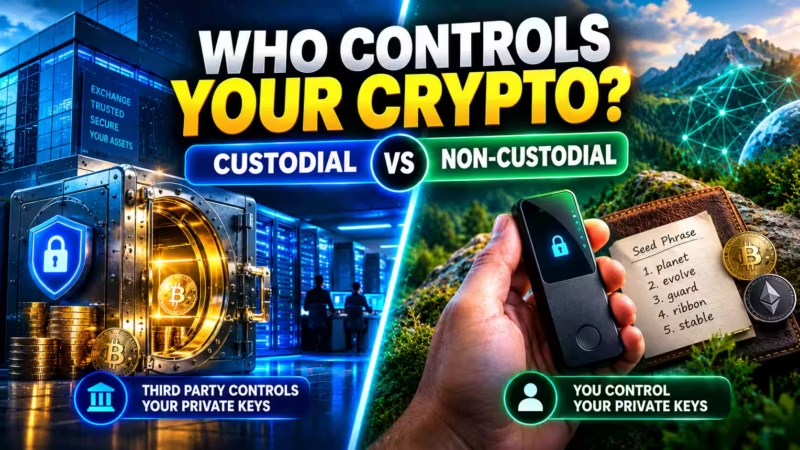
Self-custody means you hold your crypto directly instead of trusting a company to hold it for you. You are the only one who can approve a transaction. No third party sits between you and your coins.
Think of it like cash. Money in a bank account is a promise from the bank. Cash in your own safe is simply yours. Nobody can block it, and nobody will replace it if it goes missing.
Ownership in crypto works through keys, not apps or logins. The blockchain records which coins belong to each wallet address. That address comes from your public key, which is safe to share. Only your private key can sign a transaction that moves funds out. Ethereum.org’s wallet documentation explains this key pair in more detail.
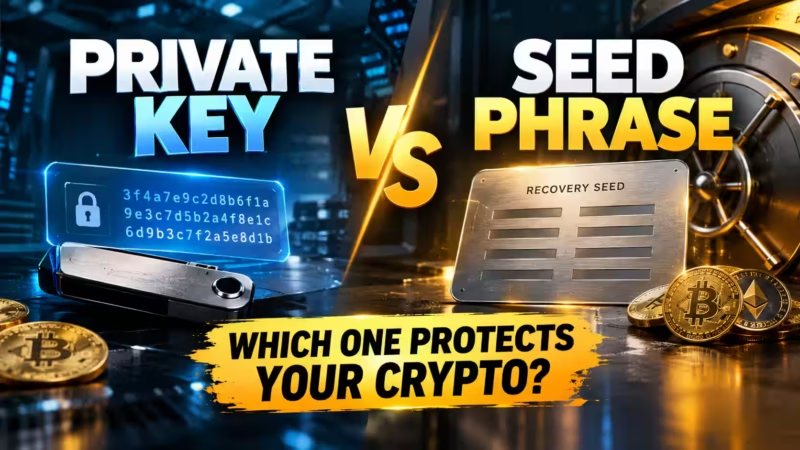
Whoever controls the private key controls the coins. Self-custody puts that key in your hands. To understand the technical difference between a private key and its backup, see our guide on private key vs seed phrase.
This idea goes back to Bitcoin’s origins. The Bitcoin whitepaper describes a system that lets two parties transact directly, without a trusted third party. Self-custody is how you use crypto the way it was first designed.

What “Not Your Keys, Not Your Crypto” Really Means
If someone else holds your keys, you hold a claim on that party, not the coins themselves. Bitcoin educator Andreas Antonopoulos popularized this phrase as a straightforward description of how crypto custody actually works.
When you buy crypto on an exchange, the coins usually sit in the exchange’s wallets. Your account shows a balance, but that number is a record of what the company owes you. It works more like an IOU than direct ownership.
That does not make every exchange unsafe. Many reputable platforms run strong security and serve millions of users without incident. Still, your access depends on three things you cannot control:
- Solvency: whether the company stays financially healthy
- Policies: what its rules say about withdrawals
- Decisions: how it responds to regulators or emergencies
Self-custody removes that dependency. Your access rests on your keys alone.
Why Self-Custody Matters in Crypto
Self-custody matters because it removes the risk that a company holding your crypto fails to return it. History shows this risk is real.
Counterparty Risk, Explained Simply
Counterparty risk is the chance that the party holding your assets can’t or won’t return them. In crypto, this third-party risk can appear in several ways:
- Insolvency: the platform runs out of money
- Hacks: attackers drain the platform’s wallets
- Withdrawal halts: the company pauses all outgoing transfers
- Account freeze: your individual account gets locked for regulatory review or internal policy
With self-custody, none of these platform-level events can touch your coins directly.
One important nuance: self-custody protects you from platform freezes, but it does not protect against every kind of freeze. Some stablecoin issuers, including the companies behind USDC and USDT, can freeze specific wallet addresses at the token level. That means even coins held in a self-custody wallet can be frozen if the issuer acts on a legal order. This is the asset’s risk, not the wallet’s.
What Happens When an Exchange Fails
Three well-documented collapses show the pattern:
- Mt. Gox (2014): Once the largest Bitcoin exchange, it lost hundreds of thousands of bitcoin and filed for bankruptcy. According to the Mt. Gox Rehabilitation Trustee, initial repayments to creditors did not begin until 2024, roughly a decade after the collapse.
- Celsius (2022): The lender froze withdrawals in June and filed for Chapter 11 in July. The Vermont Department of Financial Regulation notes that a court held that assets in certain customer accounts became property of the bankruptcy estate.
- QuadrigaCX (2019): The Canadian exchange collapsed after its founder died, reportedly as the only person with access to the cold wallet keys. Roughly CAD 190 million in customer assets became permanently inaccessible. The case is a direct illustration of why private key control and inheritance planning matter together.
In each case, coins held under self-custody were unaffected by the platform’s failure. The blockchain kept its record. Only platform custody left customers with no recourse.
For the bigger picture on how platforms differ from protocols, read our breakdown of centralized vs decentralized finance.
Self-Custody vs Exchange Custody
The core difference is who holds responsibility. With exchange custody, the company protects access, handles recovery, and absorbs the operational work. You trade control for convenience.
With self-custody, you take on those jobs yourself. A non-custodial wallet is the tool that makes this possible. It gives you the keys directly, with no company in the middle.
Neither model is wrong. They solve different problems. Exchange custody suits active trading and small learning balances. Self-custody suits people who want to remove platform risk from money they intend to keep.
For a full side-by-side comparison of how these models work, see our custodial vs non-custodial wallet guide.

The Benefits and Risks of Self-Custody
Self-custody removes one set of risks and adds another. Knowing both sides clearly makes the decision much easier.
Benefits of Self-Custody
- True ownership: Your coins answer only to your keys.
- No platform freezes: A company cannot halt your withdrawals. (Note: stablecoin issuers can still freeze certain tokens at the address level, as mentioned above.)
- Permissionless access: You can send or receive at any hour without approval.
- Less data exposure: You share fewer personal details with platforms that can be breached.
- Direct on-chain access: You can connect to decentralized apps without moving funds through an intermediary first. Our beginner’s guide to DeFi explains what that unlocks.
Self-Custody Risks You Take On
- No password reset: Nobody can restore access for you. MetaMask’s support documentation states plainly that it cannot recover a lost wallet.
- Lost backup means lost funds: Your recovery phrase is your only way back in. Our guide to what is a seed phrase covers how it works and how to store it safely.
- Mistakes are usually permanent: Crypto sent to the wrong address rarely comes back.
- Scammers target you directly: The FTC warns that no legitimate business will ever ask for your wallet secrets.
- Inheritance requires planning: Without a clear plan, your family may not be able to reach your funds. The QuadrigaCX case is a stark reminder of this.
Most losses come from avoidable slips, not sophisticated hacks. Our guide to common beginner crypto mistakes covers the ones that catch newcomers most often.
The Tech Capital Hub Self-Custody Responsibility Map
This map shows which jobs shift to you when you move from exchange custody to self-custody.
Tech Capital Hub · Self-Custody Guide
The Tech Capital Hub Self-Custody Responsibility Map
See which jobs an exchange handles for you, and which ones become yours the moment you hold your own keys.
| Job | With an Exchange | With Self-Custody |
|---|---|---|
| Keeping access safe | The company | You |
| Recovering a lost login | Support team | Only your backup |
| Spotting scams | Shared | You |
| Verifying where you send funds | Shared | You |
| Planning for inheritance | Account process | Your own plan |
| Protecting against company failure | Not possible | Built in |
The trade-off: Self-custody protects you from company failure. In return, every other job on this list becomes yours. That is what it means to be your own bank.
The trade-off is direct: you gain protection from company failure, and you take on every other job yourself. That is the real meaning of “be your own bank.”
Are You Ready? The Tech Capital Hub Self-Custody Readiness Check
You are ready for self-custody when you can carry the responsibilities above calmly and consistently. Work through these six questions honestly before you begin.
- Could you protect a backup for years? That means keeping it safe from loss, fire, and other people.
- Do you plan to hold for months or years? Self-custody fits long-term holding better than active daily trading.
- Would a platform failure genuinely hurt you? If losing access to your exchange balance would cause real financial damage, self-custody is worth taking seriously.
- Will you double-check every address before sending? One small error can be permanent.
- Can you recognize a scam? Legitimate support never asks for your keys or recovery words.
- Have you thought about who could access your funds if something happened to you? Inheritance planning is part of responsible self-custody.
Mostly “yes” means you are likely ready. A mix of answers suggests starting small and building confidence first. Mostly “no” means an exchange may suit you better right now.
Self-Custody Is Not All or Nothing
Many people split their holdings rather than choosing one approach entirely:
- Keep a small, active balance on an exchange for buying, selling, or trading.
- Move longer-term savings into self-custody, under your own keys.
Start with a modest amount. Practice a transfer. Get comfortable with the process. Then expand when it feels routine.
How to Start Self-Custody: First Steps
This is a high-level overview, not a setup tutorial. The goal is to understand the sequence before you begin.
Choose Your Self-Custody Tool
Every self-custody wallet falls into one of two main types:
- Software wallet: a free app on your phone or computer. Convenient, but connected to the internet.
- Hardware wallet: a small physical device that keeps your keys offline. Better suited to larger, long-term holdings.
For a detailed comparison of these two types, see our hot vs cold wallet guide. To see a hardware wallet in practice, read our overview of the Ledger hardware wallet.
Moving Crypto Off an Exchange
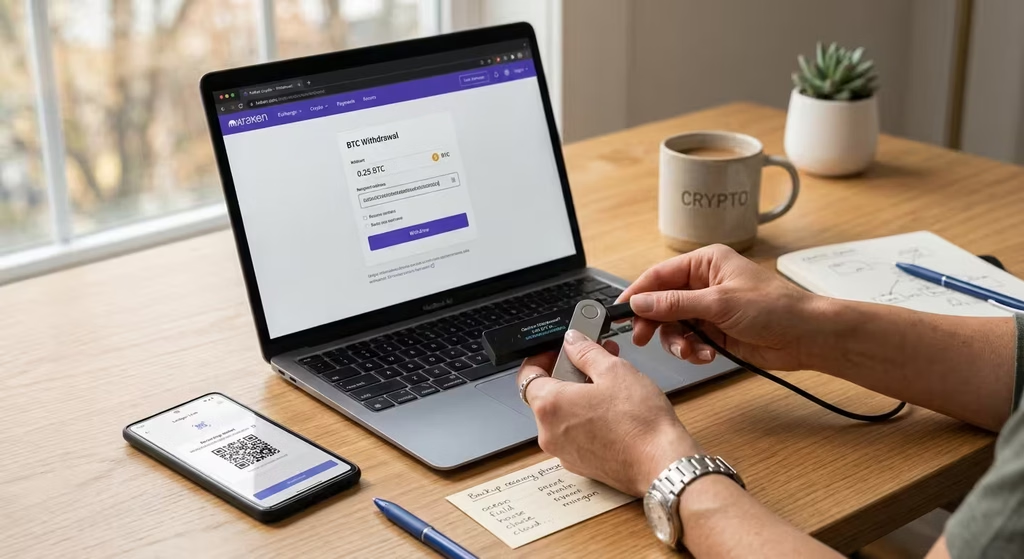
The process follows four basic steps:
- Set up your wallet from an official source only.
- Secure your seed phrase backup offline before you send anything.
- Send a small test amount and confirm it arrives correctly.
- Move the rest once the test succeeds.
Exchanges often charge a network fee for withdrawals. Our guide to crypto fees explains how to avoid overpaying.
Frequently Asked Questions
Is self-custody safe for beginners?
Yes, if you build good habits first. Self-custody removes platform risk but adds personal responsibility. Start with a small amount, store your backup offline, and never share your keys. Most beginner losses trace back to skipped backups and scams, not to the technology itself.
What happens to my crypto if an exchange goes bankrupt?
Your funds can be frozen and pulled into bankruptcy proceedings. Access may be delayed for months or years while courts decide how to handle creditor claims. Mt. Gox users waited roughly a decade for their case to reach repayment. Investor.gov warns that crypto held on a platform may lack the protections of a traditional bank deposit.
Can someone freeze my crypto in a self-custody wallet?
A company generally cannot freeze coins in a self-custody wallet. However, some stablecoin issuers can freeze specific token balances at the address level if required by law. This applies to the asset, not the wallet itself. Bitcoin and most other non-stablecoin assets do not carry this risk.
Does self-custody make sense for small amounts?
It can, mainly as a learning exercise. A small balance lets you practice the process with little at stake. The protection self-custody provides matters most once your holdings reach an amount that would hurt to lose if a platform collapsed.
Can I use self-custody and an exchange at the same time?
Yes, and many people do. A common setup keeps trading funds on an exchange and long-term savings in self-custody. This split balances convenience with control.
What happens if I make a mistake with self-custody?
Most mistakes cannot be reversed. Funds sent to a wrong address usually stay lost. A lost backup with no device access means permanent loss. That is why test transactions and careful backup and recovery habits matter so much from the start.
Is self-custody legal?
In the United States and most other countries, holding your own crypto is legal. Rules differ by jurisdiction, so verify your local regulations. Tax obligations still apply regardless of where or how you store your coins. The IRS provides guidance on digital asset taxation for U.S. taxpayers.
How do I pass self-custodied crypto to my family?
You need a clear plan your family can follow without your help. Many people write step-by-step instructions, store them securely alongside their backup, and name a trusted person who knows where to look. Some work with an estate attorney. Without a plan, your heirs may never reach the funds.
Is Self-Custody Right for You?
Self-custody means one thing: you hold the keys, so you hold the crypto. That gives you full control, freedom from platform failures, and direct access at any time. In return, it asks for full personal responsibility. No help desk will rescue you if you lose your backup.
Neither custody model is wrong. The right choice depends on how much you hold, how long you plan to keep it, and how honestly you answer the readiness check above.
If most of your answers were “yes,” start small. Move a test amount to a self-custody wallet and practice the process. When you’re ready to choose a device, our comparison of Ledger vs Trezor shows how the two leading hardware wallets differ.
Self-Custody in Crypto · Editorial Integrity
Sources & Citations
Official documentation and public records behind this guide on self-custody in crypto, covering private key control, recovery phrases, counterparty risk, exchange failures, scam prevention, and readiness to be your own bank.
Every key claim in this guide is grounded in official wallet documentation, open technical standards, and named public records. Key ownership and recovery details follow Ethereum.org, the Bitcoin whitepaper, BIP-39, and MetaMask support guidance. Exchange failure examples draw on regulator alerts, court-appointed trustee notices, and Department of Justice records. Scam and investor warnings follow the FTC and Investor.gov. Because wallet features, legal outcomes, and rules change over time, always check the latest official sources before you act.
View full sources, methodology, and editorial notes
This beginner guide was written using official wallet and protocol documentation, open technical standards, government consumer-protection resources, and primary public records from major exchange failures. We give preference to primary sources where they directly support a claim about who controls private keys, how a recovery phrase restores access, what happens to customer assets when a custodial platform fails, or how scammers target self-custody users. A few points, such as repayment timelines and legal rulings, are described in general terms because they can change as cases progress. This article is educational information, not financial, legal, or tax advice.
- How private keys, public keys, and wallet addresses prove ownership: Ethereum.org — Crypto Wallets — cited as official documentation for how a key pair controls an account and why only the private key can move funds.
- The origin of transacting without a trusted third party: Bitcoin Whitepaper — A Peer-to-Peer Electronic Cash System — cited as the primary source for the peer-to-peer design that self-custody puts into practice.
- Recovery phrase standard behind self-custody backups: BIP-39 — Mnemonic Code for Generating Deterministic Keys — cited for the 12-to-24 word recovery phrase that most non-custodial wallets use to restore access.
- No password reset in a self-custodial wallet: MetaMask Support — Secret Recovery Phrase, Password, and Private Keys — cited for the point that a wallet provider cannot recover lost access, which makes backup and recovery the user’s job.
- Security habits and never sharing your keys: Ethereum.org — Security and Scam Prevention — cited for guidance on keeping keys offline, verifying addresses, and spotting fake support and phishing attempts.
- Exchange custody and bankruptcy risk: Vermont Department of Financial Regulation — Investor Alert on Cryptocurrency Bankruptcy Cases — cited for the Celsius ruling that assets in certain customer accounts became property of the bankruptcy estate, illustrating counterparty risk.
- Mt. Gox creditor repayment timeline: Mt. Gox Rehabilitation Trustee — Official Notices — cited as the primary record for the decade-long delay between the 2014 collapse and the start of creditor repayments.
- FTX collapse and fraud conviction: U.S. Department of Justice — Samuel Bankman-Fried Sentenced to 25 Years in Prison — cited as a primary public record supporting the discussion of how a custodial platform failure locked customers out.
- Scams that target self-custody users: FTC — What to Know About Cryptocurrency and Scams — cited for the warning that no legitimate business will ask for your wallet secrets, and for the irreversible nature of most crypto transfers.
- Investor protections on crypto platforms: Investor.gov — What Should I Know Before I Buy Crypto — cited for the point that crypto held on a platform may lack the protections of a bank deposit.
- Tax obligations regardless of where you store crypto: IRS — Digital Assets — cited to support the FAQ note that self-custody does not change U.S. tax reporting duties.
Self-Custody in Crypto · Editorial Standards
Our Editorial Standards
Tech Capital Hub applies Google’s E-E-A-T framework to every beginner crypto guide. We favor plain-English explanations, official documentation, and public records over hype or unsupported claims. This guide relies on trusted references where they support specific points. Ethereum.org, the Bitcoin whitepaper, and BIP-39 explain how private keys and recovery phrases prove ownership. MetaMask support guidance shows why no provider can restore lost access. Regulator alerts, trustee notices, and Department of Justice records document real exchange failures. FTC and Investor.gov guidance supports our scam and investor warnings. Where repayment timelines or legal outcomes are still moving, we describe the general picture rather than overstate certainty.
View how our editorial standards apply to this article
Built Around the Decision Beginners Actually Face
This guide starts where most newcomers get stuck: should you leave your coins on an exchange or hold them yourself? We frame self-custody through everyday choices, not theory. The Responsibility Map shows which jobs shift to you when you leave an exchange. The six-question Readiness Check helps you decide if now is the right time. A “start small” approach keeps your first move low-stakes and confidence-building.
Ownership and Key Control Without the Jargon
Coverage focuses on the ideas that decide who really owns your crypto. We explain how a private key controls your coins, why an exchange balance works more like an IOU, how a recovery phrase restores access, and what counterparty risk means in practice. We also cover edge cases, like stablecoin issuer freezes and inheritance planning. Every term, from wallet address to self-custody wallet, is defined in plain language before it’s used.
Official Docs and Primary Records Where They Fit
Specific claims are anchored to trusted references. Key ownership and recovery draw on Ethereum.org, the Bitcoin whitepaper, BIP-39, and MetaMask support documentation. Exchange failure examples rely on the Vermont Department of Financial Regulation, Mt. Gox trustee notices, and DOJ records from the FTX case. Scam warnings follow the FTC, investor protections follow Investor.gov, and tax notes point to the IRS. We avoid promotional content and unverified claims as support for any point.
Honest About Control, Responsibility, and Risk
We state the trade-offs as plainly as the benefits. Self-custody protects you from platform failure, but there is no password reset and no help desk. A lost recovery phrase usually means lost funds, and most mistakes can’t be reversed. Exchanges still suit some people, and neither choice is wrong. Because wallet features, legal cases, and rules change, this guide is reviewed and updated over time. Nothing here is financial, legal, or tax advice. Corrections or source challenges can be sent to editorial@techcapitalhub.com.
Self-Custody in Crypto · About the Author
Marcus Delray
Fintech Analyst · Founder of Tech Capital Hub
Marcus Delray is a fintech analyst and the founder of Tech Capital Hub. In this guide, he explains what self-custody in crypto really means in plain terms. He covers who holds the private keys, why an exchange balance is a claim rather than direct ownership, which jobs shift to you when you leave an exchange, and how to tell if you’re ready to be your own bank. His focus is on clarity and safe first steps, not hype.
View full author bio, credentials, and links
Marcus Delray has spent over a decade researching financial technology, digital custody, and blockchain infrastructure. He built Tech Capital Hub to make that research useful for everyday readers, from total beginners to people who already follow the market. He covers cryptocurrency, blockchain, DeFi, AI in finance, and business accounting tools, with a steady focus on turning dense topics into clear, actionable guides.
For this guide, Marcus tackles a question every crypto holder eventually faces: should you leave your coins on an exchange or hold them yourself? He shows how private key ownership decides who truly controls your crypto, why “not your keys, not your crypto” is a literal description of how custody works, and why your recovery phrase becomes your only way back in. He uses the Mt. Gox, Celsius, and FTX collapses to show what counterparty risk looks like in real life. He also flags edge cases many guides skip, such as stablecoin issuer freezes and inheritance planning.
The Responsibility Map and six-question Readiness Check help beginners decide when to make the move, and his “start small” approach keeps the first transfer low-stakes. Where legal outcomes or repayment timelines are still moving, he describes the general picture rather than overstate certainty. All articles are educational information, not financial, legal, or tax advice.
- Explains what self-custody in crypto means in plain, jargon-free language, from private key ownership to why an exchange balance works more like an IOU
- Clarifies how a recovery phrase restores access, and why no wallet provider can reset it if it’s lost
- Breaks down counterparty and exchange risk using real platform failures, including Mt. Gox, Celsius, and FTX
- Maps which responsibilities shift to you under self-custody and offers a practical readiness check before you leave an exchange
- Promotes beginner-safe habits like small test transfers, offline backups, scam awareness, and inheritance planning, grounded in official documentation and public records
Enjoying our content?
Click below to add us as a preferred source. Google will prioritize our latest articles in your Top Stories, AI Mode, and AI Overviews.
Preferred Source on Google