AI in Stock Market & Investing: The Unfair Advantage Hedge Funds Don’t Want You to Know About
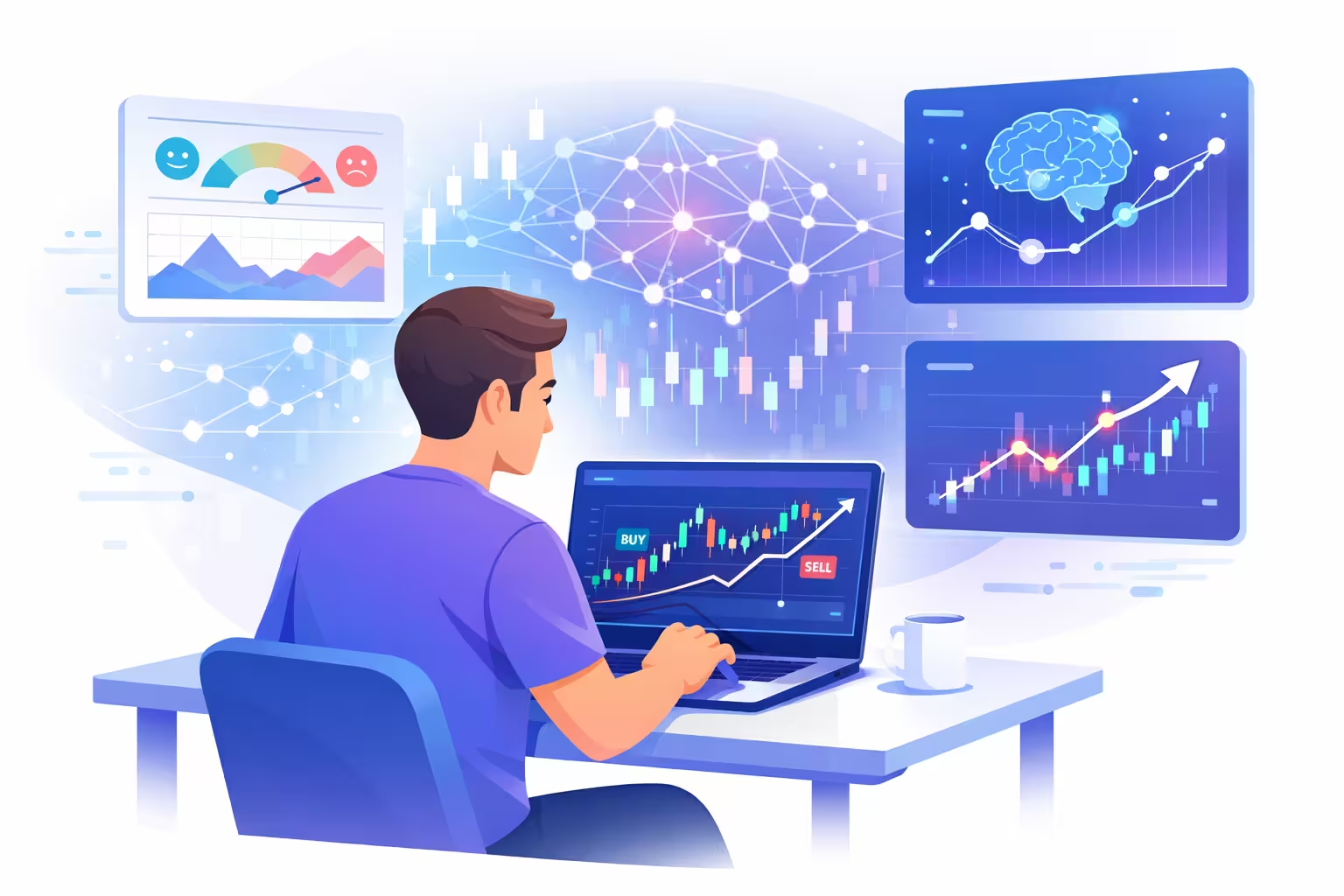
My uncle lost $11,000 in 2019 picking stocks the old way. Research, gut feeling, a tip from a friend. Gone in three weeks.
Meanwhile, a hedge fund two miles from his house was running AI that scanned 8,000 stocks before he even had his morning coffee.
That’s the gap nobody talks about. And honestly? It’s been that way for a long time. AI stock trading has been a rich man’s game — locked behind seven-figure tech budgets and PhD-level math. Regular investors didn’t stand a chance.
But here’s what’s different now. Those same tools are available to anyone. Not a stripped-down version. The real thing. And the funds that built their edge on this? They’d rather you not find out.
Let’s fix that.
What AI Stock Trading
Actually Means (No Jargon)
People throw this term around like everyone already knows what it means. They don’t. So let’s be real about it.
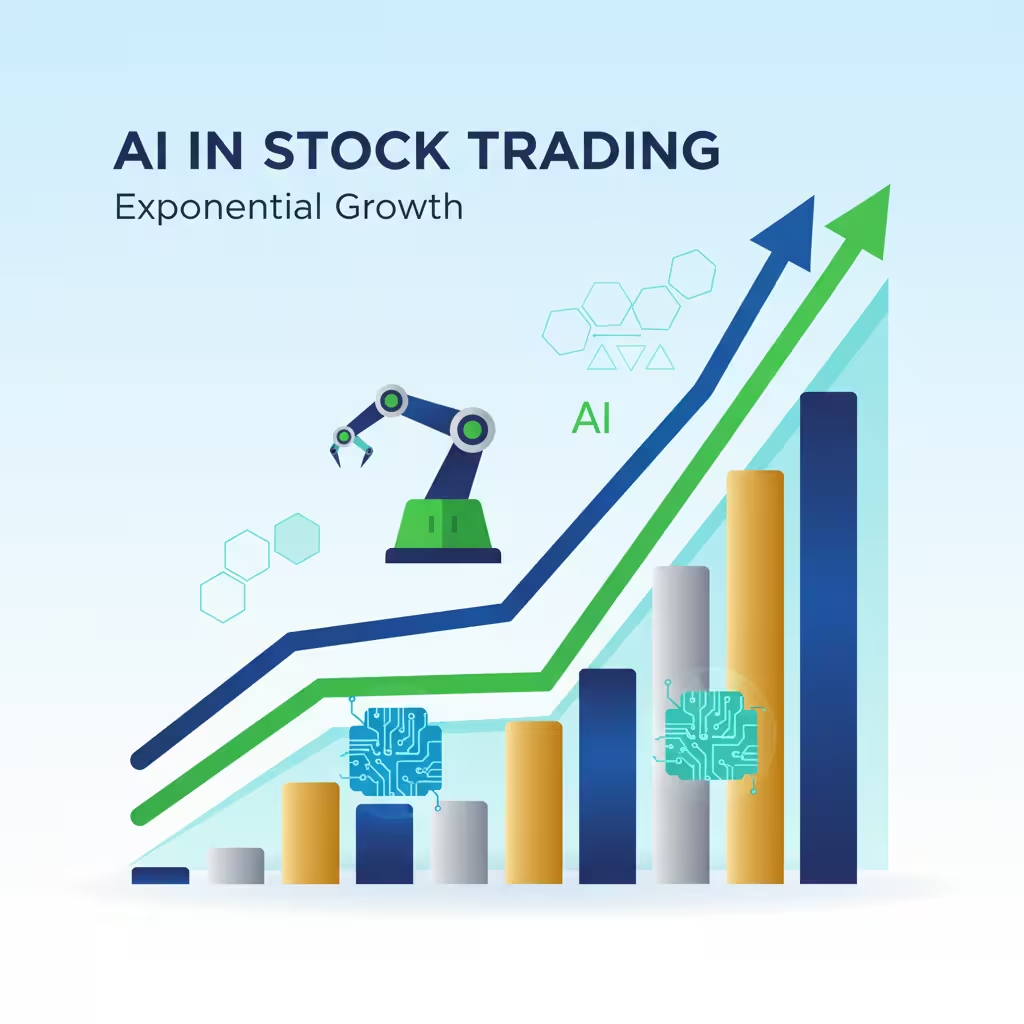
AI stock trading is when a computer program studies the market and helps you decide when to buy or sell. Simple. The program looks at prices, news, company reports, even Twitter posts. It spots patterns. Then it tells you what it found.
What makes it different from a basic stock screener? Machine learning.
Old programs followed rules a human typed in. “If the price drops 5%, sell.” That’s it. No thinking. Just following orders.
Machine learning stock market tools are different. They learn on their own. You feed them data — years and years of it — and they figure out the patterns themselves. Nobody had to program the rules. The system found them.
That’s a genuinely big shift. It’s the difference between a calculator and something that actually thinks.
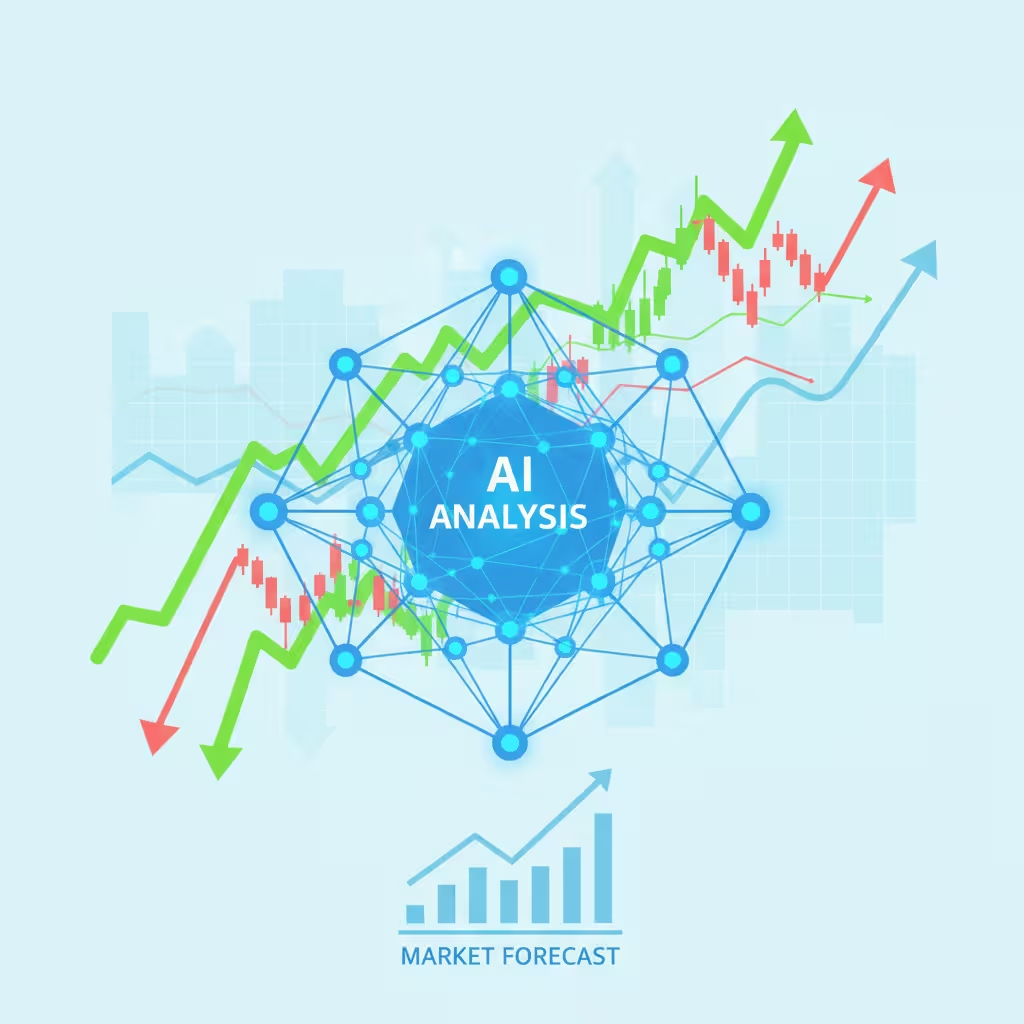
So... How Does AI Predict
Stock Market Movements?
Okay, real talk — it doesn’t “predict” anything. Not exactly.
What it does is closer to what a good poker player does. They don’t know your cards. But they read the table, track the betting, remember what happened in similar hands before. Then they make the best move given the odds.
AI does the same thing with stocks. It looks at conditions right now and asks: given everything I know from history, what usually happens next?
Here are the main tools it uses to do that:
• Sentiment analysis. The AI reads. A lot. News articles, earnings call transcripts, analyst notes, Reddit threads, Seeking Alpha posts. It scores each one — positive, negative, neutral. A flood of positive news before a report? That pattern often means the stock moves up. The AI catches it before most humans even open the article.
• Predictive analytics. This one’s all about history. The system studies decades of price data and finds patterns that keep repeating. Not 100% of the time. But often enough to matter.
• Technical indicators. RSI. MACD. Bollinger Bands. Traders have used these forever. AI takes those signals plus dozens of others and tests which combinations actually worked — not just one indicator but all of them together, in different market conditions.
• Alternative data. This is the wild one. Some hedge funds pay for satellite photos of Walmart parking lots. They count the cars. More cars than last quarter probably means stronger sales. Some firms track shipping containers. Others analyze how confident a CEO sounds during an earnings call — literally measuring voice tone. Some of this is now trickling into tools regular investors can actually afford.
The newest systems combine all of this at once. They read a chart, process a text report, and cross-reference social media data in seconds. Humans can’t compete with that on speed. But speed isn’t everything — more on that later.
What’s Actually Working:
Machine Learning in the Stock Market
Not every AI tool is worth your time. Here’s what has real results behind it.
Quantitative Trading — The OG Approach
Big quant funds have used math-heavy models since the 1980s. The methods got way more powerful over time. Modern systems use deep neural networks trained on massive datasets. We’re talking millions of variables, not just price and volume.
Two Sigma — one of the best-known quant firms in the world — has been public about something interesting. They said the focus is moving away from just building bigger models. Now it’s about building smarter ones. Ones where you understand why the model made a call. Not just what it predicted.
That word — interpretability — keeps coming up in serious investing circles. If your AI made a bad call, can you figure out why? If you can’t explain it, trusting it is a problem.
Backtesting: Useful but Tricky
Before going live, every AI strategy gets tested on old data. Run it against 10 years of prices. See how it did. This is called backtesting.
Here’s the trap most beginners fall into. A strategy looks incredible on paper — 60% annual returns, barely any losses. Then it falls apart the second you trade with real money.
Why? Because the model memorized old data instead of learning real patterns. Overfitting, it’s called. Smart systems test against data the model has never seen before. If it still works there, it might actually work in real life. If not, back to the drawing board.
Best AI Investment Tools for
2026 (That Real People Can Use)
Good news — you don’t need a Wall Street budget for these. Here are the platforms worth knowing about.
• Kavout. It assigns every stock a score from 1 to 9. They call it the Kai Score. A neural network runs billions of data points through its system and spits out a number. Higher score, stronger signals. It’s simple, which is actually a feature. You don’t need to understand the math. You just need to know what the score means.
• Danelfin. This one gives you a percentage. How likely is this stock to beat the market in the next 30 days? Straightforward. And they’re honest when the model isn’t confident — which is rare and honestly refreshing.
• AltIndex. Built around alternative data and social sentiment. It tracks hiring trends, web traffic, Reddit mentions. The idea is to find stocks that are getting hot before the mainstream crowd notices. Good for finding things early.
• Tickeron. Made for more active trading. The AI scans for chart patterns and flags breakouts as they’re forming. If you’re into technical analysis, you’ll like this one.
• Capitalise.ai. Best option for beginners, no question. You type your strategy in plain English. Seriously — “buy Tesla when RSI drops below 30.” The app turns it into a working algorithm. Zero coding. Zero math degree required.
Algorithmic Trading for
Beginners: An Honest Starting Point
Here’s advice most guides skip. Don’t start complicated. Like, at all.
1. Figure out your goal first. Long-term stock ideas? Short-term signals? Risk alerts on stuff you already own? Each of those needs a different kind of tool. Using a day-trading platform when you want long-term picks is like using a hammer to paint a wall.
2. Paper trade. Seriously. Every decent platform lets you test with fake money in real market conditions. Most beginners skip this step. Don’t. Run it for a full month before you touch real cash. You’ll see things in week three you never noticed in week one.
3. Past returns aren’t future returns. A strategy that crushed it from 2016 to 2020 might have gotten wrecked in 2022 when rates jumped. Markets shift. What worked in a low-rate bull market doesn’t automatically work when conditions change.
4. Simpler usually wins. A basic momentum screen — finding stocks trending up with rising volume — will beat a 47-variable neural network for most retail investors. More inputs doesn’t always mean better outputs.
5. Don’t go full autopilot. Use AI to narrow your list from 5,000 stocks down to 20. Then use your own brain on those 20. Full automation without understanding is how people lose real money and can’t explain why.
Can AI Actually Outperform
Human Stock Traders?
Depends who you ask. And honestly, depends on the situation.
In large, liquid U.S. stocks — think Apple, Amazon, Microsoft — AI has a genuine edge on speed and consistency. It never panics. It doesn’t check Twitter and change its mind. It can screen thousands of companies in the time it takes a human analyst to make coffee.
But markets aren’t just math. They’re people. Scared people. Greedy people. People who react to headlines, political news, things that have never happened before. When something truly new hits — a pandemic, a banking collapse, an unexpected war — AI trained on old data can get blindsided. It learned from history. History doesn’t always repeat exactly.
There’s also something that keeps happening in the AI space itself. A firm spends billions building a dominant system. Then a smaller, cheaper competitor comes along and uses similar public data to match it — or beat it. This happened with AI model development in 2024 and 2025. It’s starting to happen with investing AI too. Building the best engine today doesn’t mean you still own the road tomorrow.
So. AI is a real edge. Not a magic trick. Not guaranteed. An edge

Why 2026 Is the Year This
Actually Matters
Here’s context that makes all of this more urgent.
Right now, about $2.1 trillion is flowing into AI infrastructure. That’s the commitment from the biggest players — Microsoft, Amazon, Alphabet, Meta — through 2027. S&P 500 earnings are expected to grow 13 to 15 percent over the next couple of years. Almost all of it tied back to AI.
This isn’t hype money anymore. It’s real capital. Real earnings. Real growth.
But here’s the other side. The biggest AI stocks already have a lot of that growth priced in. Buying Nvidia at its 2025 peak expecting another 3x might not be the move.
What’s interesting is what’s been quietly overlooked. Software companies hit a 25-year valuation low compared to chip stocks heading into 2026. There’s a real gap there. Firms with sticky customers, strong renewal rates, and actual AI products built in — companies like Salesforce or Snowflake — might be where the next leg of this runs.
The market right now has a name in analyst circles: K-shaped. AI winners pulling way ahead. Everyone else falling behind. The tools in this guide are how regular investors get on the right side of that divide.
Frequently Asked Question - FAQs
How does AI predict stock market movements?
It doesn’t predict — it calculates odds. The system studies historical price data, news, sentiment, and alternative signals. It finds patterns from the past that match what’s happening now. Then it estimates how things usually play out. Not guaranteed. Just better odds.
What are the best AI tools for stock market analysis in 2026?
Kavout for clean scored signals. Danelfin for probability-based picks with transparency. AltIndex for finding early movers through alternative data. Tickeron for active technical traders. Capitalise.ai if you’re brand new and don’t want to code anything.
Can AI outperform human traders consistently?
In liquid, data-rich markets — often yes on speed and pattern recognition. In new or unusual conditions, human judgment still adds real value. The best investors use both.
Is algorithmic trading legal for regular U.S. investors?
Yes. Fully legal. The platforms listed here are regulated and widely used. High-frequency trading at institutional scale has its own rules, but retail AI tools are fair game.
What’s the biggest risk of using AI for investing?
Overfitting to past data. Model failure when market conditions change. Over-relying on a black box you don’t understand. Always test first. Always know what your tool is actually measuring.
The Bottom Line
AI stock trading isn’t a shortcut. It’s not a cheat code. My uncle still lost that $11,000 — but not because he lacked the tools. He lacked a process.
The tools exist now. Free trials, paper trading, plain-English strategy builders. The hedge fund advantage is smaller than it’s ever been.
What gives you the real edge isn’t the fanciest algorithm. It’s knowing what the tool is measuring, trusting the process when the market gets choppy, and not letting short-term noise wreck a long-term plan.
Pick one platform. Paper trade it for 30 days. Learn what it’s telling you. Then decide if real money makes sense.
Preparation wins. Not prediction.
Financial Disclaimer
The information published on Tech Capital Hub is intended for educational and informational purposes only. Nothing on this website — including articles, guides, analysis, or commentary on AI, fintech, blockchain, cryptocurrency, or stocks — should be interpreted as financial advice, investment advice, trading recommendations, or any other form of professional financial guidance.
All investments carry risk, including the potential loss of principal. Past performance of any financial instrument, strategy, or technology is not a reliable indicator of future results. Cryptocurrency and blockchain-based assets are particularly volatile and speculative in nature, and their value can fluctuate significantly in short periods of time.
Tech Capital Hub, Marcus Delray, and any associated contributors do not hold responsibility for any financial decisions you make based on content published on this site. Before making any investment or financial decision, we strongly encourage you to conduct your own independent research and consult with a licensed financial advisor, accountant, or legal professional who understands your personal financial situation.
Any links to third-party websites, tools, or platforms are provided for convenience and informational purposes only. Tech Capital Hub does not endorse or take responsibility for the content, accuracy, or practices of any third-party sites.